Clothes Fitter Guide for Families and Online Shoppers
A clothes fitter is a professional who measures, pins, and adjusts garments so they sit correctly on your body. For most people right now, there are two practical routes: book a local tailor for high-stakes pieces, or use a photo-driven sizing service like Clothme to generate saved fit profiles for every family member. Busy parents shopping online will get the most mileage from the digital route; anyone prepping a wedding gown or custom suit should call a tailor first.
Table of Contents
What does a clothes fitter actually do, and what are your options?
When should you choose a professional fitter vs. a digital sizing tool?
How to prepare so your fitter or digital tool gives the best result
How digital fit tools work, and how parents can manage family sizing
How to choose a clothes fitter or fit solution you can trust
What does a clothes fitter actually do, and what are your options?
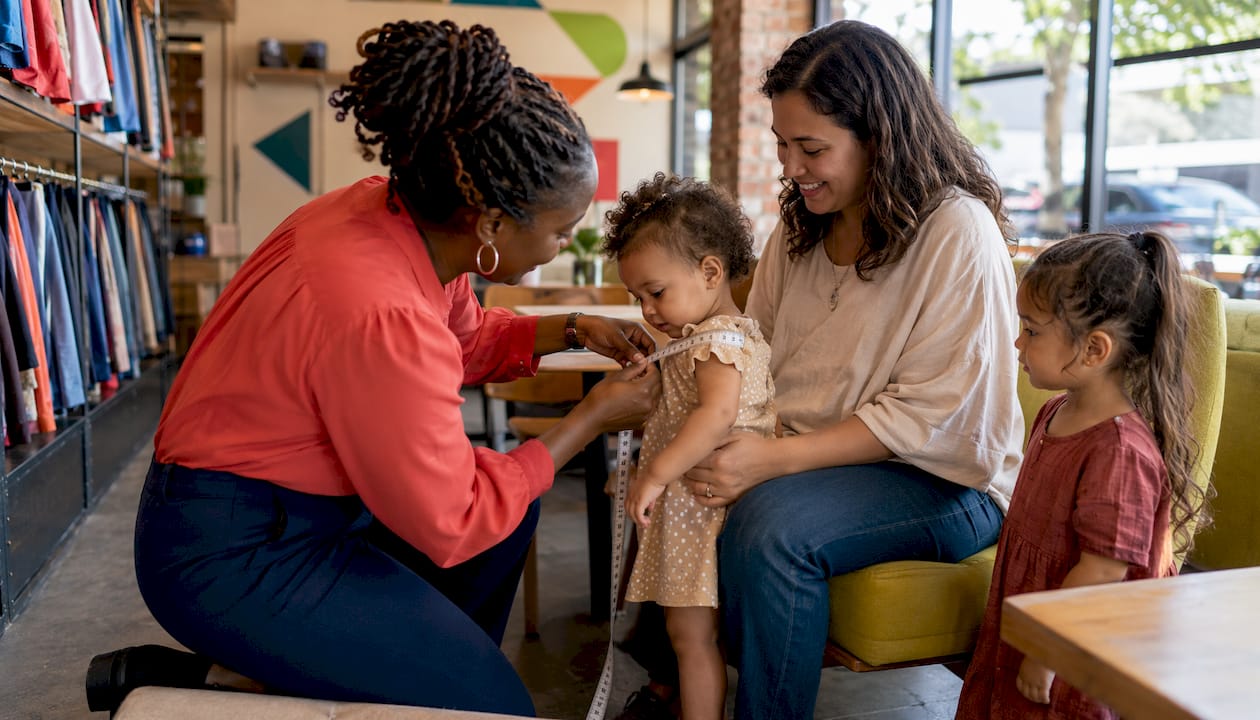
A professional fitter does more than measure. They read how a garment hangs, check where seams pull, and assess whether the construction can even support the change you want. A tapered waist on a suit jacket, for example, requires a different internal adjustment than hemming a pair of jeans. The fitter advises on what is structurally possible, marks the changes, and oversees the alteration through to a final check.
The digital alternative works differently. A photo-first service like Clothme uses two uploaded photos to build a size profile, which you can then save and reuse for every family member. No appointment, no commute, no waiting room.
In-person professional fitter Photo-driven digital fit service Speed standard turnaround time; same-day rush options are often available Instant profile; shop immediately Cost range a range of costs depending on the alteration type and complexity Typically free or low-cost to profile Best for Wedding wear, suits, structured garments Everyday clothing, kids’ sizing, multi-person households Accuracy Highest for complex construction Excellent for standard sizing across brands Convenience Requires in-person visit Fully remote, reusable profiles
When should you choose a professional fitter vs. a digital sizing tool?
The decision usually comes down to three things: garment value, structural complexity, and how many people you need to size.
Private fitting consultations produce the best outcomes for high-stakes garments like wedding gowns and custom formal wear because the tailor can address internal structure and drape in real time. If a garment cost several hundred dollars or needs to survive a once-in-a-lifetime event, an in-person fitter is worth every minute.
For everyday shopping, though, the math flips. Brand sizing varies enough across labels that a saved digital profile cuts returns faster than any size chart. Three quick scenarios:
Wedding or prom dress: Book a professional fitter. Structural adjustments to boning, lining, and hem length need hands-on assessment.
Growing kids’ wardrobes: Use a digital sizing service. Kids change size every few months; a saved profile you can update beats repeated tailor trips.
Seasonal wardrobe refresh for the whole family: Digital profiles win on speed. Upload once, shop for everyone without re-measuring each time.
If your time window is under 48 hours and the garment is not structurally complex, a digital tool is almost always the faster call.
What happens during a professional fitting, step by step?
A standard fitting follows a clear sequence, and knowing it ahead of time removes most of the anxiety.
Consultation: The tailor asks how you plan to wear the garment, what shoes you will pair it with, and what specific fit issues bother you.
Measurement and inspection: They take body measurements and examine the garment’s construction, checking seam allowances and internal structure.
Pinning and marking: The fitter pins the fabric to the corrected position while you stand naturally, sometimes asking you to sit or move.
Test wear (second fitting): For complex pieces, you return to try the adjusted garment before final stitching.
Final check: The finished piece is inspected on your body one last time before you leave.
Standard turnaround runs 4–7 days; express or same-day services are available at most shops for an additional fee. Some tailors also offer at-home or concierge fittings, which is worth asking about if you have young children or a packed schedule.
How to prepare so your fitter or digital tool gives the best result
Preparation makes a bigger difference than most people expect. A few minutes of setup prevents a second trip or a blurry photo that throws off your size profile.
For an in-person fitting:
Wear the underwear you plan to wear with the finished garment.
Bring the shoes you will wear with it, especially for pants and gowns. Heel height changes where the hem falls, and a tailor who does not know your shoe will pin the wrong length.
Avoid bulky layers that add volume and distort the fit.
Write down the specific issues you want fixed before you arrive.
For a digital fit tool:
Wear form-fitting clothing, not loose sweaters or baggy jeans.
Stand in front of a plain, well-lit wall. Natural light works best; avoid strong backlighting.
Take two photos: one straight-on (front view) and one from the side.
Keep your posture natural. Do not suck in or stand unnaturally rigid.
For kids, collect height, waist, hip, and inseam measurements before uploading. Label each profile with the child’s name and the date so you know when it needs updating.
Check Clothme’s photo-taking guide for framing specifics and the exact angles that produce the most accurate profiles. For formal dress measurements, DressMeUpNY’s measuring guide covers the key points for structured garments.
How digital fit tools work, and how parents can manage family sizing
Photo-first sizing works by translating two images into a set of body measurements, which the platform maps against its brand and garment database. The result is a size profile tied to your actual proportions, not a generic size label. Clothme stores these profiles so you can shop with personalized size data every time you return, without re-uploading photos.
For families, the real value is the profile library. You create one profile per person, name it clearly, and the platform filters product recommendations to match each person’s measurements. When a child grows, you update their profile with new photos rather than starting from scratch.
On privacy: before using any photo-based sizing service, check whether photos are stored after the profile is created, who can access saved profiles, and whether you can delete your data on request. A reputable service will answer all three questions clearly in its privacy policy.
Pro Tip: Name each family profile with the person’s name and the season (e.g., “Maya — Fall 2026”). When you revisit for the next season, you can see at a glance which profiles need a photo update and which are still current.
Common tailoring fixes: typical costs and turnaround times
Many common alterations have typical cost ranges and turnaround times, which vary depending on garment type and service provider.
Simple hems and waist adjustments can make off-the-rack clothing look custom-fitted, often for less than $30. For garments with a fit guarantee, some mobile tailors will redo the work at no charge if the result does not meet the agreed standard.
Pro Tip: Ask about express fees before you drop off the garment, not after. Most shops charge a flat rush premium — knowing the number upfront lets you decide whether same-day service is worth it for that specific piece.
How to choose a clothes fitter or fit solution you can trust
Questions to ask a professional tailor
Have you worked with this garment type before (bridal, suit, leather)?
What is your standard turnaround, and what does rush service cost?
Do you offer a re-alteration guarantee if the fit is not right?
Can I see examples of similar work?
Trust signals for a digital fit service
Clear explanation of how photos are converted to measurements
Sample results or accuracy claims backed by real garment data
A readable privacy policy that covers photo storage and deletion
Support for multiple saved profiles (family use)
Red flags to watch for
No stated turnaround time or vague “as soon as possible” answers
No rework policy for in-person tailors
A digital tool that asks for photos but never explains what happens to them
Pressure to pay upfront without a written estimate
Match the cost of the alteration to the garment’s value. A $15 hem on a $40 pair of pants is reasonable; the same hem on a $20 pair is a replacement decision, not an alteration one. The fit issues by garment type guide on the Clothme blog breaks this down further if you are weighing repair against replacement.
Key Takeaways
A photo-first digital profile handles everyday family sizing faster than any tailor visit; reserve in-person fittings for high-stakes, structurally complex garments.
Point Details Match the tool to the garment Book a professional fitter for wedding wear and suits; use a digital profile for everyday and kids’ clothing. Standard turnaround is 4–7 days Express services exist at most shops for a fee — confirm the cost before dropping off. Prepare before you go Bring the right shoes to a fitting; wear fitted clothing and use good lighting for digital photos. Name family profiles clearly Label each profile with a name and season so you know when a child’s measurements need updating. Clothme for family shopping Clothme’s two-photo sizing and saved family profiles cut returns and speed checkout across all household members.
Why photo-first sizing makes sense for most families
The conventional wisdom says a tailor is always the gold standard. For a wedding dress or a bespoke suit, that is true. But for the other 95% of clothing decisions — back-to-school shopping, seasonal refreshes, replacing a kid’s jeans every three months — an in-person fitting is overkill. It costs time you do not have and money that does not scale across a household of four.
What actually works for most families is a consistent, reusable size record. The problem with size charts is that they are brand-specific and often wrong. A saved photo-based profile travels across brands in a way a size chart never can. That is the gap a digital-first approach fills, and it is why Clothme’s workflow resonates with parents who have been burned by returns one too many times.
The tailor still has a place. But treating every sizing problem as a tailor problem is like calling a plumber to change a lightbulb.
Clothme makes family sizing fast and return-proof
Skip the size-chart lottery. Clothme builds a precise fit profile from two photos and saves it permanently, so every family member has their own size record ready at checkout. Upload photos for your partner, your kids, and yourself once, then shop curated product feeds filtered to each person’s actual measurements, style preferences, and favorite fabrics.
Privacy is built in: Clothme’s profile system is designed so you control your data, including the ability to update or remove photos after your profile is generated. No guessing, no mismatched orders, no post-holiday return pile. Create your family’s size profiles on Clothme today and shop with confidence from the first click.
Sources and further reading
Resource What it covers Finding the right fit for every garment — Clothme Blog Fit strategies and expert tips across garment types How to find clothes that fit every time — Clothme Blog Step-by-step digital fit workflow and photo-first sizing Clothing fit issues by garment type — Clothme Blog Quick remedies for common fit problems Shop smarter with personalized size data — Clothme Blog Benefits of saved size profiles for families How to measure for dresses — DressMeUpNY Measuring and photo guidelines for formal garments Sunsilk Tailor Expert tailor perspective on measurement and construction Alterations Express Standard and rush turnaround timelines for alterations Alteration Specialists At-home fittings and fitting preparation tips Taily — mobile tailoring NYC Mobile tailoring timelines and fit guarantees