US Shoppers, Measure First: Junior 7 Often Equals Women’s 4–6
Junior and women’s sizes are not the same system, and the gap comes down to more than the number on the tag. Juniors run smaller and are cut straighter through the hips and waist, being built for a teen frame rather than a fuller adult figure. While some try to estimate equivalencies like a junior 7 corresponding roughly to women’s 4 to 6, these are best treated as rough approximations. Skip the label math when you can and check the garment’s actual measurements instead.
TL;DR:Junior sizes are cut straighter and narrower through the hips and waist, making them a better fit for slimmer, less curvy body types.
Converting between juniors and women’s sizes is only approximate, requiring detailed measurements and garment-specific data rather than relying on number patterns.
Proper fitting depends on measuring your bust, waist, and hips accurately and comparing those numbers to each garment’s actual measurements.
Body shape and proportions, not age, determine whether juniors or women’s sizing fit better, with juniors suited for leaner figures and women’s for fuller curves.
Using measurement-based profiles and tools like ClothME helps reduce sizing errors and online returns by matching products to your true body dimensions.
Table of Contents
Juniors vs. Women’s Sizes: How the Number Systems Actually Compare
How ClothME Takes the Guesswork Out of Junior vs. Women’s Shopping
Juniors vs. Women’s Sizes: How the Number Systems Actually Compare
Junior sizes use odd numbers: 1, 3, 5, 7, 9, and up. Women’s sizes, also called misses sizes in some stores, use even numbers: 2, 4, 6, 8, 10, and beyond. That alone trips up a lot of shoppers who assume a “7” and an “8” are basically neighbors on the same scale. They’re not even on the same scale. Junior sizing is typically odd-numbered and cut slimmer, with less room through the hips and bust than misses or women’s sizing at a comparable label number.
Here’s a rough mapping that retailers commonly use as a starting reference, though it shifts brand to brand:
Junior 3 ≈ Women’s 0 to 2
Junior 5 ≈ Women’s 2 to 4
Junior 7 ≈ Women’s 4 to 6
Junior 9 ≈ Women’s 6 to 8
Junior 11 ≈ Women’s 8 to 10
Letter sizing adds another layer. A junior XS or S often corresponds to a slimmer cut than a women’s XS or S, since junior letter sizes were designed around a straighter body shape from the start. Some brands blend the two systems entirely, labeling a garment “S/M” without specifying whether it follows junior or misses proportions.
None of these numbers are contracts. Conversion tables and single-point mappings are approximate and shift by garment type, brand, and even the specific fabric used in that season’s cut. A junior 7 in one brand’s skinny jean can measure closer to a women’s 8 in another brand’s straight-leg version. Treat every chart on this page, and every chart you find on a retailer’s site, as a rough guess you confirm before you buy, not a rule you follow blindly.
How to Convert Between Juniors and Women’s Sizes
Converting sizes accurately takes three steps, and skipping any one of them is where most fit mistakes happen.
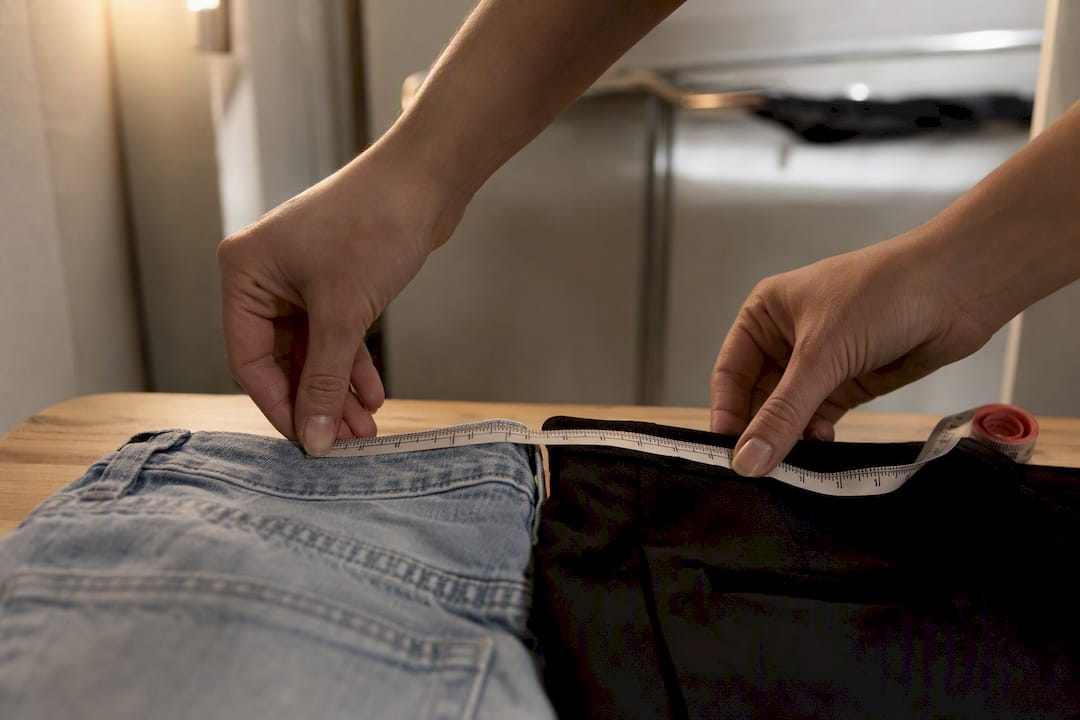
Measure your body first. Take your bust at the fullest point, your waist at your natural crease (usually just above the belly button), and your hips at the widest point, typically a few inches below your waist. Use a soft tape, stand naturally, and don’t hold your breath.
Check the garment’s actual measurements. Most brand product pages list flat measurements or a size chart specific to that item, not just a generic size label. This is the number that matters. There’s no universal conversion formula; you start with your body measurements and the garment’s flat measurements, then apply a tolerance based on fabric.
Match your numbers to the closest garment measurement, not the closest label. If your hip measurement falls between two sizes, size up for structured fabrics and consider staying true to size for anything with stretch.
Different garment types need different tolerance rules. Denim with little to no stretch should be sized to your largest measurement, since rigid fabric won’t give. Structured dresses, especially anything with a fitted bodice or zipper, need close attention to bust and waist measurements together, since one tight spot can throw off the whole garment. Stretch knits are more forgiving.
Pro Tip: Save your body measurements once, then compare them against every brand’s garment chart before buying, instead of memorizing a size number that only works for one store.
Why Juniors and Women’s Clothes Fit So Differently
The size gap isn’t only about numbers. It’s about how the pattern itself is drafted.
Junior garments are cut straighter through the torso, with less shaping at the waist.
The rise (distance from waistband to crotch seam) tends to run lower in junior bottoms.
Hip and bust allowances are narrower in junior patterns than in women’s patterns at a comparable label size.
Sleeves and torso lengths run shorter, built for a teen’s proportions rather than an adult’s.
This isn’t accidental. Department stores historically cut juniors for straighter, less curvy figures, while misses and women’s lines were drafted for fuller busts, defined waists, and rounder hips. A skinny jean in juniors and a skinny jean in misses can share a name and still fit two completely different body types. If you have a curvier figure, more defined waist, or simply want extra room through the hips and thighs, women’s or misses sizing usually gets you there faster than chasing a junior conversion. If you’re flat through the hips and torso, junior sizing might fit closer to your shape even past the age it was designed for.
How to Measure Yourself and What to Check Before You Buy
Grab a flexible tape measure and stand in front of a mirror. Measure your bust around the fullest part of your chest, keeping the tape level and snug but not tight. Measure your waist at the natural crease where your body bends when you lean sideways. Measure your hips at the widest point, usually 7 to 9 inches below your waist. Write all three numbers down before you shop, not while you’re mid checkout.
Before you buy, run through this checklist on the product page:
Does the listing include garment measurements, not just a size label?
What’s the stretch percentage or fiber content? A cotton/spandex blend behaves nothing like 100% rigid denim.
Is there a note on what size the model is wearing and how it fits her?
What’s the return policy if the size guess is wrong?
That last point matters more than shoppers assume. Poor fit is one of the most common reasons people return clothing they bought online, and most of those returns trace back to trusting a label instead of a measurement. National anthropometric datasets like the CDC’s body measurement surveys confirm that average body proportions vary enough across the population that no single size chart works for everyone. Your own three numbers beat any population average. For a full walkthrough on getting those numbers right the first time, ClothME’s bust, waist, and hip measurement guide breaks down the exact landmarks to use.
Age and Body Shape Considerations Behind the Divide
Junior sizing was built with a specific customer in mind: a teenager whose body hadn’t fully developed adult curves yet. That’s why the pattern runs straighter through the waist and hips. It’s not a smaller version of women’s sizing, it’s a differently shaped one.
Body shape matters more than birth date here. A 35-year-old with a straight, athletic build might find juniors fit better through the waist and hips than misses sizing does, even though juniors are marketed toward teens. Meanwhile, a 15-year-old with a fuller bust or curvier hips often finds women’s or misses sizing more comfortable, despite being well within the “junior” age range the category targets. Retail categories were never really about age. They were shorthand for a body shape assumption that doesn’t hold for every individual, and that assumption gets less accurate every year as body diversity in the marketplace gets more attention. Treat “juniors” and “women’s” as fit categories to test against your own measurements, not age brackets you age out of on a schedule.
What You’ll Actually Find in Junior vs. Women’s Lines
Junior departments lean heavily into trend-driven pieces: skinny jeans with lower rises, cropped tops, bodycon dresses, graphic tees, and going-out styles built for a younger, more casual wardrobe. The cuts favor a straighter silhouette and shorter overall lengths, and the price points tend to run lower than comparable women’s pieces.
Women’s and misses lines carry more structured basics: tailored blazers, straight or bootcut denim with a higher rise, wrap dresses, button-down blouses, and workwear built to sit comfortably at a natural waist. Fabric weight tends to run heavier too, since women’s lines are drafted with more shaping through the bust and hips. A misses A-line dress and a junior bodycon dress might both be labeled “size 7 to 8” territory, but they’re solving completely different fit problems. If you’re building a work wardrobe, women’s or misses sizing is almost always the better starting point, regardless of your age. ClothME’s guide on slim fit versus regular fit walks through how silhouette differences like these change what size you should actually reach for.
Moving From Juniors to Women’s Sizes as You Grow
Transitioning out of junior sizing isn’t about hitting a certain age. It’s about your body changing shape, and that happens on its own timeline for every teen and young adult. If junior tops are getting tight across the bust or junior bottoms feel snug through the hips while still baggy at the waist, that’s the signal to start trying misses or women’s sizes, even if the number feels bigger.
Don’t get hung up on the size number going up. A women’s 6 is not a “bigger” size than a junior 9, it’s a differently shaped garment measured against a differently shaped pattern. Start by measuring your bust, waist, and hips fresh (bodies change faster during teen and young adult years than most size charts account for), then compare those numbers against a few women’s size charts from different brands. Buy one piece before committing to a whole wardrobe switch. A misses button-down or a pair of straight-leg jeans is a low-risk way to test whether the new category fits better than what you’ve been wearing. Keep your measurements updated every few months during this stretch. Bodies shift, and a chart you outgrow in six months isn’t a chart worth reordering from.
Why We Built Around Measurements, Not Labels
Sizing labels were never designed to be precise, they’re marketing shorthand layered on top of inconsistent pattern-making. That inconsistency is exactly why ClothME asks for two photos instead of a size guess. From those photos, we generate a measurement-based size profile for you, and you can save separate profiles for every person in your household. The payoff is fewer wrong-size orders and less time spent cross-referencing charts brand by brand. Measurements don’t lie the way size labels sometimes do.
— admin
How ClothME Takes the Guesswork Out of Junior vs. Women’s Shopping
There are services designed for shoppers tired of reading five different brand charts before adding one item to cart. Some platforms build a size profile based on photos and measurements and match users to products across brands and boutiques instead of relying solely on size labels.
These services can work alongside brand sizing charts rather than replacing them; functioning as an additional tool to supplement size label information. Some platforms allow saving profiles for multiple family members to facilitate shopping across different sizes without restarting the fit process each season. These platforms aim to reduce returns caused by sizing mismatches through better measurement-based recommendations. Head to ClothME to set up your first size profile and start seeing products matched to your actual measurements instead of a label that might not mean what you think it means.