Avoid Returns: Measure Waist Size at the Hip Bone for Health and Clothes
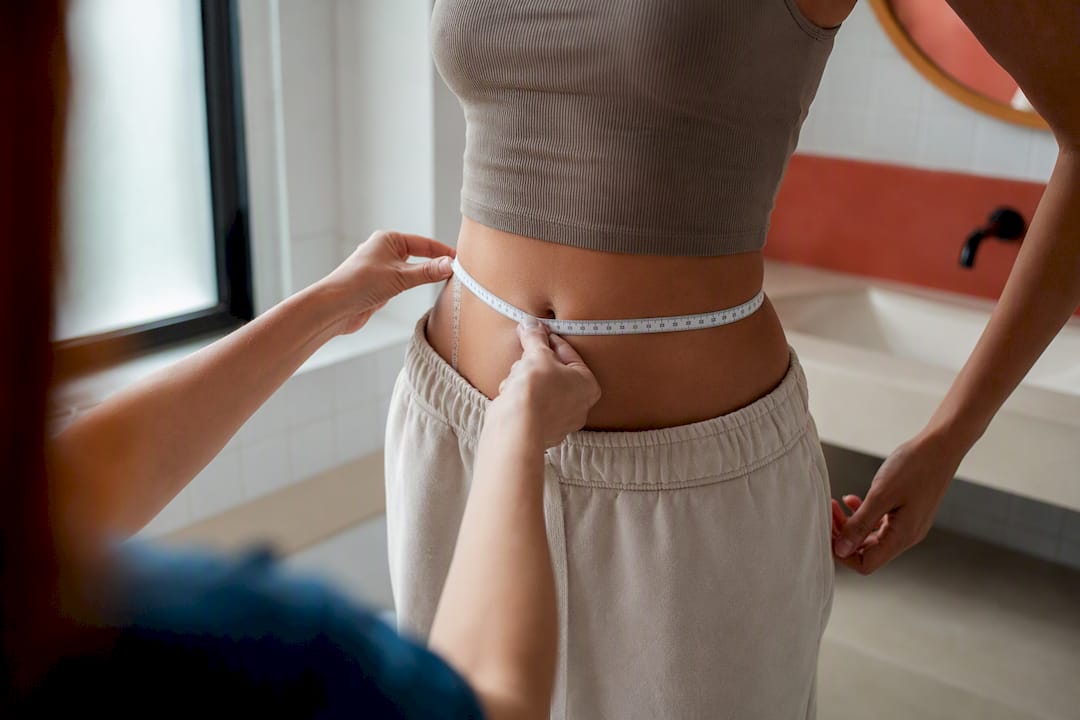
Wrap a non-stretch tape measure horizontally around your bare abdomen at the top of your hip bone, breathe out normally, and read the number without pulling the tape tight. For health screening, a waist of 35 inches or more in women and 40 inches or more in men signals elevated risk. For clothing, that same clinical spot rarely matches where a pair of jeans actually sits.
TL;DR:Waist measurement should be taken at the iliac crest level with a snug, non-tight tape around bare skin or thin clothing for accuracy.
A waist of 35 inches or more in women and 40 inches or more in men signals increased health risks due to visceral fat.
Measure in the morning before eating and track weekly or monthly, averaging multiple readings to account for fluctuations caused by meals or bloating.
Waist size is more predictive of health risk than BMI alone, especially in cases of normal weight obesity where visceral fat is high.
For clothing, measure both at the iliac crest for health and at the natural waist for better fit, as clothing sit differs from clinical landmarks.
Table of Contents
How to Measure Waist Size Step by Step
Grab a flexible, non-stretch tape measure, the kind used for sewing rather than a metal construction tape, and measure against bare skin or a thin layer of clothing. Anything thick or elastic will throw off the number.
Stand up straight with your feet together and your arms relaxed at your sides. Don’t tense your stomach or pull it in.
Find your iliac crest. Run your fingers along your side, above your hip, until you feel the bony ridge just below your rib cage. That ridge is your landmark, not your belly button and not wherever your pants happen to sit.
Wrap the tape horizontally around your body at that level, keeping it parallel to the floor all the way around.
Breathe out normally (not a forced exhale) and read the tape while it rests snug against your skin.
Record the number to the nearest 1/8 inch or 0.1 centimeter, then repeat once or twice and average the results if you’re tracking change over time.
A few things trip people up here:
The tape should be snug enough to stay in place, not tight enough to leave a mark.
If the tape sags in back or rides up in front, the reading is meaningless.
A helper or a mirror makes it far easier to check that the tape is level all the way around.
Pro Tip: Do this in front of a mirror the first time. You’ll be surprised how often the tape drifts an inch higher on your back than your front, which quietly adds a false half inch to the number.
Quick Waist Measurement Checklist
Before you start, lay out your tape measure and pick a spot with enough space to stand normally. Then work through this short list:
Locate the iliac crest by feel, not by guessing where your waistband sits.
Exhale normally before reading the tape.
Take two readings and average them.
Write down the number, the date, the time of day, and whether you measured for health tracking or for a specific garment.
Note anything that might inflate the reading: a big meal, bloating, or where you are in your menstrual cycle.
That last point matters more than most people think. A reading taken after a heavy dinner can run an inch higher than the same measurement taken the next morning, and if you don’t log the conditions, you’ll misread normal fluctuation as real change.
What Does Your Waist Measurement Actually Mean?
Once you have a number, the question is what to do with it. For adults, a waist circumference of 35 inches or higher in women and 40 inches or higher in men is linked to increased health risk, largely because that extra circumference tends to reflect visceral fat, the kind that surrounds internal organs rather than sitting just under the skin.
A simpler rule some clinicians use: keep your waist at or below half your height. A person who is 68 inches tall would aim to stay under 34 inches around the waist. It’s rough, but it scales in a way a flat cutoff doesn’t.
Waist circumference often catches risk that BMI misses entirely, since someone with a technically healthy BMI can still carry high visceral fat if the weight is concentrated around the midsection.
A few caveats worth knowing:
Pregnancy makes waist circumference an unreliable health marker; skip it as a screening tool during that period.
Recent bloating, a large meal, or abdominal distension from other causes can temporarily inflate the number.
Body composition and where people store fat varies by ethnicity, so these cutoffs work best as general screening guidance, not a diagnosis.
Measuring for Clothes vs. Measuring for Health
Here’s where a lot of shoppers go wrong: the clinical waist and the “natural waist” tailors talk about are usually not the same spot. Your natural waist is the narrowest part of your torso, often an inch or two above the iliac crest. Health guidelines use the iliac crest specifically because it’s a repeatable landmark that lines up with national health data, but it’s not where most pants, skirts, or dresses are designed to sit.
High-rise jeans and skirts are usually cut close to your natural waist.
Mid-rise styles often sit right around or just below the iliac crest.
Low-rise pants sit closer to your hips, so your natural waist number will overshoot the fit.
The fix is simple: measure both using this custom clothing measurement guide for perfect fit. Keep your clinical waist number for health tracking, and note your natural waist separately for shopping. A tailoring-focused measurement guide can help you figure out where a specific garment style expects the tape to sit, and Clothme’s own bust, waist, and hip measurement guide walks through capturing both numbers cleanly.
When and How Often to Track Your Waist
Consistency matters more than precision here. A measurement taken first thing in the morning, before eating, removes most of the daily noise that bloating and food intake introduce later in the day.
Pick a consistent time, ideally morning before breakfast, and stick to it every time you measure.
Measure weekly if you’re actively tracking a health or fitness goal; monthly is plenty for general monitoring.
Average two or three readings taken back to back rather than trusting a single number.
Log the date, time, tape unit (inches or centimeters), and whether you used bare skin or clothing, so future comparisons actually mean something.
Skip this logging step and you’ll spend months chasing phantom changes that are really just measurement noise.
Common Waist Measurement Mistakes to Avoid
Most bad readings come down to the same handful of errors. Holding your breath or sucking in your stomach is the biggest one; it can shave an inch or more off a number that isn’t real. Pulling the tape too tight does the same thing in reverse by compressing skin.
Measuring over thick clothing or a sagging tape gives an inaccurate read.
A tape that’s crooked in back, even if it looks level in front, skews the number.
One outlier reading isn’t data. Take a few and toss anything that looks off.
If your number jumps noticeably from one week to the next with no other changes, log what was different (meal timing, bloating, cycle) before assuming it’s real growth.
Pro Tip: Mark the iliac crest with a washable eyeliner pencil the first time you find it. Reusing that mark for a few weeks removes the guesswork of relocating the landmark every time.
Turning an Accurate Measurement Into a Better Fit
An accurate waist number is only useful if it actually changes what lands in your cart. Clothme builds personalized size profiles from measurements like these, so the same waist number that flags a health risk can also route you toward the right pair of jeans instead of a guess based on a size label that means something different in every store.
Save separate profiles for yourself and family members so nobody has to remeasure from scratch every shopping trip.
Use accurate measurement techniques as the starting point; a size profile is only as good as the numbers behind it.
Check how sizing shifts from brand to brand to understand why the same waist measurement fits differently depending on the label.
Measuring the Waist on Different Body Types
Standard technique assumes a flat, easily palpable hip bone and a torso that doesn’t shift shape day to day. Real bodies vary, and the method needs small adjustments to stay accurate.
During pregnancy, waist circumference stops being a useful health metric almost immediately, since the abdomen expands for reasons that have nothing to do with visceral fat. If you’re pregnant and measuring purely for clothing, use your ribcage or a point above the belly for reference instead of chasing a pre-pregnancy landmark that’s moved.
For people with a higher body weight, the iliac crest can be harder to locate by feel because there’s more soft tissue over the bone. Palpate slowly along the side of the body rather than guessing from the front, and consider sitting down briefly first to relax the abdominal area before standing back up to measure. A helper makes a real difference here, since checking that the tape stays level around the entire circumference is harder to judge on your own when the torso has more curve to track.
For anyone with a rounded lower abdomen or significant apron-style tissue, measure at the level described (top of the hip bone) rather than at the widest point of the belly, which is a common and understandable mistake. The widest point isn’t the clinical landmark, and using it will consistently overstate the reading compared to the standard used by health guidelines.
How to Measure a Child’s or Teen’s Waist
The mechanics stay the same for kids and teens: non-stretch tape, iliac crest landmark, normal exhale, snug but not tight. What changes is the interpretation. Adult cutoffs of 35 and 40 inches don’t apply to children, because kids’ bodies change proportion constantly as they grow.
Pediatric waist circumference is typically compared against age and sex-specific percentile charts rather than a single fixed number, similar to how pediatric growth charts work for height and weight. A pediatrician is the right person to interpret where a child’s measurement falls, not a generic adult threshold.
Practically, measuring a child takes a lighter touch. Kids fidget, and asking a child to “breathe out normally” a few times in a row usually gets a more honest reading than asking once and hoping. Measure over light clothing if bare skin feels uncomfortable for a young child, and keep the tone casual. This isn’t a moment to make a kid self-conscious about their body. If you’re measuring for a school uniform or a specific clothing brand rather than a health check, note that clearly in your records so nobody mixes up a sizing number with a screening number down the line.
Reading Waist Size Alongside BMI and Body Fat
A single waist number tells you more when it sits next to other numbers. BMI is a quick, widely used screening tool, but it can’t distinguish between muscle and fat, and it says nothing about where fat is distributed. That’s precisely the gap waist circumference fills, since it’s often a stronger predictor of cardiometabolic risk than BMI alone.
Someone with a BMI in the healthy range can still carry enough visceral fat to raise their waist circumference past the risk threshold, a combination clinicians sometimes call “normal weight obesity.” The reverse also happens: a muscular person with a high BMI from lean mass, not fat, may have a perfectly normal waist measurement.
Body fat percentage, when available through a scale, caliper, or clinical scan, adds a third layer, giving you a sense of overall composition rather than just distribution. None of these numbers works well in isolation. Waist circumference tells you about distribution and visceral fat risk, BMI gives a rough size-to-height ratio, and body fat percentage rounds out the picture with total composition. Mayo Clinic’s BMI and waist circumference calculator is a reasonable starting point for seeing how the two numbers relate for your own body, though a conversation with a doctor matters more than any single online tool when the numbers raise a real concern.
A Note on Privacy and When to See a Doctor
Measure somewhere private, with a robe or loose clothing nearby, and ask a trusted person to help only if you’re comfortable. If your waist grows noticeably within weeks without a clear reason, or you notice bloating, pain, or other symptoms alongside it, that’s worth a doctor’s visit, not just another measurement.
— admin
Turn Your Measurement Into a Size That Actually Fits
Knowing your exact waist number is only half the problem. The other half is that a 32 inch waist means something different at every single retailer, which is exactly why so many online orders end up back in a return box. Clothme skips that guesswork entirely: upload two photos, and the platform builds a size profile from your real proportions, then shows you only the products likely to actually fit, matched to your style and fabric preferences too.
Parents get an extra advantage here. Clothme lets you save separate profiles for each family member, so shopping for your kids doesn’t mean re-measuring or re-guessing every season as they grow. If you’ve just taken your waist measurement using the steps above, that number is ready to go. Head to Clothme and set up a free size profile to see which brands actually fit the body you measured, not the size chart you’re hoping is close enough.
This article is general information, not a substitute for advice from a qualified doctor. Consult a qualified healthcare professional about your own circumstances before acting on anything here.