Swimwear Size Guide: Find Your Perfect Fit
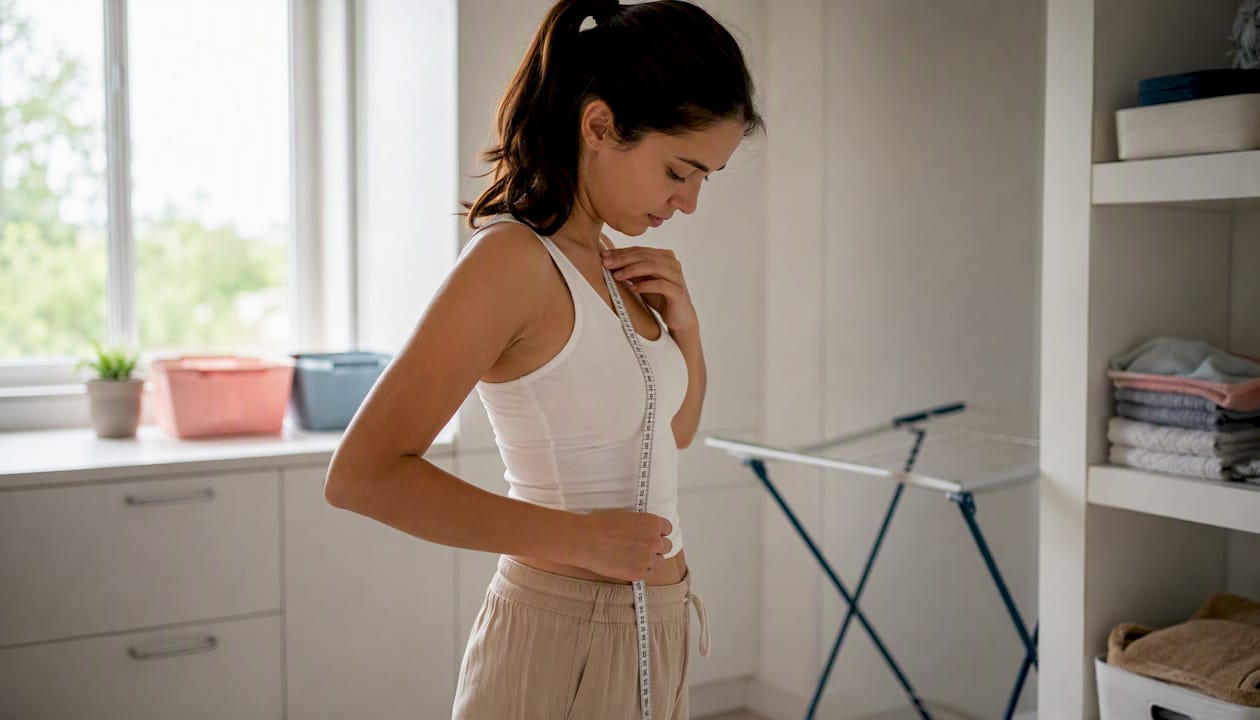
Your swimwear size comes down to five measurements: bust, underbust, waist, hips, and torso length. Get those numbers right, and every size chart becomes readable. Before you open a single product page, grab a soft measuring tape and check these off:
Bust: fullest part of your chest, tape parallel to the floor
Underbust: directly under your breasts, snug but not tight
Waist: narrowest point, usually an inch above your navel
Hips: fullest part of your seat and hips, roughly 7–9 inches below your waist
Torso/body loop: from your shoulder over your bust, through your crotch, and back up to the same shoulder
Three quick rules to keep in mind: size your bikini top and bottom separately, since most women wear different sizes for each half. For one-pieces, torso length is the measurement that matters most. When a chart puts you between two sizes, go with the size that fits your largest measurement.
Key Takeaways
Measuring bust, underbust, waist, hips, and torso length gives you everything you need to use any swimwear size chart accurately and size bikini tops, bottoms, and one-pieces independently.
Point Details Five core measurements Bust, underbust, waist, hips, and torso length cover every swimwear style. Size for your largest measurement When measurements span two sizes, always choose the larger size. Torso length rules one-pieces A body loop measurement prevents crotch pull and chest gaping in one-piece suits. Size tops and bottoms separately Most women wear different sizes for each bikini half; buy separates when possible. Clothme profiles remove brand variance A photo-based size profile on Clothme matches your measurements to specific brands, reducing returns.
Table of Contents
How to use a swimwear size guide to measure yourself accurately
How style affects your size: bikinis, one-pieces, tankinis, and more
Try-on checklist: quick fit tests for the dressing room or at home
The measurement-first approach is the only one that actually works
How to use a swimwear size guide to measure yourself accurately
Precise measurements are only useful if you take them correctly. Wear a thin, unlined bra or nothing at all, stand straight with your weight evenly distributed, and keep the tape snug but never pulled tight. A tape that digs in will read smaller than your actual size.
Seafolly’s size guide recommends measuring bust, underbust, waist, and hips as the four core points. Here is how to nail each one:
Bust: Wrap the tape around the fullest part of your chest. Keep it level across your back. Breathe normally and read the number at the end of a natural exhale.
Underbust: Slide the tape directly under your breasts. Pull it firm enough that it would stay in place on its own. This number is your band measurement.
Waist: Find the natural indent between your ribs and hip bones. Do not suck in.
High hip: About 3 inches below your waist, across the top of your hip bones. Useful for high-cut and Brazilian styles.
Low hip/fullest hip: 7–9 inches below your waist, around the widest point of your seat. This is the number most bottom charts use.
Torso/body loop: Start at the top of your shoulder, run the tape down over your bust, between your legs, and back up your spine to the starting point. Berunclothes notes that this measurement, along with high and low hip distinctions, is what separates a one-piece that pulls at the crotch from one that sits perfectly.
Take each measurement twice and use the larger reading if they differ. Fabric has no give for a measurement that is too small.
Pro Tip: For torso length, ask a friend to hold the tape at your shoulder while you thread it through. Solo, you can use a mirror and a piece of string first, then measure the string flat.
How do you read a swimwear sizing chart?
Most US brands publish charts in two formats: numeric sizes (0, 2, 4, 6, 8, 10, 12, 14) and letter sizes (XS, S, M, L, XL). The numbers below show a generic mapping used across many mainstream US brands, though you should always cross-check the specific chart on the product page you are buying from, since sizing varies by brand.
US Size Letter Bust (in) Waist (in) Hips (in) 2–4 XS 32 24 34 4–6 S 34 26 36 6–8 M 36 29 38 10–12 L 38 30 40 14 XL 40 32 43
For a quick example: if your bust is 36 inches, waist 29 inches, and hips 40 inches, your measurements span M and L. The rule is to size for your largest measurement, so you would pick L. For a bikini, that same person might wear M on top and L on the bottom, which is completely normal.
UK and EU sizes shift the numeric labels. A US 8 is roughly a UK 12 and an EU 38. If you shop international brands, a clothing size conversion chart will save you from guessing. Farnelli’s guide also flags that fabric composition changes how a size feels: a high-compression nylon/elastane blend will feel noticeably firmer than a standard polyester/spandex fabric at the same labeled size, so factor that in when you are close to a boundary.
When charts conflict, the Seafolly size guide advises choosing the size that accommodates your largest measurement. Never squeeze into a smaller size hoping the fabric will stretch to fit.
Cup sizing, band fit, and choosing the right swim top
Swim top sizing borrows from bra logic but does not follow it exactly. Your band size comes from your underbust measurement rounded to the nearest even number. Your cup size comes from the difference between your bust and underbust: a 1-inch difference is an A cup, 2 inches is B, 3 inches is C, 4 inches is D, and so on.
Many swim tops skip cup labeling entirely and use S/M/L, which works fine for A–C cups. If you are a D cup or above, bra-sized swim tops (sold as 32D, 34DD, etc.) give you a much more reliable fit because the cup is actually cut to your volume, not averaged across a letter size range.
Fit checks for tops:
Band level: the back of the band should sit level with the front, not ride up. If it pulls upward, the band is too loose or the cups are too small.
Strap pressure: straps should stay put when you roll your shoulders forward. If they slip, tighten them or try a racerback style.
Side spillage: no breast tissue should push out at the sides or underarm. This means the cup is too small.
Underwire placement: if the suit has underwire, it should sit flat against your ribcage, not on breast tissue. Underwire that pokes or floats is the wrong cup size.
For fuller busts, underwire swim tops, wide-set straps, and shelf bra construction distribute weight better than triangle tops. Halter ties can strain your neck over a long day at the beach. A bra-sized underwire top with a fixed back band is worth the extra search time.
How style affects your size: bikinis, one-pieces, tankinis, and more
Different cuts prioritize different measurements, and knowing which one matters for each style saves you from ordering the wrong size.
Bikini tops and bottoms are sized independently. Your top follows bust and underbust; your bottom follows your fullest hip measurement. Buying separates, when a brand offers them, is the cleanest solution. If you must buy a set, size for whichever half is harder to adjust.
One-pieces are where torso length becomes the deciding measurement. Farnelli’s sizing guide explains that a short torso in a standard-length suit will pull at the crotch and compress the bust, while a long torso in the same suit will gap at the chest and sag at the seat. Measure your body loop first, then check whether the brand lists torso length ranges for their sizes.
High-cut and cheeky/Brazilian cuts sit higher on the hip and cover less of the seat by design. They run true to your hip measurement but feel smaller because of the cut. If you are between sizes, go up. If coverage is a priority, size up regardless.
Tankinis and swim dresses add a length variable. The top half sizes like a bikini top, but the hem length is fixed, so check the brand’s length measurements if you are petite or tall. Swim dresses with skirt panels size primarily by waist and hip.
What to do when your measurements fall between sizes
The general rule: size to your largest measurement. A suit that is slightly loose at the waist is fixable; one that is too tight across the hips is not.
The exception is performance and training suits. Speedo’s size guide notes that competitive suits are cut to feel firm when dry and relax slightly once wet. For those, sizing down is intentional. For leisure suits, comfort in the dressing room is the right target.
Size up when you prioritize coverage, comfort, or plan to wear the suit for long stretches.
Size down for training suits, compression-fit styles, or when the suit has significant elastane content and you want a secure feel in the water.
At-home adjustments: side ties and adjustable straps can take up a half-size of slack. Removable cups can be swapped for a better-fitting insert. Elastic at the leg or waist can be tightened by a tailor for under $20 at most alterations shops.
If you ordered online and the fit is off, contact customer support before assuming you need a different size. Sometimes the issue is a specific measurement, not the whole size, and a brand rep can tell you whether their cut runs long or short in the torso.
Pro Tip: When shopping online, check the model’s listed measurements and the size she is wearing. If her proportions are close to yours, that is more useful than the size chart alone.
For fit issues that go beyond swimwear, the clothing fit issues guide on the Clothme blog covers quick fixes by garment type.
Sizing guidance for plus and cup-inclusive swimwear
Plus-size and extended-size charts use the same measurement logic but cover wider ranges and often include cup-inclusive options that account for larger bust-to-waist ratios. A standard size chart might top out at a 43-inch hip; extended charts continue through 50 inches and beyond, with proportional waist and bust adjustments.
Key priorities for plus-size fit:
Band stability: a wider underband on a swim top distributes weight and prevents the back from riding up. Look for at least 2 inches of band depth.
Cup-inclusive options: if your bust is a D cup or larger, look for brands that explicitly offer cup-inclusive sizing (e.g., 1X/D, 2X/DD) rather than standard plus sizes that assume a smaller cup relative to band.
Coverage and support: high-waist bottoms and longer-torso one-pieces are cut specifically for plus proportions and will fit more predictably than standard cuts sized up.
Separate top/bottom sizing: this matters even more at extended sizes. A 2X bottom and 1X top is a completely normal combination.
When confirming cup fit in extended sizes, the same pinch test applies: if you can pinch more than an inch of fabric at the cup, the cup is too large. If the fabric pulls or gaps, it is too small.
Try-on checklist: quick fit tests for the dressing room or at home
Run through these seven checks before you commit to a suit. Each one targets a specific fit problem.
Strap stability: pull both straps to their loosest setting, then tighten until the suit sits flat. If the straps are already at their tightest and the suit still sags, the torso is too long or the cups are too small.
Leg opening: slide two fingers inside the leg opening at the hip. Snug but passable means good fit. Tight enough to leave a mark means size up.
Arm rotation: raise both arms overhead. The suit should move with you, not pull down at the crotch or gap at the chest.
Bend and sit test: sit down and lean forward. The back should not gap, and the seat should not pull tight enough to feel restrictive.
Pinch test (top): pinch the fabric at the center of the cup. If you can grab more than an inch, the cup is too large. If the fabric is taut and pulls away from your body, it is too small.
Two-finger test (bottom): slide two fingers inside the waistband. They should fit comfortably. Too tight means size up; too much room means size down.
Wet test: Bikini Uni’s sizing guide recommends a wet test for any suit you plan to wear in water. Wet the suit briefly and check that it does not sag, become transparent, or lose its shape. Unlined suits and lighter fabrics are most likely to change behavior when wet.
For training and competitive suits, Speedo confirms that a firm, snug feel when dry is correct. Do not size up just because it feels tight on the hanger.
How personalized sizing tools reduce the guesswork
Even with perfect measurements, brand-to-brand variation means a size 8 at one label fits like a 10 at another. That inconsistency is where returns pile up. Clothme addresses it directly with a photo-based sizing profile: upload two photos, and the platform generates a precise size profile that accounts for your proportions across brands, including torso length and cup fit, the two measurements most size charts handle poorly.
Key features relevant to swimwear shopping:
Independent top/bottom sizing: Clothme supports separate size recommendations for swim tops and bottoms, so you are not forced into a set size.
Saved family profiles: parents can store profiles for each family member, which is useful when shopping kids’ swimwear alongside your own. The kids’ clothing size chart guide on the Clothme blog explains how those profiles work for younger shoppers.
Cross-brand recommendations: the platform matches your profile against participating brands and boutiques, so you see only products that fit your measurements, style preferences, and fabric choices.
Fewer returns: matching measurements to a specific brand’s cut before checkout is more reliable than relying on a generic chart. Personalized size data reduces the back-and-forth that comes with ordering multiple sizes and returning the ones that do not work.
The photo-based approach also captures proportional details that a tape measure alone can miss, like how your torso length distributes relative to your hip width, which directly affects one-piece fit.
The measurement-first approach is the only one that actually works
Every sizing shortcut, whether it is going by your usual dress size or trusting a brand’s generic fit model, breaks down the moment you cross brand lines or try a new cut. Swimwear is less forgiving than most clothing because there is no layering to compensate and no tailoring margin built into the seams.
The five measurements in this guide take about four minutes to take. They will not change much season to season, and once you have them written down, every size chart becomes a straightforward lookup rather than a guess. If you are shopping online and still feel uncertain after checking the chart, a sizing profile removes the last variable. Returns are always an option, but they cost time and, sometimes, a restocking fee.
Clothme makes accurate swimwear sizing faster
Measuring yourself is the foundation, and Clothme builds on it. Upload two photos to generate a size profile that covers your bust, underbust, waist, hips, and torso length, then shop a curated feed of swimwear from brands and boutiques that match your exact proportions. No more ordering two sizes and hoping one works.
Clothme supports separate sizing for swim tops and bottoms, saves profiles for every family member, and filters products by your style, color, and fabric preferences, making it easier to shop kids’ swimwear like the Pear-fect Swimsuit alongside your own. Your photos are used only to generate your size profile and are handled with standard data security practices.
Ready to stop guessing at size charts? Create your size profile on Clothme and shop swimwear sized to you from the first click.
Sources
These are the primary references used to build the recommendations in this guide. Each one is worth bookmarking for brand-specific chart lookups.
Size Guide | How to Measure your Swim & Resortwear | Seafolly US
Women’s Swimwear: The Ultimate Comprehensive Sizing Guide (All Types) | Farnelli
How To Choose The Right Swimwear Size: US Charts & Fitting Tips