What Does a Family Fashion Profile Contain?
A family fashion profile is a structured system that stores each household member’s clothing sizes, style preferences, seasonal wardrobe data, and usage history in one organized place. Parents and caregivers who understand what does a family fashion profile contain can coordinate outfits faster, shop with purpose, and cut down on returns caused by size mismatches. The profile works as a living document. It grows with your family, adjusts to changing sizes, and reflects each person’s individual taste while keeping the household’s overall look cohesive.
What does a family fashion profile contain?
A family fashion profile functions as a digital asset management system for household clothing, storing far more than just sizes. The core data fields fall into five categories, each serving a distinct purpose in daily wardrobe management.
Individual sizing data is the foundation. Each family member gets their own size record, including notes on how specific brands run large or small. This matters because clothing sizes vary significantly across brands, and a size 6 in one label can fit like a size 8 in another.
Item purpose classification organizes clothes by context:
Play and outdoor wear
School and everyday casual
Formal and special occasion
Sleepwear and loungewear
Seasonal tagging marks which items are available for summer, fall, winter, or spring. This prevents the frustrating moment of pulling out a jacket in october only to realize it no longer fits.
Color and fabric preferences capture each person’s palette and texture comfort. A child who hates scratchy fabrics needs that noted. A parent who gravitates toward navy and white needs that recorded too.
Usage frequency tracking shows which clothes get worn constantly and which hang untouched. Usage tracking distinguishes workhorses from underused items, which directly shapes smarter buying decisions.
Data Field What It Records Individual sizing Measurements and brand-specific size notes per person Item purpose Category tags: play, school, formal, casual Seasonal availability Which items are ready for each season Color and fabric Preferred palettes and texture sensitivities Usage frequency How often each item gets worn
How does a family fashion profile help coordinate style without matching outfits?
Coordination is not the same as matching. Expert stylists define coordination as a shared rhythm of color and texture, not everyone wearing the same shade of blue. This distinction is the most misunderstood concept in family fashion, and getting it right makes a real visual difference.
A well-built family style guide uses a defined color story of 2 to 4 complementary base colors with neutral tones like cream, sage, tan, dusty blue, oatmeal, and soft gray. These shades create visual harmony in photos and in daily life without forcing anyone into an outfit they dislike.
The profile’s “vibe” section is where individual personality lives. A family might share a relaxed, earthy palette but express it differently. One child wears linen shorts and a striped tee. Another wears joggers in the same tan tone. The parent wears a sage wrap dress. The colors connect. The personalities stay intact.
Accessories play a key role here too. A statement sneaker, a woven bag, or a bold hair clip lets each person add a personal touch within the shared palette. Allowing older children autonomy within the color guidelines, like incorporating a vintage tee or their favorite sneakers, increases cooperation and makes the whole process feel less like a mandate.
Pro Tip: Start with the most expressive family member’s outfit first, then build everyone else’s look around that palette. This prevents the “forced uniform” look that happens when you try to match from scratch.
What are the practical steps for creating a family fashion profile?
Building a profile from zero feels big. Breaking it into stages makes it manageable.
Choose one anchor outfit. Styling starts with an anchor piece that sets the color and texture foundation. Stylists often use the parent’s outfit as the anchor because it typically offers the most variety in cut, fabric, and movement. Once that outfit is set, every other family member’s look builds from it.
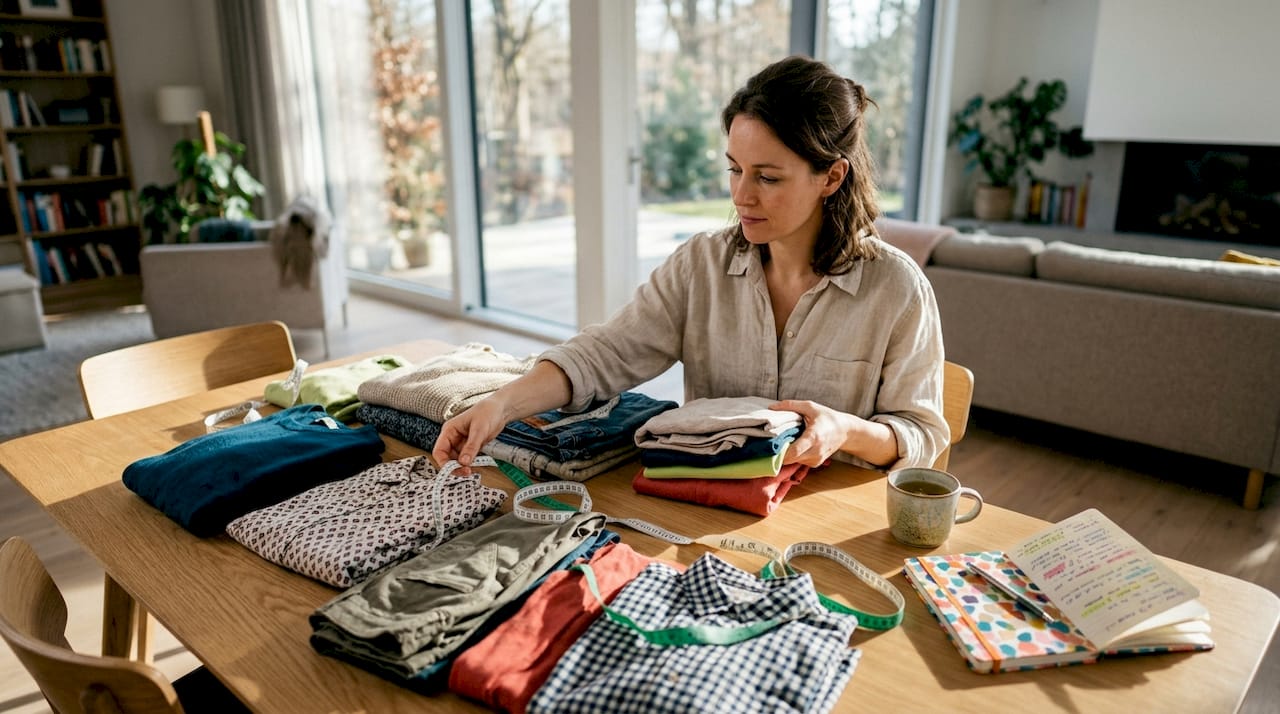
Catalog each person’s current wardrobe. Photograph clothes by category: play, school, formal, seasonal. This step converts a physical closet into a searchable record.
Apply tags to every item. Tiered data architecture with tags for family member, size, season, and purpose transforms static photos into a dynamic, searchable wardrobe. A tag system means you can pull up “daughter, size 7, winter, school” in seconds.
Record size notes per brand. Note whether a brand runs small, large, or true to size for each family member. This saves time on every future purchase.
Set a review schedule. Children’s sizes change fast. A quarterly review catches growth spurts before they create a wardrobe gap. Update the profile every season at minimum.
Give older kids a voice. Children who help shape their section of the profile are more likely to wear what’s in it. Let them flag favorites and mark items they’ve outgrown.
Pro Tip: When shopping for kids whose sizes keep changing, add a “buy next size up” note in the profile for fast-growing children. It prevents last-minute scrambles before school events.
How can a family fashion profile help parents shop smarter?
The profile’s biggest practical payoff is in shopping. Parents who know exactly what each family member owns, what fits, and what gets worn make far fewer impulse purchases. That awareness directly reduces closet clutter and unnecessary spending.
Tracking usage frequency reveals the true workhorses of each person’s wardrobe. When you know your son wears his gray joggers four times a week, you prioritize replacing those when they wear out. When you see a dress that has never been worn, you stop buying similar styles.
Shopping with a color story in mind also prevents the common mistake of buying pieces that don’t connect to anything already owned. If the family palette is built around cream, sage, and tan, every new purchase gets evaluated against that filter. Color, fabric, and fit all factor into whether a new item actually integrates into the existing wardrobe or just adds noise.
Budget management becomes cleaner too. The profile shows gaps clearly. Maybe the youngest needs a formal outfit for the holidays. Maybe the oldest has outgrown all winter layers. Those are targeted purchases with a clear purpose, not browsing sessions that end with a cart full of maybes.
Seasonal shopping benefits from the profile as well. Knowing which summer items still fit before the season starts means you shop for gaps, not guesses. Swimwear, for example, is highly seasonal, and buying it at the right time with accurate size data prevents the frustration of ordering the wrong size mid-summer.
Review the profile before every major shopping trip
Flag items that are worn out or nearly outgrown
Use the color story as a filter for every new purchase
Prioritize replacing high-frequency items first
Remove items that haven’t been worn in two seasons
Key Takeaways
A complete family fashion profile contains sizing data, item purpose tags, seasonal availability, color and fabric preferences, and usage tracking for every household member.
Point Details Core data fields Include sizing, item purpose, season tags, color palette, and usage frequency for each person. Coordination over matching Use 2 to 4 base colors and shared textures to create harmony without forcing identical outfits. Anchor piece method Start with one expressive outfit to build the whole family’s color and texture palette. Quarterly updates Review and refresh the profile each season to catch size changes before they create gaps. Shopping with purpose Use usage tracking and color story filters to eliminate impulse buys and redundant purchases.
Why I think most families are building their profiles backwards
Most parents I’ve seen approach family fashion coordination start with the children’s clothes and try to match the adults to whatever the kids already own. That approach almost always produces a look that feels forced, because children’s clothing lines have limited palette variety and even more limited fabric options.
The anchor piece method flips that logic. Start with the adult who has the most expressive wardrobe, build the color story from there, and let the children’s outfits follow. The result looks intentional rather than accidental.
The other mistake I see constantly is treating the profile as a one-time setup. Families build it once, never update it, and then wonder why it stops being useful after six months. Children grow. Tastes shift. A profile that isn’t reviewed quarterly becomes a record of who your family used to be, not who they are now.
The families who get the most value from a fashion profile are the ones who treat it like a living document. They update it after every shopping trip, flag items that are wearing out, and involve their kids in the process. That involvement is not just practical. It teaches children to think about clothing with intention rather than impulse, which is a skill that pays off for decades.
Invest the time upfront to build the profile properly. The payoff is fewer stressful mornings, fewer wasted purchases, and a wardrobe that actually works for everyone in the house.
— admin
How Clothme makes managing your family fashion profile easier
Clothme gives parents a direct way to build and maintain size profiles for every family member in one place. By uploading two photos, each person gets a size profile that reflects their actual measurements, not a generic size chart that varies by brand.
Clothme stores individual profiles for each household member, so parents can shop for a child, a partner, or themselves without switching between apps or guessing at sizes. The platform filters products to match each person’s size, color preferences, and fabric choices, which means every item shown is already a realistic fit. For families who want to manage wardrobe coordination without the back-and-forth of returns and exchanges, Clothme removes the friction from the process entirely.
FAQ
What is a family fashion profile?
A family fashion profile is a structured record of each household member’s clothing sizes, style preferences, seasonal wardrobe items, and usage data. It functions as a digital management system for coordinating family outfits and shopping decisions.
What information should I include in a family fashion profile?
A complete profile includes individual sizing with brand-specific notes, item purpose categories, seasonal availability tags, color and fabric preferences, and usage frequency data for each family member.
How often should I update a family fashion profile?
Update the profile at least once per season, or quarterly. Children’s sizes change quickly, and a seasonal review catches growth before it creates wardrobe gaps.
Does a family fashion profile require everyone to dress the same?
No. Effective family style coordination uses a shared color palette of 2 to 4 base colors and complementary textures, not identical outfits. Each person expresses their own style within that shared framework.
Can older children have input in the family fashion profile?
Yes, and they should. Giving older children autonomy within the profile’s color and style guidelines increases their cooperation and helps them feel comfortable in what they wear.