Why Family Fashion Coordination Reduces Waste
Why coordinating family fashion cuts clothing waste
Family fashion coordination reduces clothing waste by pushing families toward intentional, durable purchases instead of reactive, disposable ones. When you plan outfits around a shared color story or fabric, every piece has to earn its place in the closet. That single shift changes how your family shops, how long clothes last, and how much ends up in a landfill.
The core mechanisms are straightforward:
Choosing durable fabrics like organic cotton and recycled fibers means garments survive multiple children, not just one season.
Coordinated wardrobes eliminate redundant purchases because each item must work with what the family already owns.
Fewer impulse buys means fewer rarely worn pieces collecting dust before they’re discarded.
Versatile, unbranded basics pass easily between siblings, extending the life of each garment without any extra effort.
Mindful coordination keeps the total clothing volume low, which directly shrinks the household’s textile footprint.
The result is a wardrobe that works harder, lasts longer, and generates far less waste than the average American family closet.
How coordinated family fashion fights textile waste
A family capsule wardrobe built around versatile pieces reduces total clothing volume and carbon footprint by ensuring each item gets worn frequently and for longer. When every garment coordinates with three or four others, you stop buying things that only work with one outfit. That discipline alone cuts the pile of barely worn clothes that most families accumulate.
Material choice amplifies the effect. Organic cotton production reduces water consumption by up to 91% versus conventional cotton and eliminates pesticide runoff, protecting ecosystems. Recycled fibers divert plastic and textile scraps from landfills before they ever become new clothing. Building a coordinated wardrobe around these materials means the environmental benefit compounds: fewer garments, made better, lasting longer.
Plastic-free and minimal packaging from eco-conscious brands adds another layer. Children who watch parents choose packaging-conscious brands absorb the logic early, which shapes their own consumption habits for years.
Wardrobe type Avg. items per person Garment wear frequency Estimated waste contribution Typical uncoordinated High Low (many rarely worn) High (clutter, impulse buys) Coordinated capsule Low High (every piece works together) Low (intentional, durable choices)
Environmental benefits from a sustainable, coordinated family wardrobe include:
Less clothing discarded, meaning less landfill contribution from the household
Lower production demand as families buy fewer, better pieces
Reduced water and energy use tied to organic and recycled fabric choices
Smaller carbon footprint from fewer purchases and longer garment lifespans
Less packaging waste when families prioritize brands that ship responsibly
How coordination strengthens family bonds and shapes sustainable habits
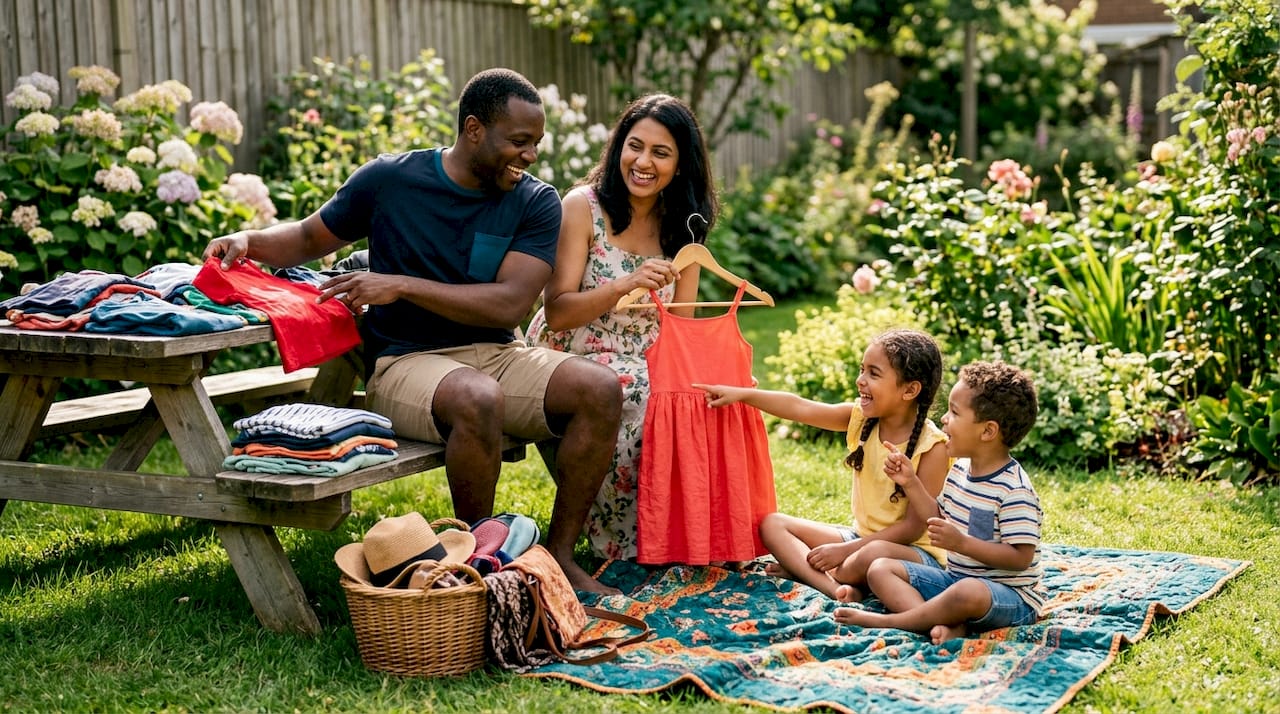
Coordinated dressing does something that purely individual fashion choices cannot: it creates a shared ritual. Coordinated family style releases oxytocin, the bonding hormone, which strengthens family identity and reduces anxiety, particularly in young children who look to visual cues for emotional security. Getting dressed becomes a small act of belonging rather than a chore.
Children gain real confidence from feeling included in the family “team.” When a child sees themselves wearing the same colors as a parent, it signals protection and connection in a way words alone don’t. That sense of security carries into group settings like school or family gatherings, where kids feel anchored rather than anxious.
Statistic callout: Research links coordinated visual cues between family members to improved emotional connection and stronger child confidence, with oxytocin release identified as the physiological mechanism behind the bonding effect.
The sustainability payoff from these rituals is lasting. Families that build coordination habits around clothing naturally extend that mindfulness to other consumption decisions. Children who grow up choosing quality over quantity, and who watch parents pass garments to younger siblings rather than discarding them, internalize those values before they ever shop independently.
Social and psychological benefits of coordinated family dressing:
Oxytocin release strengthens emotional bonds and reduces child anxiety
Children feel included and secure, boosting confidence in social settings
Family communication improves through the collaborative process of choosing outfits
Shared rituals around clothing create lasting memories and reinforce family identity
Dopamine dressing effects from harmonious colors lift collective mood during outings
Sustainability values transfer naturally from parents to children through visible daily habits
Pro Tip: Use the outfit coordination process itself as a teaching moment. Ask kids to help choose which pieces can be handed down to a younger sibling, and explain why that choice matters. The conversation sticks far longer than any lecture about the environment.
Practical ways to build a coordinated family wardrobe that reduces waste
The anchor element strategy is the most practical starting point: pick one feature, a color, a print, or a fabric, and build every family member’s outfit outward from it. This avoids the “costume” trap of identical matching while keeping the group visually unified. It also means existing wardrobe pieces get used rather than replaced.
A three-color palette keeps things cohesive without uniformity. Choose a base neutral, a main color, and one accent. Assign roles: one person wears the main color prominently, others use it as a small pop, and everyone leans on the neutral. The result looks considered without requiring anyone to buy something new.
Pro Tip: When shopping for coordinated basics, look for versatile vacation pieces that work across multiple occasions. A linen shirt in a family’s main color can go from a beach day to a family dinner without a second purchase.
Practical steps for building a waste-reducing coordinated wardrobe:
Start with one anchor element rather than buying a full matching set from scratch
Choose high-quality, durable pieces in organic cotton or recycled fibers that survive multiple children
Buy unbranded basics that serve multiple purposes and transfer easily between siblings
Encourage hand-me-downs by selecting gender-neutral styles and classic cuts that age well
Evaluate every potential purchase against what the family already owns before buying
Shop for kids with sizing flexibility in mind, choosing pieces with room to grow so they last longer
Donate outgrown items promptly rather than storing them until they’re no longer usable
The fashion industry’s waste problem and what family coordination actually fixes
Fashion produces 92 million tons of textile waste annually, with 73% ending up landfilled or incinerated and less than 1% truly recycled. Those numbers reflect an industry built on volume: fast production cycles, trend-driven purchasing, and garments designed to be replaced rather than repaired. Uncoordinated wardrobes feed directly into that system, because without a plan, most families buy reactively and discard frequently.
Statistic callout: 92 million tons of textile waste are generated by the fashion industry each year, with 73% landfilled or incinerated and less than 1% recycled.
Coordinated family fashion interrupts that cycle at the household level. When every purchase must integrate with an existing wardrobe, impulse buying drops sharply. Capsule wardrobes cut impulse buying by requiring each new item to fill a genuine need compatible with what the family already owns. That discipline reduces the pile of unworn clothes that most closets accumulate and eventually discard.
The production demand argument matters too. Fewer purchases from more families sends a signal up the supply chain. Less demand for fast, disposable fashion means less resource-intensive production, less water consumed, and fewer synthetic fibers entering waterways as microplastics.
How family coordination addresses the industry’s waste problem:
Slower consumption cycles replace trend-driven impulse buying
Each purchase is evaluated against existing coordinated pieces, eliminating redundancy
Durable, versatile garments replace single-use fashion designed for one occasion
Hand-me-down culture extends garment life across siblings, reducing per-child clothing volume
Choosing sustainable swimwear capsules and similar category-specific basics builds a wardrobe that resists disposable trends
Lower household demand, multiplied across families, meaningfully reduces production pressure
What the evidence shows about coordination and waste reduction
The shift from identical matching to coordinated, complementary dressing reflects a measurable cultural move toward mindful consumption. Families that adopt this approach report simplified morning routines, fewer laundry loads, and less closet clutter. Those aren’t just convenience wins. Fewer laundry loads mean less water and energy use. Less clutter means fewer forgotten garments that get discarded unworn.
The family capsule wardrobe model demonstrates the behavioral mechanism clearly. A well-defined capsule forces every potential purchase through a compatibility filter: does this work with what we already own? That single question eliminates the category of clothing most likely to become waste, the impulse buy that seemed right in the store and never gets worn at home.
Organic cotton’s documented environmental advantages reinforce the material side of the argument. Organic cotton production reduces water consumption by up to 91% versus conventional cotton, making fabric selection a real sustainability decision rather than a marketing claim. When coordinated family wardrobes are built on these materials, the environmental benefit is real and traceable.
The holiday shopping patterns of families who coordinate also show a preference for quality over volume, fewer pieces bought more deliberately, with longer intended lifespans. That behavioral pattern, documented across coordinated family shoppers, is exactly what the textile industry’s waste problem requires at scale.
Key Takeaways
Family fashion coordination reduces clothing waste by combining intentional purchasing, durable materials like organic cotton and recycled fibers, and garment-sharing habits that extend the life of every piece across the whole family.
Point Details Coordination cuts impulse buying Every purchase must fit existing coordinated pieces, eliminating redundant or rarely worn garments. Material choice multiplies the benefit Organic cotton reduces water use by up to 91% versus conventional cotton, making fabric selection a real sustainability decision. Fashion waste scale is severe The industry generates 92 million tons of textile waste annually, with 73% landfilled or incinerated. Oxytocin links bonding to behavior Coordinated dressing releases oxytocin, strengthening family identity and reinforcing sustainable consumption habits in children. Anchor element strategy reduces purchases Starting with one shared color, print, or fabric unifies outfits without requiring new identical items for every family member.
Shop smarter for your whole family with Clothme
Coordinating a family wardrobe is easier when sizing is never the obstacle. Clothme lets you upload two photos to generate precise size profiles for every family member, so you shop for coordinated pieces with confidence and skip the returns that generate extra packaging waste. Save profiles for each child, filter by color and fabric, and build a wardrobe that actually works together. Less guesswork, fewer returns, and a closet full of clothes your family will actually wear.