Pack, Work, Travel: Wrinkle Resistant Fabrics That Recover in Minutes
Polyester, nylon, merino wool, lyocell, and heavy double-knits like ponte resist wrinkles best, either because their fibers hold a heat-set memory or because a durable-press finish locks cotton’s structure in place. Synthetics bounce back on their own; treated cotton needs chemistry to do the same job. Even the best of these fabrics can use a five-minute steam session after a long haul in a suitcase.
TL;DR:Polyester and nylon fabrics with heat-setting finishes recover from creases better than untreated natural fibers, especially after long travel or storage.
Chemical treatments like durable-press finishes are necessary for cotton and linen to resist wrinkles, but their effectiveness diminishes after multiple washes.
Heavier weaves such as twill and dense knits like ponte mechanically resist creasing without chemical help, ideal for casual and travel wear.
Proper care, including gentle washing, prompt hanging, and steaming, significantly extends the wrinkle resistance of treated fabrics.
Blended fabrics are more reliable than pure natural fibers for maintaining a wrinkle-free appearance over time.
Table of Contents
Best Wrinkle Resistant Fabrics for Travel, Work, and Everyday Wear
Caring for Wrinkle Resistant Fabrics: Washing, Steaming, and Packing
Best Wrinkle Resistant Fabrics for Travel, Work, and Everyday Wear
Fiber content decides most of the outcome before a garment even reaches the sewing machine. Some fibers simply refuse to hold a crease. Others need help from a finishing plant. Here’s how the major players stack up.
Polyester and polyester blends lead the pack for a simple reason: heat-setting during manufacturing gives the fiber a “memory” of its flat, smooth shape, so when it bends or crumples, it snaps back once the pressure is gone. This is why dress shirts, travel pants, and blazers with even 20 to 30 percent polyester content shrug off a day of sitting in a car or a suitcase.
Nylon and technical polyamides take that same thermoplastic advantage a step further, with better recovery under stress, which is why packable rain jackets and travel blazers lean on it.
Lyocell (often sold as Tencel) and modern viscose variants give you a fabric that drapes like a natural fiber but resists creasing far better than plain rayon or untreated cotton, making it a favorite for flowy blouses and dresses that still need to survive a flight.
Merino wool has a natural crimp in its fiber structure that lets it flex and recover, which is why wool trousers and travel blazers have quietly been a business traveler’s secret for decades.
Ponte and other heavy double-knits skip chemistry altogether. The dense, weighty construction mechanically resists creasing, which is why ponte pants and knit blazers stay smooth without any finish at all.
Treated cotton, or “non-iron” cotton, gets its performance from a chemical finish rather than the fiber itself, and that finish behaves differently over time than a synthetic’s built-in memory.
Quick picks by use case:
Travel: polyester blends, ponte knits, lyocell
Office: merino wool trousers, treated cotton dress shirts
Casual wear: cotton/spandex blends, nylon technical wear
How Wrinkle Resistance Is Actually Made
There are only two real paths to a wrinkle-resistant garment, and understanding the difference changes how you shop.
The first path is fiber chemistry. Synthetic fibers like polyester and nylon are thermoplastic, meaning they soften under heat and can be permanently reshaped, then locked into that shape when they cool. Manufacturers heat-set the fiber flat during production, and that flatness becomes the fiber’s resting state. Crumple it, and it wants to return to flat.
Cotton and linen don’t have that option. Cellulose fibers absorb moisture and bend easily, which is exactly what causes creasing. So the second path is chemical: a durable-press finish applies crosslinking resins that bond the cellulose chains together, restricting how much the fabric can fold. For decades, the industry standard was DMDHEU, a formaldehyde-releasing agent that worked well but raised health and durability concerns, including some strength loss and yellowing when poorly cured. Newer formulations, including Cotton Incorporated’s PUREPRESS™ finish, deliver similar crease resistance without formaldehyde, and broader crosslinking research points to more of these safer, multifunctional finishes reaching the market.
Weave and weight matter just as much as fiber choice. Twill and sateen weaves distribute stress across more contact points than a plain weave, so they resist visible creasing better. Knits, especially heavier ones measured by grams per square meter (GSM), rely on structural weight to resist folding in the first place.
One distinction worth remembering: “wrinkle-resistant” means fewer, shallower creases that often smooth out on their own. “Wrinkle-free” is closer to a marketing term, and even the best-finished garments benefit from occasional steam.
How to Choose the Right Low-Wrinkle Fabric for Your Needs
Start with how you’ll actually use the garment, not just how it looks on a hanger. A blazer that lives in a suitcase needs different priorities than a shirt that lives in an office closet.
Identify your primary use case. Travel calls for weight and drape that survive folding; office wear can lean on treated cotton if you’re near an iron; activewear needs stretch recovery more than crease resistance.
Check the fiber content on the label, not just the marketing copy. A shirt labeled “wrinkle-free” with 100 percent cotton is relying entirely on a finish, while a cotton/poly blend gets help from both fiber and chemistry.
Look for specific terms like “non-iron” or “permanent press,” and read the care instructions rather than trusting the hangtag’s tone.
Ask about finish longevity on higher-end pieces. Durable-press finishes fade with repeated washing, and the longevity of the finish varies by brand.
Favor blends or structured knits when you want comfort without babysitting the garment. Even adding some spandex improves crease recovery in everyday cotton pieces.
Pro Tip: If a product page doesn’t list fiber percentages, treat every wrinkle-resistant claim as unverified. Brands that back their claims almost always print the exact blend.
Caring for Wrinkle Resistant Fabrics: Washing, Steaming, and Packing
Care habits matter almost as much as fiber choice, especially for treated cotton, since a rough wash cycle can wear down a durable-press finish faster than normal use would.
Use the permanent-press cycle on your washer, which uses a cooler wash and a slower spin to reduce the mechanical stress that sets creases.
Pull garments out of the dryer while still slightly warm, and hang them immediately. Wrinkles set as fabric cools, so a five-minute delay matters.
For synthetics and wool, a handheld steamer or even hanging the garment in a steamy bathroom for ten minutes will relax most creases.
Save the iron for treated cotton, and use low heat to avoid degrading the finish over repeated touch-ups.
Keep a small wrinkle-release spray in your travel bag for quick fixes between wears.
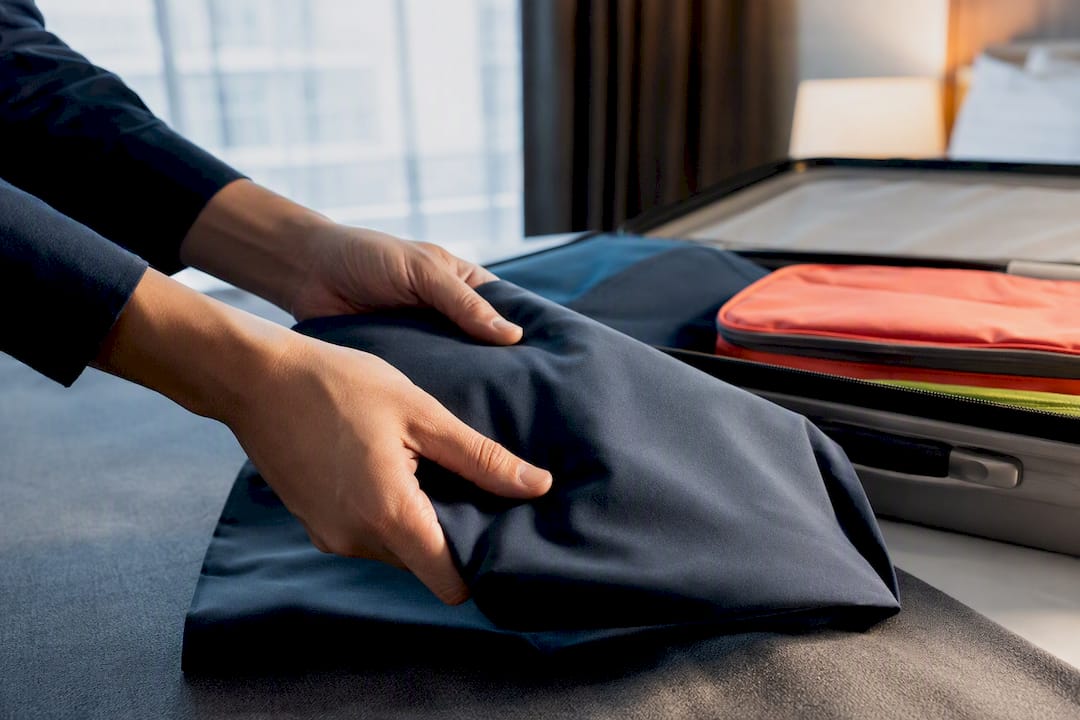
Packing technique changes outcomes almost as much as fabric choice. Roll knits and synthetics; fold structured items like blazers along their natural seams and place them on top of the pile. A garment bag helps for anything with tailoring, and fabrics like ponte, merino, and lyocell tend to recover within minutes of unpacking, which is exactly why frequent travelers gravitate toward them.
Pro Tip: A damp washcloth tossed in the dryer with a wrinkled garment for ten minutes works almost as well as a steamer for one or two stubborn pieces. For printed or graphic garments specifically, gentler wash routines also help preserve the design alongside the fabric’s shape.
The Sustainability Trade-Offs Behind Low-Wrinkle Fabrics
Every low-wrinkle fabric carries a cost somewhere, and it’s worth knowing what you’re trading for convenience. Synthetic-heavy blends resist wrinkles beautifully, but blending polyester into cotton makes the finished garment harder to recycle. Most textile recycling streams separate fibers by type, and a 60/40 cotton-poly shirt often ends up in the landfill stream instead of either recycling path.
Chemical finishes carry a different trade-off. Older DMDHEU-based treatments could release formaldehyde and weaken fabric over time, but the newer generation of finishes, PUREPRESS™ among them, addresses both problems by using formaldehyde-free crosslinking chemistry. That’s a real step forward, not just a marketing refresh.
The best move for your footprint and your wallet is the same: follow the care label, avoid over-washing, and repair small issues like loose seams instead of replacing the whole garment. A wrinkle-resistant piece that lasts five years beats a landfill-bound one that lasted eighteen months, regardless of what fiber it started with.
Finding Wrinkle Resistant Clothes That Actually Fit
Fabric performance means nothing if the garment doesn’t fit right in the first place, and that’s the gap ClothME was built to close. Upload two photos, generate a size profile, and filter results by fabric and care preferences so you’re not guessing whether that “wrinkle-resistant” blazer will actually hold its shape on your frame. Families can save profiles for kids too, which matters when shopping for a whole household ahead of a trip means fewer returns and fewer wrinkled surprises at the hotel.
What to Actually Expect From “Wrinkle-Free” Claims
A polyester travel shirt pulled from a packed suitcase usually looks presentable within minutes of hanging. Ponte pants worn through a full workday tend to stay smooth without a single touch-up. But finishes fade and fibers relax with age, so keep a small steamer or a wrinkle-release spray within reach even for your best low-wrinkle pieces.
Most of the marketing around “no-iron” fabric oversells the permanence of the effect. What’s true is that the gap between a wrinkle-resistant garment and a wrinkle-prone one is real and measurable, not marketing fluff, and it shows up the moment you pull something out of a bag after eight hours of travel. What’s not true is that any of these fabrics are maintenance-free forever. Durable-press finishes lose effectiveness over dozens of washes, and even the best synthetic fiber can develop set creases if it sits crumpled for weeks. Buy for the fiber and construction first, then treat any “wrinkle-free” label as a helpful bonus rather than a permanent guarantee.
— admin
Skip the Fitting Room Guesswork With ClothME
The platform helps users avoid purchasing clothing that doesn’t fit well by creating size profiles from actual measurements rather than standard size charts. Users upload two photos and set fabric and care preferences to browse clothing options that align with their fit and maintenance needs.
Users can save size profiles for their children, streamlining the process of shopping for a family trip and reducing returns. If you’re planning travel wardrobe shopping or just tired of ironing shirts that promised they didn’t need it, create your ClothME profile and start browsing curated, low-wrinkle selections built around how you actually dress.
Sources
Cotton Incorporated introduces PUREPRESS™ technology to keep cotton garments wrinkle-free
Review of recent advances in textile crosslinking agents and durable press finishes
The 11 best wrinkle-resistant travel clothes, tested and reviewed