Two Photos End Fit Guesswork: A Dress Size Guide to Accuracy Across Brands
Measure your bust, waist, and hips, then match your largest measurement to the brand’s body-measurement chart. That gives you your starting dress size. From there, adjust for stretch (a jersey wrap dress forgives an inch or two; a structured satin sheath does not) and for silhouette, then tailor the leftover gap. Do those four things in order and you’ll stop guessing.
TL;DR:Most brand size charts are based on body measurements, so always compare your largest measurement to the specific brand’s chart for accuracy.
When between sizes, prioritize the measurement most relevant to the dress style, such as hips for fitted skirts or bust for corset tops, and consider sizing up if fabric has little stretch.
Fabric content and silhouette greatly influence fit, with stretch fabrics allowing smaller sizes and structured styles often requiring size increases for comfort.
Using your own measurements over a thin layer and checking brand-specific charts ensures better fit than relying solely on generic converters or letter sizes.
Building a personalized size profile with photo-based sizing can minimize cross-brand guesswork and reduce fit-related returns in the shopping process.
Clothme
Find Your Fit Across Brands
ClothME uses two photos to create a personalized size profile, helping you find clothing matched to your body shape and preferences.
Find your personalized sizes
Table of Contents
How Do You Read a Size Chart and Convert Between US, UK, and EU?
How Should Petite, Tall, and Plus Sizes Approach This Differently?
How Do You Measure Yourself for a Dress Size Guide?
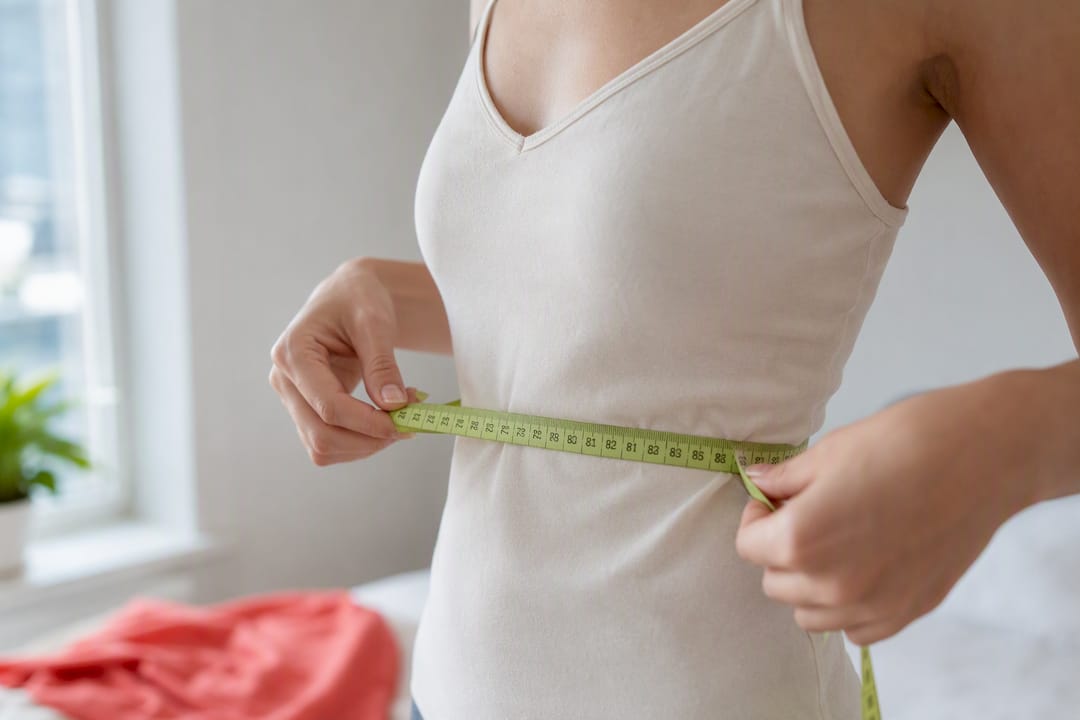
You need three numbers, and you can get all of them in about five minutes with a soft tape measure, a mirror, and well-fitted underwear (no push-up bras, no compression shapewear, nothing that distorts your natural shape). Measure in inches or centimeters, whichever your target size chart uses, so you’re not doing mental math while you shop.
Here’s the sequence that matches how most brand charts are built:
Bust: Wrap the tape around the fullest part of your chest, keeping it level and parallel to the floor. Don’t pull it tight. It should sit against your skin the way a well-fitted bra band does.
Waist: Find your natural waist using the “teapot bend” trick. Tip sideways like you’re pouring water from your hip, and the crease that forms is your natural waistline. Measure there, not at your belly button.
Hips: Stand with feet together and measure around the fullest part of your hips and rear, usually 7 to 9 inches below your natural waist.
Measure each spot twice. If the numbers differ, average them.
Measuring alone works fine if you stand sideways to a full length mirror and check that the tape stays level, or brace one end against a wall for a straight reference line. If you’re shopping for a petite or tall-labeled style, add a fourth number: torso length from the top of your shoulder to your natural waist, plus your preferred hem length. Those two measurements matter more for dress length than bust or hip width ever will. This basic method lines up with what Primark’s own sizing instructions and most other retailer guides recommend, and consistent technique is what actually makes a bust waist hip measurement useful across different stores.
Pro Tip: Measure over a thin layer, like a cotton camisole, rather than bare skin. It gets you closer to how the dress will actually sit, and it keeps the tape from slipping.
How Do You Read a Size Chart and Convert Between US, UK, and EU?
The first thing to check on any chart isn’t the numbers. It’s the label above them. Some charts list body measurements (your actual bust, waist, and hip size), while others list garment measurements (the finished dimensions of the dress itself, which usually run a couple of inches larger to allow for ease). ASOS spells this distinction out directly on its size pages, and mixing the two up is one of the fastest ways to order the wrong size.
Once you know which type you’re reading, conversion gets more predictable. Rough rules that hold up across most Western brands:
US size + 4 ≈ UK/AU size (a US 8 lands around a UK 12)
US size + 32 ≈ EU size (a US 8 lands around an EU 40)
These are starting points, not guarantees. Fit guides note these conversions vary by brand because every manufacturer grades its own patterns differently.
An Omni Calculator breakdown of dress sizing makes the same point from a different angle: converters translate bust, waist, and hip numbers into a size, but the output is always an approximation, since two brands labeled “size 8” can differ by a full inch or more in the finished garment.
Letter sizes complicate things further. An “M” at one retailer might cover a 27 to 29 inch waist, while another’s “M” spans 28 to 31 inches. Never buy a letter size on faith. Look up what numeric range that letter actually represents on the specific brand’s chart, then compare it to your own measurements. If a generic converter and the brand’s own chart disagree, trust the brand chart. It reflects the pattern that garment was actually cut from, while sizing differences between brands come down to grading choices no universal converter can account for.
Does Fabric or Silhouette Change Which Size You Should Buy?
Two dresses with identical size labels can fit completely differently depending on what they’re made of and how they’re cut. A four way stretch jersey has built-in give, so you can often size down or stay true to size even if your measurement sits right at the chart’s upper edge. A rigid cotton poplin or satin has none of that forgiveness, so you generally want to size up if you’re between two numbers.
Silhouette changes the calculation again:
Bodycon dresses: Prioritize hips and bust over waist. These styles cling, so the widest points dictate the fit.
A-line dresses: Prioritize bust and waist. The flared skirt hides hip discrepancies, which makes this the most forgiving shape for in-between measurements.
Corset or structured bodices: Size up if you’re uncertain. Boning and internal structure leave almost no stretch, and fit guides consistently flag these styles as needing extra room compared to unstructured cuts.
Before you buy, check the product page for lining, boning, and fabric composition percentages. A dress marked “95% cotton, 5% spandex” behaves nothing like one marked “100% polyester.” Model sizing notes (“model is 5’9” wearing a size 4") give you a real-world anchor too.
What Do You Do When You’re Between Two Sizes?
Start with the measurement that matters most for that silhouette (hips for a fitted skirt, bust for a corset top) and let that number drive your decision. If the two sizes are close and the fabric has zero stretch, size up. A dress that’s slightly loose is nearly always easier to fix than one that won’t zip.
Check the return policy first. If returns are free and easy, order both sizes, try them on at home, and send back the one that doesn’t work.
If returns are limited, size strategically. Go with the size that fits your largest relevant measurement and plan to alter the rest. Sizing to the larger measurement and adjusting smaller areas is the standard advice across most fit guides, including size calculators built specifically for this problem.
Budget for simple tailoring. A basic hem typically runs $15 to $30. Taking in a waist seam runs $20 to $40 depending on the fabric and lining. Both are quick fixes for a local tailor.
Skip tailoring on complex structured pieces like fully boned corsetry or heavily beaded gowns, where alterations get expensive fast and risk damaging the construction.
Pro Tip: Before you rely on a size chart alone, scan customer reviews for phrases like “runs small” or “true to size” and check any fit photos shoppers have posted. Real bodies tell you more than a spec sheet.
How ClothMe’s Photo-Based Sizing Cuts Cross-Brand Guesswork
Every brand grades its patterns differently, which is exactly why the same body can wear a size 6 at one store and a size 10 at another. Clothme tackles that problem at the source: upload two photos, and the platform builds a personalized size profile instead of asking you to reread a chart every time you shop a new label.
That approach solves a specific pain point beyond just accuracy. A persistent, photo-based size profile means you’re not re-measuring for every single brand, which is where most sizing mistakes and return requests originate in the first place.
One profile generates size recommendations across participating brands and boutiques.
Profiles can save size information for multiple individuals, reducing the need to re-measure every shopping trip.
Product feeds filter by style, color, and fabric preference, on top of fit.
The measuring steps in this guide still matter. They’re what make the initial photo-based profile more accurate from the start.
How Should Petite, Tall, and Plus Sizes Approach This Differently?
Standard size charts assume an average torso length and average hip-to-waist ratio, and that assumption breaks down fast for anyone at either end of the height range or with a fuller figure. The fix isn’t a different bust or waist number. It’s different proportions.
Petite lines (typically for those 5’3" and under) shorten the torso and adjust hem placement, not chest or hip width. If you’re petite and only check bust, waist, and hip numbers, you can land on the “right” size and still end up with sleeves that hang past your wrists or a bodice that bunches at the waist. Petite-specific charts factor in torso length and shoulder-to-waist distance precisely because those measurements move independently of your other proportions.
Tall lines work the same way in reverse: longer torso allowance, longer sleeve length, hemlines cut to sit correctly on a taller frame rather than just adding fabric evenly.
Plus-size charts (often starting around US 14 or 16 depending on the brand) aren’t just “the same chart scaled up.” Waist-to-hip ratios shift at different sizes, so a plus-size pattern is frequently regraded with different proportional spacing between bust, waist, and hip, not a flat percentage increase. Extended sizing for specific life stages, like maternity, follows a similar logic. Guides built around plus-size maternity fit walk through how those proportions shift stage by stage, which is worth a look if you’re shopping outside a brand’s standard size run.
What Are the Most Common Dress Sizing Mistakes?
The single biggest mistake is measuring over bulky clothing or a padded bra, which can add a full inch to your bust number and push you into the wrong size before you’ve even opened a size chart. Take your measurements over a thin layer or well-fitted basics, every time.
The second mistake is trusting a letter size without checking the numeric range behind it. “Medium” is not a universal standard. It’s a label a brand assigns to whatever numeric range it wants, and those ranges shift constantly between retailers.
Third: relying on a generic size converter instead of the retailer’s own chart. Converters are genuinely useful for a rough cross-brand estimate, but they’re explicitly built as approximations, not brand-accurate lookups. When a specific brand publishes its own measurements, that chart always wins.
Fourth: ignoring fabric content. Buying a rigid, non-stretch dress in your “usual” size without checking the material is how a lot of returns happen, especially with structured or lined pieces.
Fifth: measuring once and calling it done. A single pass can be off by half an inch from tension or posture. Measure twice, average the results, and you’ll land on a size chart position with real confidence instead of a coin flip.
Authority Charts and Converters Worth Checking
A few tools cover most of what you’ll need beyond your own measurements:
Brand body charts (like ASOS’s size guide) for the most accurate, brand-specific numbers.
Dress size calculators (Omni Calculator’s tool or a dedicated dress size calculator) for quick US/UK/EU conversion estimates.
General conversion charts (Clothme’s clothing size conversion guide) when you’re comparing several brands at once.
Use the brand’s own chart as your primary source, and treat converters as a cross-check, not the final word.
What This Guide Gets Right That Most Sizing Advice Misses
Most sizing content treats measuring and chart reading as separate problems. They aren’t. A perfect measurement paired with a misread chart still produces the wrong dress, and a rough measurement matched carefully against the right chart type often outperforms a “precise” number applied carelessly.
The conventional advice oversells conversion formulas. Adding 4 or 32 to get a UK or EU size is a fine starting estimate, but treating it as gospel ignores how differently brands grade their patterns. The chart label (body versus garment measurement) matters more than any converter, and that detail gets buried in most generic guides.
What should come first, if you only do one thing: measure carefully once, using the teapot bend and level tape, then find the specific brand’s own chart before you touch a converter. Everything else (silhouette adjustments, fabric ease, tailoring budgets) is refinement on top of that foundation. Skip the foundation and the refinements won’t save you.
Tools that carry a persistent size profile across brands can help address the repeat-measurement problem. That’s less about convenience and more about consistency: the same body measured the same way, checked against every chart the same way.
— admin
Sources
FAQ
How Do I Know My Dress Size?
Measure your bust, waist, and hips, then compare those numbers to the specific brand’s body-measurement chart, using your largest relevant measurement as your starting point.
How Do I Determine My Dress Size if I’m Between Two Sizes?
Size up when the fabric has little stretch or the silhouette is structured, and prioritize whichever measurement matters most for that dress style, such as hips for a fitted skirt.
Is a US Size 8 a Medium or a Large?
It depends entirely on the brand. A US 8 often falls in the medium range at many retailers, but some brands classify it as a small or a large, so always check that specific retailer’s numeric range rather than assuming.
Is a Size 10 Woman a Medium or a Large?
Again, it varies by brand: a US 10 sits at the upper edge of medium for some retailers and the start of large for others, which is exactly why matching your actual measurements to the chart beats relying on the letter alone.
Should I Trust a Universal Size Converter Over a Brand’s Own Chart?
No. Converters give useful rough estimates for comparing across brands, but a brand’s own body chart reflects the actual pattern that garment was cut from and should always take priority.