Stop Losing 2 Inches: Sewers’ Prewash Test for Fabric Shrinkage
Fabric shrinkage is the dimensional change in a textile, measured as a percentage of length or width lost after washing, drying, or heat exposure. The single most useful thing you can do with that fact: pre-wash your fabric using the exact method you’ll use on the finished piece, or cut a test swatch and run it through one cycle before you commit scissors to yardage. Rates vary widely by fiber and construction, so skipping this step is how a perfectly cut garment ends up two sizes smaller.
TL;DR:Pre-wash fabrics using the same method planned for the final garment to accurately measure and account for potential shrinkage.
Most fabrics shrink between 2 and 3 percent, potentially causing fit issues, seam puckering, or pattern mismatching if ignored.
Relaxation shrinkage occurs during the first wash, while felting affects wool and is largely irreversible, making prevention crucial.
Washing with cold water and air drying or low heat minimizes shrinkage across most fiber types, especially cotton and linen.
Always test fabric shrinkage with a sample swatch before cutting, as it can vary widely based on fiber content, weave, and finishing processes.
Clothme
Shop With Fewer Sizing Surprises
ClothME uses two photos to create personalized size profiles, helping you find clothing that matches individual body shapes and preferences.
Explore ClothME
Table of Contents
What Fabric Shrinkage Means and Why It Matters
Dimensional stability is the technical term for how well a fabric holds its size and shape through washing and wear. When a textile lacks it, you get residual shrinkage, the amount of contraction still baked in after the fabric has already been washed once or more. Some fibers can also expand slightly under certain finishing conditions, though contraction is the far more common headache for sewers and shoppers alike.
Small percentages carry outsized consequences. A 5% shrinkage on a 40-inch pant leg removes 2 inches, enough to turn a comfortable fit into a return. Seams can pucker when face fabric and interfacing shrink at different rates, pattern yield calculations go sideways, and mismatched panels on a quilt or garment stop lining up.
The apparel industry generally treats 2 to 3% residual shrinkage) as an acceptable tolerance for finished goods. Anything beyond that tends to show up as:
Visible fit changes at the waist, hem, or sleeve length
Fabric that no longer matches the pattern piece it was cut for
Increased return rates for brands selling finished garments
Puckered seams where shrink rates differ between fabric and thread or interfacing
Why Fabrics Shrink: Relaxation, Felting, and Heat Effects
Four distinct mechanisms cause shrinkage, and knowing which one is at play tells you whether prevention is even possible. Relaxation shrinkage happens when tension applied during weaving or knitting gets released the first time the fabric meets water or heat. The yarns simply relax back toward their natural, unstretched state, and this accounts for most of the shrinkage you see in a first wash.
Felting is specific to wool and other animal fibers. Wool fibers are covered in microscopic scales, and when heat and agitation combine, those scales interlock and mat together permanently. Textile scientists note that felting shrinkage is largely irreversible, which is why a wool sweater that hits a hot dryer rarely comes back.
Consolidation is more mechanical: repeated washing and drying physically compresses the yarn structure, pulling fibers closer together over time. This is progressive, meaning it can keep happening across many wash cycles rather than settling after the first one.
Synthetics behave differently altogether. Polyester and nylon are thermoplastic, meaning heat above a certain threshold can reshape the fiber structure itself. Fabrics that were heat set during manufacturing usually resist shrinking until they hit a dryer or iron hot enough to undo that setting.
Shrinkage Rates by Material: A Quick Reference
Fiber content is the biggest predictor of how much a fabric will move, but weave and knit structure matter almost as much. A tightly woven cotton behaves differently than a loose cotton knit, and progressive shrinkage means even “stable” fabrics can keep contracting slightly across several wash cycles before leveling off.
Rayon and viscose deserve their own warning. These fibers can lose a significant portion of their dry strength when wet, and that same instability drives some of the highest first-wash shrinkage of any common fiber. Handle wet viscose gently, skip the dryer, and never assume a blend behaves like its dominant fiber.
How to Measure and Calculate Fabric Shrinkage
Guessing is the expensive way to find out your fabric shrinks. Testing a swatch takes fifteen minutes and saves you from cutting a garment that no longer fits after wash number one.
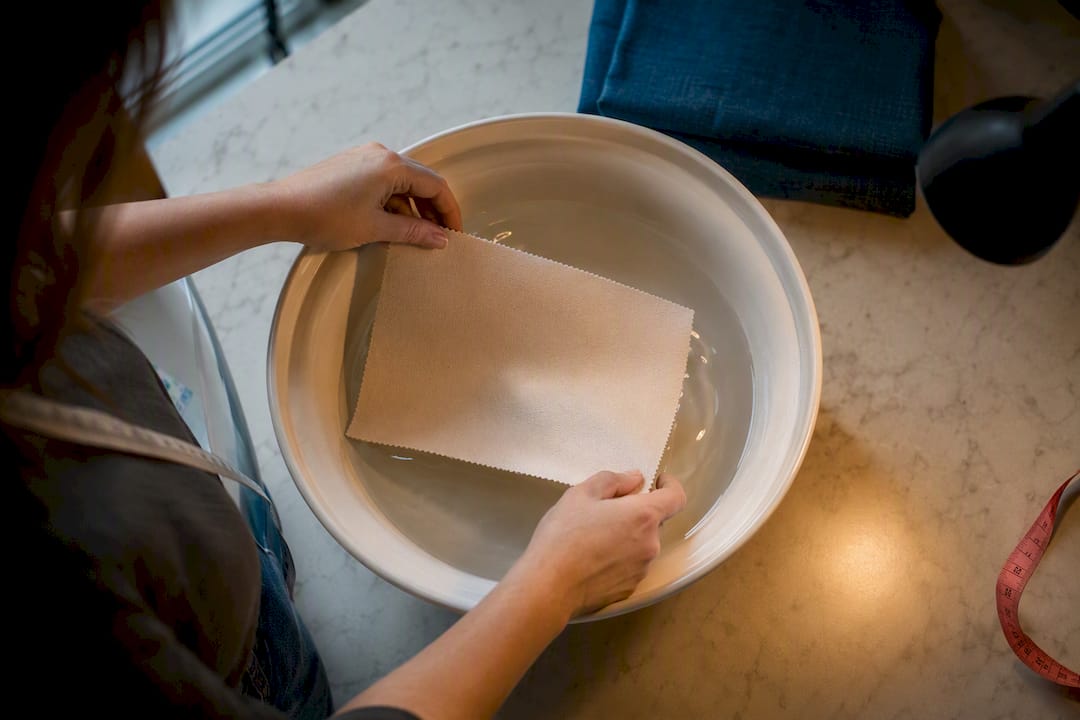
Cut a sample. Use an 18-inch by 18-inch square, or a piece that represents your actual pattern piece if space is limited.
Mark the grainlines. Draw a line parallel to the selvedge and one perpendicular to it, then measure and record both exact lengths before washing.
Launder exactly as intended. Wash and dry the swatch using the same water temperature, cycle, and drying method you plan to use on the finished piece. This is the only way to lock in a realistic result rather than an optimistic guess.
Remeasure both directions. Lay the swatch flat, let it settle, and measure the same two lines again.
Apply the formula. Shrinkage % = (Original measurement minus Final measurement) ÷ Original measurement × 100.
A worked example: an 18 inch swatch that measures 16.9 inches after washing has shrunk (18 minus 16.9) ÷ 18 × 100, or 6.1%.
Step Length (before) Length (after) Shrinkage % Sample A 18 inches 16.9" 6.1% Sample A (width) 18 inches 17.5 inches 2.8 percent
Notice the two axes gave different results. Length and width often shrink at different rates, so measure both directions separately rather than assuming one percentage applies across the board. Run a second wash cycle if you’re worried about progressive shrinkage. A fabric that barely moves on wash two is stable; one that keeps contracting needs a firmer prevention routine.
Standards and Acceptance Limits You Should Know
Commercial testing doesn’t rely on guesswork either. AATCC and ISO domestic laundering test methods simulate typical home washing and drying conditions to produce standardized shrinkage figures manufacturers can compare across fabric lots.
Most apparel brands set acceptance limits around 2 to 3% residual shrinkage for finished goods.
Sanforization, a mechanical preshrinking process applied to woven cotton, is how most quality denim and shirting fabric hits that tolerance before it ever reaches a cutting table.
Heat setting locks synthetic fiber structure in place during manufacturing, which is why polyester rarely shrinks unless it meets heat well above normal laundering temperatures.
If a fabric label doesn’t mention preshrinking, treat it as untested and run your own swatch check before cutting.
Prevention and Care: Laundry Rules That Actually Work
Most shrinkage disasters trace back to one of three things: hot water, high dryer heat, or aggressive agitation. Controlling those three variables prevents the majority of unwanted contraction across nearly every fiber type.
Cold water first. Cold water for the first three washes noticeably reduces shrinkage in cotton, linen, and other cellulose fibers.
Low or no dryer heat. Whirlpool’s laundry guidance recommends removing garments while still slightly damp and air drying or laying flat instead of running a full heat cycle.
Mesh bags for delicates. They cut down on the mechanical agitation that drives consolidation shrinkage in knits.
Fiber-specific handling: wool needs cold water and zero tumble drying to avoid felting; silk prefers hand washing or a gentle cycle; viscose and rayon should never see a hot dryer.
Pro Tip: Always pre-wash your yardage using the exact wash and dry cycle you plan to use on the finished garment, not a gentler “just to be safe” setting. If you baby the fabric now and wash it hot later, you’ll get the shrinkage anyway, just after you’ve already sewn it.
Can You Reverse Shrunken Clothes? Realistic Expectations
Minor shrinkage in cotton and knits is often fixable. Soak the garment in lukewarm water with a capful of hair conditioner or baby shampoo, let it sit for 15 to 20 minutes, then gently stretch it back toward its original dimensions while it’s still wet and lay it flat to dry.
That trick has limits. Felted wool is usually a lost cause since the fiber scales have physically interlocked; you might loosen it slightly but won’t fully restore it. For anything beyond minor stretch, a tailor or a professional wet-blocking service is a better bet than repeated home attempts.
Buying Enough Fabric: Yardage Allowances for Shrinkage
Converting a shrinkage percentage into extra yardage is simple math, and skipping it is how sewers come up short mid-project.
Calculate the allowance. Multiply your required yardage by the shrinkage percentage, then add that to your total. Two yards of linen at 8% shrinkage needs roughly 2.16 yards.
Apply fiber rules of thumb. Budget 5 to 10% extra for cotton and linen, and 0 to 5% for preshrunk cottons or poly blends.
Choose pre-wash timing. Pre-wash yardage before cutting whenever possible; only pre-wash cut pieces separately if the fabric frays badly or the pattern requires precise pre-cut shaping.
What Online Shoppers Get Wrong About Fit and Fabric
Shrinkage is really a fit problem in disguise. A shirt that measured true to size on the rack can run tight after one wash if the fabric wasn’t preshrunk, which is exactly why dimensional stability affects how consistent sizing feels across different brands. Accurate body measurements paired with fabric-aware sizing cut down on that guesswork and the returns it causes.
— admin
Shop With Fewer Sizing Surprises on Clothme
Clothme removes the guesswork that fabric shrinkage adds to online shopping. Upload two photos, and the platform builds a size profile that accounts for your actual body shape rather than a single brand’s chart, then filters recommendations by style, color, and fabric preference so you’re not stuck guessing whether that “true to size” listing accounts for a cotton blend that shrinks. Families can save profiles for each member, which matters most for kids’ clothing where a few percent of shrinkage on a growing body means a garment that fits for one season instead of two. If you want to stop returning clothes that shrank into the wrong size, start a size profile on Clothme and let your next order come pre-filtered for the fit you’ll still have after the first wash.
Sources
How To: Calculate Fabric Shrinkage In 3 Easy Steps — Smart Patternmaking
Fabric Shrinkage Guide: How to Calculate & Pre-Wash — Fabricis
FAQ
How Do I Calculate Fabric Shrinkage?
Measure a marked sample before washing, wash and dry it exactly as you plan to for the finished piece, then remeasure. Use the formula: (Original minus Final) ÷ Original × 100, calculated separately for length and width.
Will 90% Cotton and 10% Polyester Shrink?
Yes.
How Many Inches Will 100% Cotton Shrink?
It depends on the starting measurement, since shrinkage is a percentage, not a fixed number of inches. At the typical 3 to 7% range, a 40 inch measurement could lose anywhere from about 1.2 to nearly 3 inches.
Will 80% Cotton and 20% Polyester Shrink?
Yes, though usually slightly less than pure cotton. Polyester content increases stability, but you should still pre-wash or test a swatch rather than assume stability.