Stop Guessing Fit: Infant Size Chart and ClothME Profiles for Parents
Most babies born over 8 pounds skip Newborn clothes entirely and go straight into 0-3 Months. The rule that matters more than the label on the tag: size by weight and length, not by your baby’s age in weeks, and when the numbers land between two sizes, buy the bigger one. The full infant size chart below turns that rule into exact numbers.
TL;DR:Babies over 8 pounds often skip newborn clothes and should be sized primarily by weight and length, not age in weeks.
Clothing sizes vary significantly between brands, making it essential to check each brand’s specific size chart before purchasing.
For a better fit, prioritize weight for snug items and length for footed sleepers, and measure your baby regularly every four to six weeks.
Building a personalized size profile through photos can improve fit accuracy and reduce unnecessary returns.
Always select sleepwear that fits correctly to ensure safety and avoid risks associated with overly large or small garments.
Table of Contents
Infant Size Chart by Weight and Length
Clothing brands don’t agree on much, but they cluster around the same rough weight and length bands. Here’s the complete size-chart breakdown from Preemie through 24 months, with metric equivalents for anyone converting from a European or Canadian chart.
Notice how much every row overlaps with the one next to it. A baby at 12 pounds could reasonably wear 0-3M or 3-6M, and length is usually the tiebreaker for anything with feet built in, like footed sleepers or footie pajamas, since a snug-but-short sleeper puts real pressure on tiny toes. For everything else, weight tends to predict fit more reliably.
Newborn is the size most likely to get skipped. It typically tops out around 7 to 8 pounds and 21 to 21.5 inches, and plenty of babies are born heavier than that. If your baby arrives at 8.5 pounds, buy 0-3M and save yourself a return.
Treat this chart as a starting point, not gospel. Every retailer runs its own numbers, and the full breakdown on ClothME’s blog walks through how to cross-check a specific brand before you check out.
Why Do Infant Sizes Vary So Much Between Brands?
An age label like “3-6 Months” isn’t a promise. It’s an average, built from growth-chart data across thousands of babies, and your kid doesn’t have to match it. Some brands cut generously to account for that variance; others run tight enough that a 6 Month label fits like a 3 Month elsewhere. That inconsistency is exactly why checking each brand’s own chart before buying beats trusting the label alone.
Body proportion complicates things further. Two babies can weigh the same 14 pounds and need completely different sizes if one is long and lean and the other is shorter and stockier. Weight and length don’t always move together.
A few working rules make this manageable:
For snug items (onesies, bodysuits, footed sleepers), prioritize weight first.
For anything with length built in (pants, footie pajamas, sleep sacks), check the length number even if weight says otherwise.
If your baby measures long for their weight, size up to match length and roll the cuffs if the fit runs loose elsewhere.
If your baby runs shorter and denser, size down and expect a shorter usable window before the next size.
Pro Tip: Keep a small tape measure in the diaper bag. Retailers list length ranges right on the product page, and having your baby’s actual number on hand beats guessing from the age label every time.
How Do You Measure a Baby for Clothing Sizes?
Getting real numbers takes about five minutes and turns every online size chart from a guess into a match.
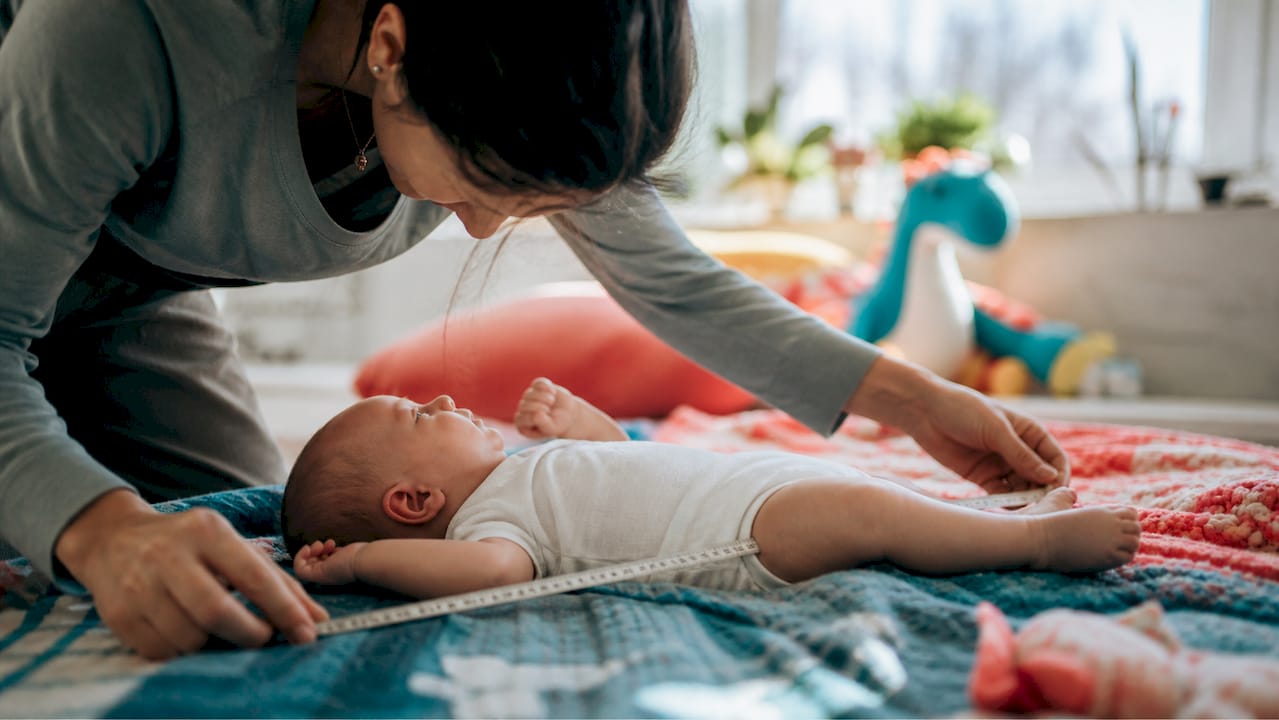
Length (crown to heel): Lay your baby flat on a firm surface. Gently straighten one leg and measure from the top of the head to the heel with a flexible tape measure or a length of string you then measure against a yardstick.
Chest: Wrap the tape around the fullest part of the chest, roughly at nipple line, keeping it snug but not tight.
Weight: Weigh yourself alone, then weigh yourself holding your baby, and subtract. A pediatrician’s scale at a checkup is more accurate if you have one scheduled soon.
Wriggly babies make this harder than it sounds. Measure right after a diaper change or during a calm moment after feeding, and don’t fight for a perfect straight leg. Close enough is fine; you’re matching a range, not filling out a medical chart.
Remeasure every four to six weeks for the first year. Growth is fastest early on, and a chart-accurate size from March can be tight by May.
Most retailers publish weight and length ranges directly on the product page. Match your two numbers against the size chart above, and when they fall in different rows, follow the length number for anything with feet or a fitted bottom.
Pro Tip: Write your baby’s current length and weight on a sticky note inside the closet door. It saves you from re-measuring every time you shop, and it makes the next size-up decision instant.
How Many Clothes Do You Actually Need Per Size?
Buying a full wardrobe in one size is the fastest way to end up donating unworn onesies with the tags still on. Newborns spit up, blow out diapers, and grow through a size in six to eight weeks, so plan for laundry frequency, not a Pinterest-perfect closet.
Newborn layette (roughly 4–8 weeks of use):
6–7 onesies or bodysuits
4–5 sleepers or footed pajamas
2–3 outfits for outings
6–8 pairs of socks or booties (they vanish)
1–2 swaddles or sleep sacks
3–6 Months starter set:
5–6 onesies
4 sleepers
3–4 daytime outfits
1 lightweight jacket or layer, season-dependent
These counts assume laundry every two to three days. Stretch that gap and add a few more of each. Cotton also shrinks slightly after repeated washes, so a garment that fit perfectly at week one might run snug by week five even before your baby grows. For a longer breakdown by age, ClothME’s wardrobe-planning guide covers counts through toddlerhood.
Signs It’s Time to Size Up (and Safety Notes on Sleepwear)
Snaps that won’t close without a fight, fabric pulling tight across the chest or diaper area, and sleeves or pant legs that stop well above the wrist or ankle are the clearest signs a garment is done. Restricted arm or leg movement matters more than a snug waistband. If your baby can’t kick freely in a sleeper, that sleeper’s retired regardless of what the tag says.
Snaps or zippers strain to close
Fabric looks stretched or seams show stress
Sleeves or footed sections no longer reach
Leg or arm movement looks restricted during play
A few fit issues are fine to work around temporarily. Rolling cuffs on pants that run long, or swapping an oversized sleeper for a properly sized sleep sack, both buy you time without a same-day size change.
Safety is the one place where “just size up” backfires. Pediatric guidance is specific here: sleepwear that’s too large can ride up or bunch, which raises suffocation risk in a crib. A correctly sized sleeper or a wearable blanket beats a roomy hand-me-down every time your baby sleeps.
How ClothME Turns a General Chart Into an Exact Fit
A size chart tells you what’s typical. It can’t tell you that your particular baby runs long in the torso or that a specific brand’s 6 Month onesie fits more like a 9 Month elsewhere. That gap is where most online returns come from.
ClothME closes it with a photo-based size profile: upload two photos of your child, and the platform builds a fit profile that accounts for actual body proportions instead of just an age label. You can save profiles for every family member, so shopping for your toddler doesn’t mean re-measuring every time a new brand catches your eye. The general chart gets you in the right neighborhood. A saved profile gets you the actual fit.
A Few Habits That Cut Down Sizing Guesswork
Keep a “too-small” bin by the closet instead of donating immediately. Half those clothes fit again after a growth plateau, and you’ll avoid rebuying basics you already own. Label closet bins by size range, not age, since a size label outlasts the calendar. Buy basics like onesies one size up on purpose. They’ll fit correctly for longer than the tag suggests. Rotate sleepers into use first, since they wear out fastest and reveal a size change before daytime clothes do.
For the mechanics of getting accurate numbers in the first place, ClothME’s measuring guide walks through it step by step, and the size-conversion breakdown helps if you’re comparing an imported brand’s chart against the one above.
— admin
Skip the Guesswork: Build a Size Profile for Your Baby
A photo does more for sizing accuracy than a birthdate ever will. ClothME builds a personalized size profile from two uploaded photos, so instead of matching a chart to a rough estimate, you’re matching your baby’s actual proportions to what a specific brand runs like.
The setup takes a few minutes: upload two photos, let ClothME generate a fit profile, and save it. Add profiles for older siblings too, since family members can be stored and switched between without redoing the process each time sizes change. Once a profile is saved, every product feed you browse gets filtered to items that actually fit, which cuts down the returns that come from chasing a mismatched size label across five different brands. Create your child’s size profile and start shopping by fit instead of by guess.
Where to Check Brand-Specific Sizing
Baby Gear Wise’s full size chart for cross-brand ranges
What to Expect’s sizing guide for brand variation notes
Carter’s official size chart for one major retailer’s exact numbers
Healthychildren for pediatric dressing and sleep safety guidance