Build a Reusable Jeans Fit Profile in Five Seconds
Jeans sizing runs on two numbers: waist times inseam, both in inches. Measure your natural waist and your inseam before you look at a single tag. Then compare those numbers to the actual brand size chart, not the number printed on the label, and check the rise and how much stretch the fabric has. A saved fit profile, built once and reused, turns this from a repeat chore into a five-second lookup.
TL;DR:Jean sizes are based on waist and inseam measurements in inches, but actual garment fit varies due to stretch, rise, and fabric content.
Measuring your body and favorite jeans directly provides more reliable sizing than relying on tags or generic size charts, especially across different brands.
The fit of jeans depends on five key areas: waist, rise, thigh, knee, and break, with rise significantly affecting overall comfort and appearance.
Stretch denim relaxes with wear, so deciding on size involves choosing snug fits for high-elastane fabrics and true-to-measure sizing for rigid denim.
Building a personalized fit profile from accurate measurements saves time, improves consistency, and helps match brands more precisely without frequent re-measuring.
Clothme
Make Jeans Sizing Easier
ClothME uses two photos to create a personalized size profile, helping you find clothing that matches your body shape and preferences.
Explore ClothME
Table of Contents
What Jeans Size Guide Notation Actually Means (W × L Explained)
The Five-Point Fit Checklist: Waist, Rise, Thigh, Knee, Break
Men’s, Women’s, and Kids’ Jeans: Different Sizing Rules Entirely
Why Most Sizing Advice Skips the One Thing That Actually Works
What Jeans Size Guide Notation Actually Means (W × L Explained)
A tag that reads “32x32” means a 32-inch waist and a 32-inch inseam, in that order. That’s the entire code. Levi’s explains it this way: the first number is waist, the second is inseam, both measured in inches regardless of the brand.
Women’s jeans complicate things because many brands still use numbered sizes (0, 2, 4, 6…) instead of inches on the tag. A size 6 typically corresponds to somewhere around a 27 to 28 inch waist, but that range shifts brand to brand, sometimes by a full inch or more. That’s vanity sizing at work, and it’s exactly why measurements beat tag numbers.
Here’s what causes the confusion:
Two brands can use the same numbered size for waists that differ by 2 inches or more.
“Fit” labels (skinny, straight, boyfriend) change the finished garment measurements even within one brand’s own size run.
Stretch content changes how a size behaves once you’re actually wearing it, which the tag never tells you.
Treat the number on the tag as a starting point, never the final word.
How to Measure Yourself for Jeans, Step by Step
Grab a flexible tape measure, not a metal one, and skip the bulky sweater for proper measurement hygiene as explained in this backswing tested sizing guide. Here’s the sequence that actually produces usable numbers:
Waist. Wrap the tape around your natural waistline, the crease that forms when you bend slightly to one side. If you’re shopping low-rise, measure a couple of inches lower, roughly where the jeans will actually sit.
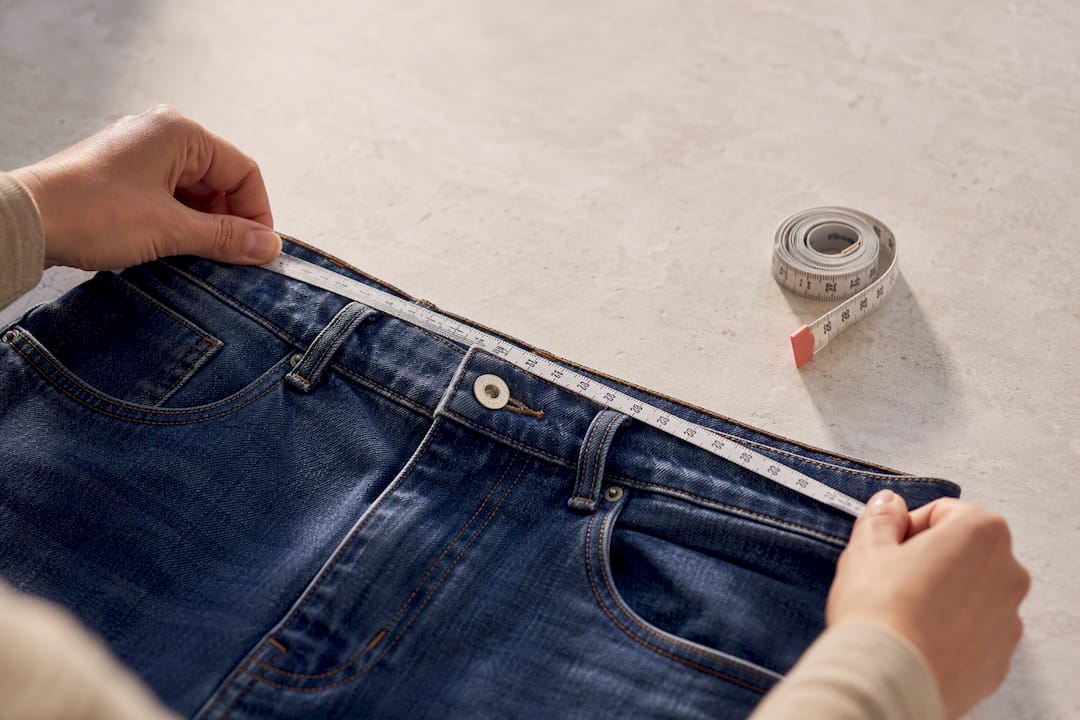
Inseam (on your body). Measure from the top of your inner thigh straight down to your ankle bone. For a pair you already own, lay the jeans flat and measure from the crotch seam to the hem instead. That’s usually the more accurate method since it removes guesswork about posture.
Hips. Measure around the fullest part, typically 8 to 9 inches below your waistline.
Front rise. On a pair laid flat, measure from the crotch seam straight up to the top of the waistband.
Thigh. Measure across the leg about an inch below the crotch seam, then double that number since you’re only measuring one layer of fabric.
Pro Tip: Measure everything twice, on two different days if you can. Bodies shift by half an inch depending on hydration and time of day, and a single bad reading throws off every size comparison you make afterward.
For a deeper look at inseam specifically, this inseam measurement guide walks through common mistakes people make measuring on their own body versus a garment.
The Five-Point Fit Checklist: Waist, Rise, Thigh, Knee, Break
Fit comes down to five spots, according to DenimHunters’ breakdown of jeans fit, and checking all five matters more than trusting the number on the tag.
Waist: should sit without gapping or digging in when you sit down.
Rise: the distance from crotch to waistband; too short and you get a wedgie effect, too long and fabric bunches.
Thigh: should allow you to pinch about half an inch of fabric, per the widely used two-finger rule for jeans.
Knee: the fabric should follow the knee’s shape without pulling tight when you bend.
Break: how the hem falls over your shoe. No break means a clean, cropped look; a full break means fabric folds at the ankle.
Rise categories change the whole equation. Low-rise sits at or below the hip bone and shortens the torso visually. Mid-rise sits at or near the natural waist and works for most body types. High-rise sits above the navel and tends to elongate the leg line. If you’re shopping low-rise specifically, this low-rise fit guide covers how the rise shift changes your waist measurement point.
Pro Tip: If you’re between two leg shapes, like slim versus straight, go straight. It’s easier to have a tailor take in a straight leg than to let out a slim one.
Elastane and Stretch: Why Fabric Changes Your Size
Stretch content changes how a “correct” size actually behaves once you’ve worn it for a week. Low-stretch denim, generally under 1% elastane, holds its shape and barely moves. High-stretch denim, around 2% elastane or more, relaxes noticeably with wear, stretching out at the waist and knees within days of regular use.
That single fact should drive your sizing decision:
Rigid or low-stretch denim: size true to your measurements, since the fabric won’t give much.
High-stretch denim (2%+ elastane): buy snug on purpose. JAG Jeans’s fit guide notes that these fabrics loosen with body heat and movement, so a size that feels tight in the dressing room often settles into a proper fit within a week.
Raw or selvedge denim: buy tighter still. Raw denim typically stretches about half an inch to a full inch at the waist and roughly half an inch at the thigh during the first month of regular wear.
Sizing down on stretch denim isn’t a trick, it’s just accounting for what the fabric will do to itself.
Matching Your Numbers to a Brand’s Size Chart
Once you have real measurements, the actual matching process gets simple, provided you resist the urge to shop by memory (“I’m always a 32”).
Pull up the brand’s actual garment measurements, not just a size label. Most retailers list waist, rise, thigh, and inseam in a size chart; Levi’s own size guide is a good example of the format to look for.
Compare each of your four numbers against the chart, not just waist. A brand can nail your waist and still miss badly on rise or thigh.
If you land between two sizes, let the fabric decide. Choose the larger size for rigid, low-stretch denim where comfort matters more than a snug break-in. Choose the smaller size for anything with real stretch, since it’ll relax to fit.
Cross-check against a favorite pair. Measuring a pair that already fits you well and comparing those numbers to a new brand’s chart catches mismatches that body measurements alone miss, especially around the rise.
Brands vary widely on what a labeled waist size actually delivers in finished garment inches, which is exactly why matching against real garment measurements beats trusting the tag every time.
Build a Denim Fit Profile You Can Reuse Every Time
A single body measurement tells you less than you’d think. Rise, in particular, is often the hidden mismatch between a waist size that reads “correct” and a fit that’s actually wrong once you sit down. That’s why measuring a favorite-fitting pair directly, rather than relying only on your own body, produces a more reliable reference.
Here’s the workflow:
Lay your best-fitting jeans flat.
Measure the waistband end to end, then double it.
Measure the front rise from crotch seam to waistband top.
Measure the thigh one inch below the crotch, then double it.
Measure the inseam from crotch seam to hem.
Those four numbers, recorded once, become your reference for every future purchase. Store separate profiles if you own jeans in different fits (skinny for one, relaxed for another), and store separate profiles entirely for each family member if you’re shopping for a household rather than just yourself.
Pro Tip: Keep the profile in inches, not size numbers. A 32/32 profile compares cleanly to any brand’s chart; “size 10” does not.
This is the exact logic behind ClothME’s size-profile approach: upload a couple of photos once, generate a size profile, and skip re-measuring every time you shop a new brand.
Men’s, Women’s, and Kids’ Jeans: Different Sizing Rules Entirely
These three categories don’t share a sizing system, which trips up more shoppers than any single brand’s quirks.
Men’s jeans almost universally use the W×L format, inches on inches, printed right on the tag. That consistency makes men’s denim the easiest category to shop across brands, since a 34x32 means roughly the same thing everywhere, even if finished measurements vary a bit.
Women’s jeans split between two systems. Some brands print waist and inseam in inches, matching the men’s format. Others use numbered sizing (00 through 20 or higher), which maps loosely to inches but shifts noticeably between brands. A size 8 at one retailer can measure closer to a size 10 or 12 at another. Curvy-fit lines add another variable: they’re cut with more room through the hip and thigh relative to the waist, so a curvy 29 waist fits differently than a straight-fit 29 waist from the same brand.
Kids’ jeans size by age or height ranges rather than waist inches, and the jump from kids’ to junior’s or men’s/women’s sizing rarely lines up cleanly. A 14-year cut and an adult XS can differ by several inches in the waist alone. If you’re shopping for multiple family members across these three systems, the numbers genuinely don’t translate without measuring each person directly, which is where a saved profile per person, rather than per size chart, earns its keep.
US, UK, EU, and Asian Jeans Sizing Compared
International size labels create the same headache as brand vanity sizing, just at a bigger scale.
US sizing for men’s jeans is inches on inches, W×L, and stays consistent across most American retailers. UK sizing largely mirrors this for men’s denim, waist and inseam in inches, so a US 32x32 and UK 32x32 are generally the same garment.
EU sizing switches to centimeters and uses different numbering conventions entirely. A EU size 42 for jeans roughly corresponds to a US/UK size in the 30 to 32 waist range, but the exact conversion varies enough by brand that it’s worth treating as a rough starting point only, not a fixed formula.
Asian sizing, common across Japanese and Korean denim brands, tends to run smaller in the waist and hip relative to US and EU sizes carrying the same number label. A size labeled “30” from a Japanese brand can measure closer to a US 28 in finished garment inches. Cuts also tend to be slimmer through the thigh and leg overall, independent of the waist number.
None of these conversion charts replace an actual measurement comparison. The safest move when shopping an unfamiliar sizing system is the same move that works domestically: measure a pair you already own and love, then match those inches, not the label, against whatever chart the new brand provides.
Tailoring Options When Off-the-Rack Doesn’t Quite Fit
Even a well-measured purchase sometimes lands a little off, and that’s normal. Denim is one of the more alteration-friendly fabrics to work with.
A waist take-in or let-out is the most common fix, and a tailor can usually adjust up to an inch or two in either direction without disturbing the pocket structure too much. Hemming for inseam length is the single most requested denim alteration, and it’s inexpensive almost everywhere, though it’s worth asking for the original hem to be preserved on raw or selvedge denim so the characteristic fading pattern along the hem isn’t lost.
Tapering the leg narrows a straight or relaxed cut through the calf and ankle without touching the thigh or knee, a popular option for anyone who bought a size up for thigh room but finds the leg opening too wide. Rise adjustments are trickier and pricier, since they involve reconstructing the crotch seam, but they’re possible when a rise runs consistently too long or short across multiple pairs from the same brand.
For anyone buying stretch or raw denim with the expectation that it will relax over the first few weeks, it’s worth waiting through that break-in period before paying for alterations. A pair that feels tight on day one can settle into the intended fit within a month, especially with the higher-elastane fabrics discussed earlier. Alter only once you know the fabric’s finished shape, not its day-one shape.
Why Most Sizing Advice Skips the One Thing That Actually Works
The conventional advice on denim sizing spends most of its energy on charts and conversion tables, and almost none on the one method that consistently produces a good result: measuring a pair you already love and using those exact numbers as your shopping reference. Every size chart, every W×L conversion, every “size 8 equals roughly a 27-inch waist” rule of thumb is a generalization. Your favorite pair isn’t.
What gets overrated in most guides is the body measurement alone. Your waist number is real, but it tells you almost nothing about rise, and rise is where fit actually breaks down most often. What gets underrated is fabric behavior. People size for the fit they see in the mirror at the store, not the fit that fabric settles into after two weeks of wear, and that gap causes more returns than a wrong waist measurement ever does.
If there’s one thing to prioritize first, it’s building a reference, not a single measurement. Measure the pair that already fits, write down all four numbers, and treat every future purchase as a comparison against that reference rather than a fresh guess.
— admin
Get a Fit Profile You Never Have to Rebuild
Some platforms skip the tape measure after the first setup: upload two photos, generate a size profile, and see product recommendations filtered to what fits, in preferred fabric and rise.
That matters most for anyone shopping across multiple brands, since a profile built once translates automatically instead of forcing a fresh waist-to-chart comparison every single time. Some platforms also let you save separate profiles for each family member, so buying jeans for a partner, a teenager, or a parent doesn’t mean re-measuring them every season or guessing at their current size. Curated feeds then surface only the styles, colors, and fabrics that match each saved profile, cutting down the scroll-and-guess cycle that leads to returns. Set up a profile at Clothme and start browsing jeans that are already filtered to your actual fit.