Three Fabrics Parents Should Try First for Sensory Sensitive Kids
Start with bamboo, modal or Tencel, and organic cotton jersey. Merino works for some kids but not all, so test it first. Beyond fiber, four construction details matter most: tagless or heat-printed labels, flat-lock or seamless stitching, soft wide waistbands, and seamless socks. Every child’s sensory profile is different, so a short home trial beats guessing from a size chart.
TL;DR:Natural fabrics like bamboo, modal, Tencel, and organic cotton jersey are generally the most tolerated for sensory-sensitive children due to their softness and breathability.
Construction details such as tagless labels, seamless or flat-lock seams, wide soft waistbands, and seamless socks significantly reduce tactile irritation regardless of fabric choice.
Polyester and high-polyester blends should be avoided because they trap heat, generate static, and have a plasticky feel that can be upsetting for some kids.
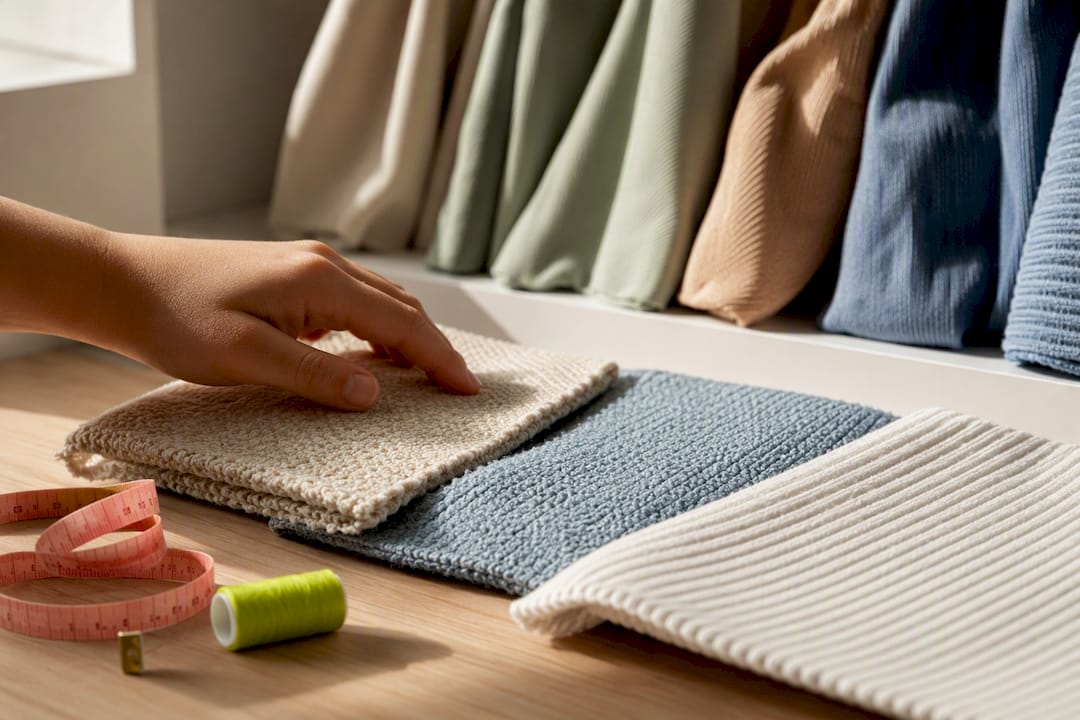
Testing fabrics with a hand feel and short at-home wear trials helps identify the most comfortable options before committing to full wardrobes.
Proper sizing and fit are equally important, and tools like personalized profiles can minimize returns and ensure garments support sensory comfort effectively.
Clothme
Find A Better Fit For Every Child
ClothME helps parents find clothing sizes tailored to each child's body shape, style, color, and fabric preferences.
Explore ClothME
Table of Contents
What Are the Best Fabrics for Kids With Sensory Sensitivities?
Natural vs. Synthetic Fabrics: Which Matters More for Sensory Comfort?
How ClothME Reduces the Guesswork in Sensory-Friendly Shopping
What Are the Best Fabrics for Kids With Sensory Sensitivities?
Fiber choice determines roughly half the battle. The other half is weave, knit, and finish, but if you’re standing in a store trying to decide what to grab first, these four fabric families cover most kids’ needs.
Bamboo has a genuinely silky hand feel straight off the shelf, no breaking-in required. It wicks moisture well, which matters for kids who melt down over feeling damp or sweaty, and it carries some natural antimicrobial properties that cut down on odor between washes. The trade-off: bamboo fabric costs more than cotton, and not every brand carries it in a full range of sizes, so you may need to shop specialty children’s lines rather than big-box racks.
Modal and Tencel (lyocell) are both derived from wood pulp, and both drape and move more like a lightweight knit than a stiff woven. They soften with every wash instead of stiffening or pilling, which is the opposite of what happens to cheap cotton blends. Kids who fixate on the difference between “new shirt stiff” and “favorite shirt soft” often accept modal or Tencel garments faster because they arrive already close to that broken-in feel.
Organic cotton jersey deserves a specific callout, because “cotton” alone tells you almost nothing. A stiff cotton twill and a soft cotton jersey knit are both technically cotton, but they feel completely different against skin. Jersey’s knit structure, the same stretchy construction used in T-shirts, is what makes cotton tolerable for sensory-sensitive kids. Organic processing typically means fewer chemical residues left in the fiber, though the bigger comfort factor is really the knit itself. Jersey is also the most affordable option on this list and the easiest to find in any store.
Merino wool splits opinion more than any other fabric here. Its temperature-regulating properties make it a favorite for families dealing with kids who run hot or cold unpredictably, and fine merino (look for 17.5 microns or finer) can feel remarkably soft. But wool triggers the same “hessian” aversion response as burlap for some sensory-sensitive kids, according to a Journal of Autism and Developmental Disorders study on fabric preferences. That same research found participants consistently preferred soft natural textures like cotton and satin while rating spandex and coarse woven fibers among the most aversive. Don’t buy a merino wardrobe before testing one piece.
Blends can work, particularly bamboo/cotton or modal/cotton combinations that balance softness with durability and price. The number to watch is the polyester percentage. A broader synthesis of sensory fabric research consistently ranks bamboo, modal, Tencel, and organic cotton jersey among the most tolerated fabrics across sensory-sensitive kids, with merino noted as effective for some children but not universally.
Pro Tip: Before buying, check for an OEKO-TEX Standard 100 label. It confirms the garment was tested for harmful residues and chemical finishes, which matters because some of the “scratchy” feeling kids react to is actually leftover manufacturing chemicals, not the fiber itself.
Quick checklist for shopping, in-store or online:
Read the composition label first, not the size tag. If it lists more than one fiber, note the percentages.
Reach inside and feel the seams before touching the outer fabric. Rough construction ruins a good fiber.
Check for a polyester content under 5% unless the item is activewear designed for moisture-wicking performance.
Look for the OEKO-TEX Standard 100 mark on infant and toddler items especially.
If shopping online and the listing has no fabric content percentage listed, message the seller before buying rather than guessing.
Which Fabrics and Finishes Should You Avoid?
Polyester tops the list of problem fabrics for a reason. It traps heat instead of breathing, builds up static charge that makes hair stand on end and fabric cling uncomfortably, and has a slick, almost plasticky surface that many kids find upsetting from the first touch. High-polyester blends carry the same problems in smaller doses, which is why checking that composition percentage matters more than checking the brand name.
Spandex and other stretch synthetics need a more nuanced look. A small amount of spandex in a knit adds necessary stretch without much sensory cost. But spandex-heavy fabrics can cling tightly to skin and abrade with movement, which is different from the deep-pressure comfort some kids seek from true compression garments. The distinction is pressure versus friction. Compression calms; clingy synthetic fabric that rubs and shifts irritates.
A few more categories to watch for:
Stiff denim and coarse cotton create surface variation, meaning the fabric doesn’t feel consistent across the garment, which is exactly the kind of unpredictability that bothers tactile-sensitive kids.
Untreated or scratchy wool lands in the same aversive category as burlap for many sensory-sensitive children, per the fabric preference research cited above.
Fabric finishes and residues like sizing agents, flame retardant treatments, and even fabric softener buildup change how a fiber feels regardless of what it’s made from. A soft cotton shirt treated with stiff sizing can feel worse than a plain synthetic.
Scratchy trims, meaning lace edges, sequins, or embroidered patches on the inside of a garment, cause targeted irritation even when the main fabric is fine.
When you read a composition label, look past the front-facing marketing terms. “Breathable performance fabric” often means polyester with a wicking finish. “Soft-touch” printed on a tag doesn’t override what your fingers feel on the inside seams. Trust the composition percentages and your own hand test over the packaging copy every time.
Which Construction Details Matter More Than Fabric?
You can buy the softest bamboo shirt on the market and still get a meltdown if the tag scratches or the seam digs in. Construction often overrides fiber choice entirely, and it’s also the cheapest thing to fix.
Replace tags with heat-printed labels, or cut them out entirely. Most sewn-in tags can be snipped close to the seam with small scissors without damaging the garment. Many brands now print sizing and care information directly onto the fabric instead, which eliminates the problem before it starts.
Look for flat-lock or overlock seams instead of standard sewn seams. A flat-lock seam lies nearly flush against the skin rather than creating a raised ridge, and “seamless” garments use a knitting process that avoids side seams altogether. Turning a shirt inside out to check the seam finish takes ten seconds and tells you more than any product description.
Choose wide, soft waistbands over narrow elastic. Narrow elastic concentrates pressure into a thin band that digs in over hours of wear, while a wide waistband spreads the same pressure across more surface area. If a favorite pair of pants has degraded elastic, replacing it at home with soft, wide elastic is a fifteen-minute fix.
Buy seamless, no-heel-seam socks before anything else. Socks sit against some of the most sensitive skin on a child’s body, and a bunched heel seam or tight cuff band causes outsized distress relative to its size. This is often the single cheapest, highest-impact purchase a family can make, according to guidance from Understood’s clothing solutions guide.
Know when compression helps versus when it hurts. Therapeutic compression garments, designed with even, consistent pressure across large areas, can genuinely calm some sensory-sensitive kids by providing deep-pressure input. But tight cuffs, narrow waistbands, or clingy synthetic fabric that pulls unevenly is friction, not therapeutic pressure, and it usually makes things worse.
Pro Tip: Keep a small sewing kit with soft, wide elastic on hand. Waistband replacement is the single most common fix families make, and it costs under $5 in materials.
How Do You Test a Fabric at Home Before Buying More?
Skip the instinct to buy a whole wardrobe in one fabric before you know it works. A short, structured trial protects your budget and your child’s comfort.
In-hand feel test. Before your child even puts the garment on, have them touch it themselves. Watch their face and hands. A recoil or refusal at this stage saves you a wear trial entirely.
Supervised two-hour wear trial. Have your child wear the item at home during a low-stakes activity, not school or a car trip. Watch for scratching, pulling at the collar or waistband, or sudden mood shifts.
Twenty-four-hour wash-and-wear trial. Wash the item once using your normal detergent, then have your child wear it again. Fabric behaves differently after washing, sometimes softer, sometimes stiffer if it wasn’t pre-shrunk, and this step catches that.
What to record during each stage:
Outward behavior: scratching, tugging, pulling away from the fabric, refusal to keep it on.
Sleep or nap quality if the trial includes any rest period. Fabric irritation often shows up more clearly at low arousal.
Specific rubbing points: collar, waistband, cuffs, inner thigh seams.
Temperature complaints, since overheating and overcooling both show up as an irritability spike that’s easy to misread as behavioral.
For compression needs specifically, measure your child’s chest, waist, and limb circumference before shopping rather than relying on age-based sizing, since compression garments need a snugger, more precise fit than everyday clothing. If a child shows extreme, persistent reactions across multiple fabric types, or if clothing refusal is interfering with school or daily routines, that’s a reasonable point to bring in an occupational therapist rather than continuing to trial-and-error alone.
Practical Shopping and Care Tips That Actually Save Money
Pre-wash everything before the first wear. New fabric carries manufacturing residue and sizing chemicals that soften out after one or two washes, and skipping this step means your child’s first impression of a garment is its worst version.
Skip scented detergent and fabric softener entirely. Softener coats fibers with a waxy residue that actually reduces breathability over time, undoing the softness it promises. A fragrance-free, dye-free detergent preserves natural fiber softness better than any softener product on the market, a point echoed in practical guidance on fabric sensitivity in kids.
Budget-smart tactics that work:
Identify two or three fabric types that reliably work, then build future purchases around those instead of experimenting endlessly.
Buy slightly ahead in size for proven fabrics rather than gambling on new ones as your child grows.
Have kids try new items inside-out first if a specific seam or tag is the suspected trigger, not the fabric itself.
Swap narrow elastic and remove tags immediately after purchase, before the item ever gets worn.
When shopping online and fabric composition isn’t listed, message the seller directly rather than guessing from photos.
Why Do Certain Fabrics Bother Sensory-Sensitive Kids?
Tactile defensiveness, an outsized nervous system reaction to touch that would barely register for most people, is the sensory sensitivity parents encounter most often around clothing. It’s not pickiness. A seam that feels like a minor annoyance to one child can feel genuinely painful to another, and that gap is neurological, not behavioral.
Three fabric properties drive most of the reaction. Surface texture is the most obvious: rough, uneven, or inconsistent surfaces (think coarse wool or stiff seams) demand constant tactile processing that some nervous systems can’t tune out the way others do. Breathability affects temperature regulation, and kids who struggle with interoception, meaning the internal sense of being too hot or too cold, often can’t identify why they’re uncomfortable, only that they are. Stretch and pressure play a third role. Some kids seek deep, even pressure and calm down in snug-fitting clothes, while others find any tightness intolerable. That’s why a single “best fabric” doesn’t exist across all sensory-sensitive kids, and why the qualitative research on fabric preference found such a consistent split between kids who craved snug, smooth garments and those who needed loose, minimal-contact ones. Matching fabric properties to a specific child’s sensory profile, rather than assuming one solution fits all, is the actual goal.
Natural vs. Synthetic Fabrics: Which Matters More for Sensory Comfort?
Natural fibers generally outperform synthetics for sensory comfort, but the reason isn’t mystical. Cotton, bamboo, modal, and Tencel all breathe, meaning they let air and moisture move through the fabric rather than trapping it against skin. That breathability keeps a wearer at a more stable temperature, which matters enormously for kids whose sensory system already struggles to accurately read internal temperature signals.
Synthetic fibers like polyester trap heat and moisture instead of moving them, which creates that clammy, overheated feeling that triggers meltdowns in kids with temperature-related sensitivities. Polyester also builds static charge more readily, and it has a smoother, sometimes slicker surface that can feel foreign against skin compared to the slightly textured, breathable surface of natural fibers.
That said, natural doesn’t automatically mean comfortable. Untreated wool and coarse linen are both natural and both frequently land on aversive-fabric lists. The real distinction is softness and consistency of surface texture combined with breathability, not simply “natural versus synthetic” as a blanket rule. A high-quality synthetic blend with minimal polyester content and a smooth knit can outperform a scratchy, low-grade natural fiber. Read the fabric, not just the fiber category, and remember that a small percentage of spandex or elastane in an otherwise natural-fiber garment rarely causes the same problems as a majority-synthetic blend.
How Should You Layer Sensory-Friendly Clothing by Season?
Layering with sensory-sensitive kids means minimizing the number of seams and transitions touching skin at once, not just adding warmth. Each additional layer adds another waistband, collar, or cuff that can rub, so fewer, better-chosen layers usually beat multiple thin ones.
For cold weather, start with a single well-fitted base layer in merino or a cotton/modal blend, tested individually before combining with anything else. Add bulk with a mid-layer fleece or sweatshirt that has minimal interior seams, and save any zippers or buttons for the outermost layer where they don’t contact skin directly. Avoid stacking multiple tight-cuffed layers at the wrist and ankle, since that’s where irritation compounds fastest.
For warm weather and active play, a single breathable layer in bamboo or cotton jersey usually beats a “technical” synthetic performance shirt, despite marketing claims about moisture-wicking. If a child needs sun protection, choose a loose, breathable long-sleeve in a natural fiber rather than a tight synthetic rash guard, unless the child specifically seeks the compression feel, in which case a snug rash guard can actually be calming rather than irritating.
For transitional weather, prioritize easy-off layers your child can remove independently without help, since being stuck in a suddenly uncomfortable layer is worse than being slightly cold or warm for a few minutes. A soft zip-up in proven fabric beats a pullover for exactly this reason.
Publisher Perspective: Fit-First Fabric Shopping
Getting the fabric right solves half the problem. The other half is sizing, and it’s the half most families overlook. A perfectly soft bamboo shirt that’s too tight at the collar or too loose at the waist reintroduces the exact friction and pressure problems you were trying to avoid.
Size profiles generated from two uploaded photos exist for exactly this reason: consistent fit across brands, without repeat guessing every time a child grows or a new brand’s sizing runs differently than the last. Saved family profiles mean parents can filter for fabric and fit at once, which cuts down on the returns and re-trials that come from buying blind.
— admin
How ClothME Reduces the Guesswork in Sensory-Friendly Shopping
Finding the right fabric only solves part of the problem if the sizing is wrong every time you try a new brand. A free size tool builds a personalized size profile from two uploaded photos, no measuring tape required, and can save profiles for multiple family members to avoid restarting the sizing puzzle with each purchase.
Once a profile is saved, you can filter for fabric and fit preferences together, which means fewer wrong-size returns and fewer wasted trial wears on garments that never had a chance because they didn’t fit right in the first place. That matters most for sensory-sensitive kids, where an ill-fitting seam or waistband undoes even the softest fabric choice. For families juggling multiple kids with different sensory needs, having separate saved profiles for each child removes one more layer of shopping friction entirely. Try the Free Size Tool to generate your child’s profile and start filtering for the fabrics that actually work for them.
Sources
6 clothing solutions for kids with sensory processing issues | Understood
Sensory Fabrics for Autism: Comfort Through Textiles | Neurolaunch
FAQ
What Material Is Best for Kids With Sensory Sensitivities?
Bamboo, modal, Tencel (lyocell), and organic cotton jersey consistently rank as the most tolerated fabrics for sensory-sensitive kids because of their soft hand feel and breathability. A Journal of Autism and Developmental Disorders study found participants preferred soft natural textures like cotton and satin over coarse or synthetic options.
What Are Some Good Sensory-Friendly Clothes for Kids?
Tagless T-shirts, flat-lock seam leggings, seamless socks, and soft wide-waistband pants cover most everyday needs. Look for the OEKO-TEX Standard 100 label to confirm the garment has been tested for chemical residues that can add to irritation.
How Does ADHD Affect Fabric Sensitivity?
Kids with ADHD often experience heightened sensory reactivity alongside difficulty tuning out mild discomfort, meaning a scratchy tag or tight waistband can become a persistent distraction throughout the day. Soft, consistent-texture fabrics and seamless construction reduce this ongoing background irritation rather than eliminating a single trigger.
What Color Is Calming for Sensory-Sensitive Kids?
There is no single research-backed “calming color” that applies universally, since color preference in sensory processing is highly individual rather than following a fixed pattern. Fabric texture and construction have far more documented impact on comfort than color choice does, so prioritize soft, breathable fibers first.
How Do I Choose the Right Sensory-Friendly Fabric for My Child?
Start with a small trial: touch-test bamboo, modal, or organic cotton jersey, then run a supervised two-hour wear trial before buying more. Once you find two or three fabrics that reliably work, build future purchases around those types instead of testing something new every time.