Measure Shoulder Width: Quick, Accurate Methods for Fit
Shoulder width means the straight-line distance across your back between your two acromion points, the bony tips where your shoulder blade meets your upper arm. Tailors call this biacromial width, and it’s the number that decides whether a jacket sits right or a shirt pulls at the seam.
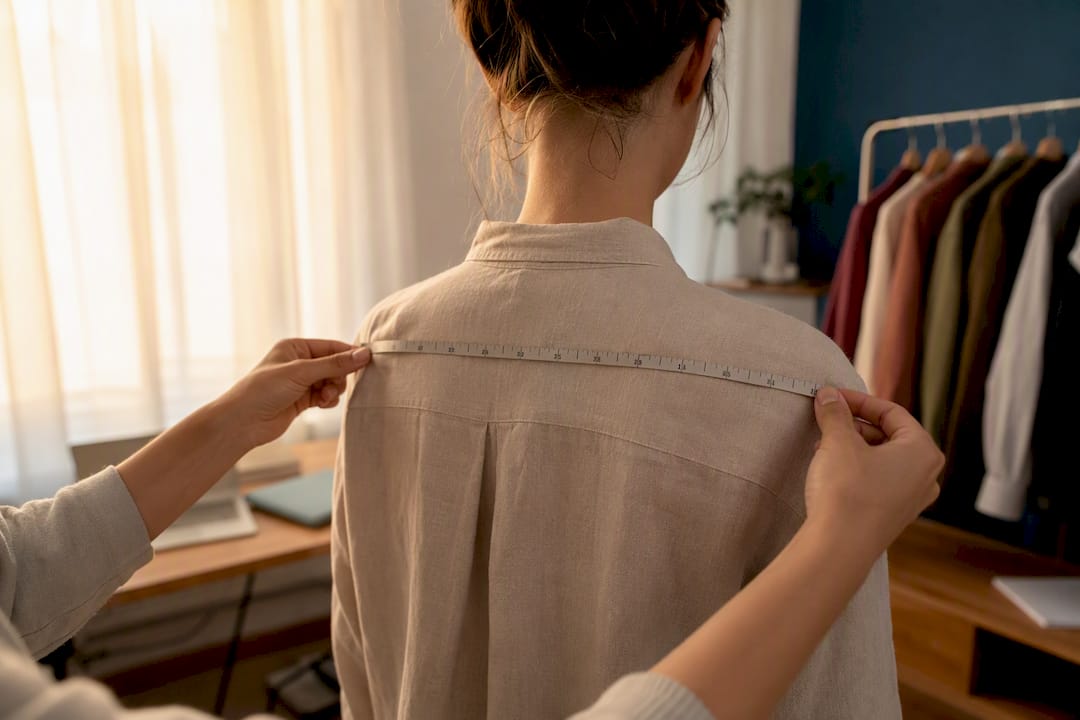
The fastest accurate method uses a helper: they stretch a tape straight across your back, acromion to acromion, while you stand relaxed. Solo, you can lay a well-fitting shirt flat and measure shoulder seam to shoulder seam, or mark both shoulder points against a wall. Average shoulder width runs about 16 inches for men and 14 inches for women, so those numbers give you a rough sanity check on your own reading.
Helper method: most accurate, uses a tape across the back, bone to bone.
Solo method: lay-flat shirt or wall-mark technique, both within about half an inch of the helper reading.
Key Takeaways
Shoulder width is a fixed bone measurement, and matching it correctly to a garment’s seam width prevents more fit problems than any other single fix.
Point Details Measure the back, not the front Biacromial width, acromion to acromion across the back, gives the true skeletal number. Use a helper when possible A second person keeps the tape level and adds accuracy over solo methods. Solo methods work within reason Lay-flat shirt or wall-mark techniques land within about half an inch of a helper reading. Average multiple readings Take two or three measurements and average them to cancel out posture drift. Match number to garment type Structured shirts want a tight match; hoodies and drop-shoulder styles allow one to three inches of slack.
Table of Contents
Tools You Need to Measure Shoulder Width Correctly
You don’t need much. A flexible fabric measuring tape is the one non-negotiable item; a metal tailor’s tape or stiff ruler won’t curve properly across your back. A second person makes the whole process faster and more reliable, but a mirror and a plain wall work fine if you’re measuring alone. If you’d rather skip your body entirely, a well-fitting shirt and any flat surface, like a bed or table, will get you close.
A few optional extras help. Non-stretch string can substitute for tape in a pinch. A pencil or a strip of tape marks wall positions for the solo method. Phone AR measuring apps are tempting, but calibrated correctly, they land around 85 to 90% accurate, which is fine for a ballpark, not fine for a bespoke jacket.
Pro Tip: If you have to measure over clothing, wear the thinnest, most close-fitting shirt you own. Bulky sweaters and hoodies add an inch or more to your reading before you’ve even started.
How Do You Measure Shoulder Width With a Helper?
This is the gold standard for a reason: someone else can see your back the whole time, so the tape stays straight instead of drooping or following muscle.
Stand relaxed with your arms hanging naturally at your sides. Strip off bulky layers first.
Find your acromion on each side by pressing your fingers along the top of your shoulder until you feel the bony edge where it meets your upper arm.
Have your helper place the tape at one acromion and pull it straight across your upper back to the other acromion, keeping the tape level and parallel to the floor, never dipping to trace the curve of your shoulder muscle.
Read the number to the nearest quarter inch. Repeat the measurement two or three times and average the results.
Professional tailoring guides recommend exactly this repeat-and-average approach, especially before cutting a jacket, since a single reading can drift by a quarter inch depending on how relaxed your shoulders are.
One accuracy note worth knowing: don’t pull the tape tight. Tension flattens the natural line across your back and shaves fractions of an inch off the true number. And if your shoulders are noticeably uneven, a common but rarely mentioned practitioner trick is to measure each side from the spine’s center point separately, then double whichever half is larger. That gives you an “effective” width that ensures a garment clears the broader shoulder instead of pulling at it.
Pro Tip: Take your three readings on three separate attempts, not three quick pulls in a row. Standing, relaxing, and re-measuring each time catches posture drift that a single sitting won’t reveal.
Can You Measure Shoulder Width Alone Accurately?
Yes, and done carefully, solo methods land close to a helper-assisted reading. Two techniques work well.
Lay-flat shirt method. Pick a shirt that already fits you well through the shoulders. Lay it flat on a bed or table, smooth out every wrinkle, then measure straight across the back from one shoulder seam to the other. This gives you the garment number, not your bone width, so subtract a bit if the shirt has extra ease built in.
Wall-mark method. Stand straight against a flat wall with your back touching it. Have a book or straight edge rest flush against the wall at each shoulder’s outer edge, mark the spot, then measure the distance between the two marks.
Done correctly, both solo methods typically land within about half an inch of a proper helper-assisted reading, which is close enough for most shopping decisions.
String or phone AR alternatives work, but only if you understand their limits. Non-stretch string behaves like tape. AR apps need good lighting and careful calibration to hit that 85 to 90% accuracy range.
Know the difference between bone-to-bone (your actual body measurement) and seam-to-seam (a specific garment’s measurement). Use the bone number when comparing across brands and the seam number when checking whether one specific item will fit.
Why Does Measuring Across the Back Matter for Fit?
Biacromial width, the acromion-to-acromion distance across your upper back, is the one number that reflects your actual skeletal frame rather than muscle bulk or posture on any given day.
The shoulder seam of a jacket should land exactly where your shoulder bone ends. Get that point wrong and no amount of tailoring elsewhere fixes how the garment sits.
That’s not a stylistic preference. Tailoring practice treats acromion placement as the anchor point for structured garments because everything else, sleeve angle, collar roll, chest drape, gets built around it. Front-body measurements consistently underestimate this width and get skewed by chest size, which is exactly why the back measurement, not the front, is the one that belongs on your size profile.
How to Use Your Shoulder Measurement When Shopping
Once you have your number, the real work is comparing it against garment specs instead of trusting a size label.
For structured shirts and blazers, look for garments within about half an inch of your bone measurement. Anything wider and the shoulder seam droops past your actual shoulder point.
For casual wear like hoodies and drop-shoulder tops, a gap of one to three inches is normal and often intentional. Style guides note that hoodie seam widths often run 19 to 21 inches against a blazer’s 17.5 to 19, so don’t panic if a hoodie’s spec sheet looks huge next to your body number.
Buying a jacket? Add roughly half an inch to a full inch of ease to your bone measurement for comfortable arm movement. That’s standard practice, not a fitting error.
If your fit priority is a structured suit or blazer, trust your shoulder measurement over your chest size when the two disagree. Chest numbers can mislead; shoulder bone width rarely does.
When off-the-rack numbers keep missing by more than an inch on your key garments, that’s your signal to look at made-to-measure rather than sizing up and hoping the fabric drapes forgivingly. For everyday shirt shopping, ClothME’s men’s shirt sizing guide walks through applying this exact number to brand-specific charts.
Common Mistakes That Throw Off Your Measurement
Most bad shoulder readings trace back to one of five habits. Measuring across the front of the body instead of the back tops the list, since front measurements get distorted by chest size and consistently read shorter than the true bone width. Letting the tape follow the curve of your shoulder muscle instead of running straight and level is a close second. Measuring over a bulky sweater, pulling the tape too tight, or grabbing a loose T-shirt as your reference garment round out the rest.
The fixes are simple. Keep your posture neutral and your arms relaxed at your sides. Take three readings and average them instead of trusting one pull of the tape. Measure bare-shouldered or in a thin, close-fitting shirt. Use a helper whenever one’s available, since a second set of eyes catches tape drift instantly.
Pro Tip: For drop-shoulder or oversized fashion pieces, the seam intentionally sits past your acromion, sometimes by two inches or more. Compare the garment’s stated seam width to your bone measurement rather than expecting the seam to land exactly on your shoulder point.
What I’ve Learned About Measuring for Real Fit Decisions
For jackets and anything structured, I trust the bone-to-bone number every time, as explained in this team uniform sizing guide for coaches that helps ensure every player’s fit is right. Chest and waist can shift with the season; your acromion points don’t move. For T-shirts, hoodies, and anything drapey, the seam-to-seam number on the garment itself matters more than your body measurement ever will.
Do the helper method once, carefully, and you’ve got a baseline that outlasts every fad size chart you’ll run into. Save that number somewhere you’ll actually use it again. A saved profile beats re-measuring every time you shop.
Frequently Asked Questions
What’s the difference between shoulder width and shoulder seam measurement? Shoulder width, or biacromial width, is your actual bone-to-bone measurement across the back. Shoulder seam measurement is specific to a garment and includes whatever ease the designer built in, so the two numbers rarely match exactly.
How accurate is measuring shoulder width alone, without a helper? Solo methods like the lay-flat shirt technique or wall-mark method typically land within about half an inch of a helper-assisted reading, close enough for most online shopping and sizing decisions.
Should I measure shoulder width over clothing or bare-shouldered? Bare-shouldered gives the truest number. If you must measure over fabric, use a thin, close-fitting shirt, never a sweater or hoodie, which can add an inch or more to your reading.
What do I do if my shoulders are uneven? Measure each side from the center of your spine separately, then double whichever measurement is larger. This gives you an effective width that keeps a garment from pulling at your broader shoulder.
How much ease should a jacket have beyond my shoulder measurement? Most tailoring guidance suggests adding about half an inch to a full inch beyond your bone measurement for comfortable arm movement in a structured jacket.
Can a phone app replace a measuring tape for shoulder width? AR measuring apps can get you in the neighborhood, generally 85 to 90% accurate when properly calibrated in good lighting, but a fabric tape and a helper remain more reliable for anything tailored. ClothME’s guide to AI measurement apps breaks down when these tools are worth using.