US Shoppers: Start with ‘Subtract 4’ and Measure to Match UK Sizes
For most women’s clothing, subtract 4 from the UK number to approximate the US size (a UK 12 corresponds roughly to a US 8), while men’s sizing stays close to numeric parity except in jeans and shirt collars. Shoes generally run about 1 to 2 sizes apart between the two systems. None of these rules are exact. Brands grade differently, so the only way to convert with confidence is to check your actual body measurements against the retailer’s own chart, not just the label.
TL;DR:UK and US clothing size conversions are approximate, with women’s sizes offset by about four numbers, but brand differences can make precise fit unpredictable.
Shoe size conversions are more reliable, with US sizes typically being one or two sizes larger than UK sizes, but measurement accuracy remains essential.
Accurate sizing depends on measuring bust, waist, hips, and inseam, then matching these numbers to each brand’s specific chart rather than relying on general conversion rules.
Vanity sizing varies by brand, so building a personalized size profile or checking retailer-specific charts helps avoid costly returns.
For children, growth spurts and differing grading rules mean height and measurement checks outperform age-based labels in ensuring proper fit.
Table of Contents
How Do UK and US Clothing Sizes Convert?
The label math is simple, but it only gets you in the neighborhood. A UK 12 dress converts to roughly a US 8, a UK 16 lands near a US 12, and a UK 8 sits close to a US 4. That 4-number offset works as a starting point for most mainstream women’s brands, but it breaks down fast once you hit designer labels, plus categories, or fast-fashion chains that size their own way.
For women’s tops and dresses, here’s how the numbers typically stack up alongside body measurements:
US 4 / UK 8: bust about 34 inches, waist about 27 inches, hip about 37 inches
US 8 / UK 12: bust about 36 inches, waist about 29 inches, hip about 39 inches
US 12 / UK 16: bust about 39 inches, waist about 32 inches, hip about 42 inches
US 16 / UK 20: bust about 42 inches, waist about 35 inches, hip about 45 inches
Men’s sizing is less dramatic across the Atlantic. A men’s medium shirt is a medium in both countries most of the time, but suit jackets and jeans tell a different story. A UK men’s jacket size 40 usually equals a US 40 (jacket sizing runs on chest inches in both systems), yet UK jean waist labels can run a size tighter than what an American shopper expects from the same measurement. If you wear a US 32 waist, check for a UK 32 label first, then verify against the waist measurement in inches, since some UK denim brands label by different reference points.
Kids’ sizing adds another layer, because most UK and US kids’ charts lean on age and height rather than a single number. A UK size labeled “7 years” and a US “size 7” often line up closely for height (around 48 inches), but weight and body shape can shift that by a size in either direction. ClothME’s kids’ size chart breaks down age-to-height mapping in more detail, and it’s worth checking before you order for a child whose growth has been anything but predictable lately.
Retailer charts like the one ASOS publishes for women’s sizing list bust, waist, and hip ranges next to every numeric label, which is exactly the kind of cross-check that catches a mismatch before you click “buy.” For a fuller breakdown across women’s, men’s, and kids’ categories, ClothME’s clothing size conversion chart lays out the numbers side by side.
What’s the Difference Between UK and US Shoe Sizes?
Shoe conversions follow a more consistent offset than clothing does, but “consistent” doesn’t mean “reliable enough to skip checking.” Here’s the breakdown:
Men’s shoes: US size is typically UK size plus 1. A UK 9 usually converts to a US 10.
Women’s shoes: US size is typically UK size plus 2. A UK 6 usually converts to a US 8.
Half sizes: Both systems use half sizes, but they don’t always align at the same break point, so a UK 8.5 might land between a US 9.5 and 10 depending on the brand’s last.
Measure your foot, not your old shoe box: stand on a piece of paper, trace your foot, measure heel to longest toe in inches, then compare that number to the brand’s printed foot-length chart rather than relying on the offset alone.
Check width, not just length: UK sizing historically used letter-based width codes (D, E, EE) more consistently than US retailers do today, so a shoe that fits length-wise can still feel wrong if the width code doesn’t match your foot.
Foot-length measurement remains the most dependable way to confirm a shoe size across brands, because the “add one size” rule of thumb can be off by a half size on athletic shoes, boots, or any silhouette with a narrower or wider last than standard.
How Do You Measure Your Body for Accurate Sizing?
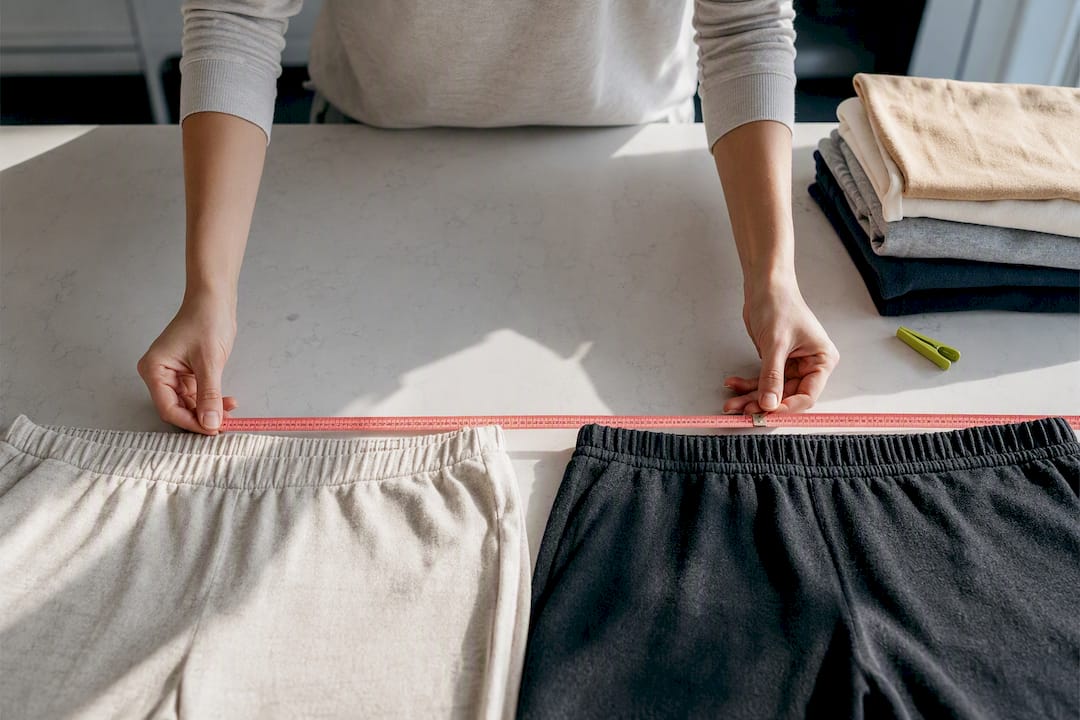
Getting the tape measure out for two minutes saves you a return label later. Here’s what to measure and how:
Bust/chest: wrap the tape around the fullest part, keeping it level across your back.
Waist: measure around your natural waistline, usually just above the belly button, without pulling the tape tight.
Hips: measure around the widest part of your hips and glutes.
Inseam: measure from the crotch seam to the bottom hem of a well-fitting pair of pants, or have someone measure leg length while you stand straight.
Foot length: trace your foot on paper and measure the longest point, heel to toe, in inches.
Once you have those four or five numbers, match them against the specific brand’s chart rather than a generic conversion table. If you fall between two sizes, size up for structured garments like blazers and jeans, and size down for stretch knits. ClothME’s measurement guide walks through exact placement for each measurement if you want a visual reference, and for jeans specifically, this breakdown of denim fit and inseam sizing is worth a look before you convert a men’s waist size across brands.
Pro Tip: Take your measurements in the evening, not first thing in the morning. Waist and hip measurements shift slightly through the day, and evening numbers tend to match how clothes actually fit when you’re out wearing them.
Before you finalize a purchase, skim two or three reviews mentioning fit and confirm the retailer has a straightforward returns policy. Both take under five minutes and catch most sizing surprises before they become a shipping hassle.
Why Doesn’t the UK-US Conversion Always Match?
The reason a “UK 12 equals US 8” rule fails so often comes down to vanity sizing, the decades-long drift where brands quietly loosen their size labels to flatter shoppers, without ever announcing the change. A dress labeled a US 8 today would likely have been labeled a US 10 or 12 in the 1980s, using identical measurements.
Vanity sizing hits UK and US brands differently, which is exactly why a UK 12 from one retailer and a UK 12 from another can differ by two inches at the waist. A budget fast-fashion brand tends to size generously to keep customers happy; a premium British label often grades tighter. The fix isn’t complicated: measure yourself once, keep that number on hand, and check it against the brand’s own chart every time, since label numbers alone can’t be trusted across companies.
How ClothME’s Measurement-First Profiles Cut Sizing Errors
A saved measurement profile solves the vanity sizing problem at its root, because it never relies on the label at all. The platform builds a size profile from two uploaded photos, then matches those measurements against each retailer’s own chart instead of assuming a UK 12 means the same thing everywhere.
That matters most for households juggling multiple sizes and multiple growth spurts. The platform lets you save separate profiles for family members, so a parent shopping for two kids and a partner isn’t rebuilding size logic from scratch for every brand. Admin’s ongoing coverage on ClothME’s blog digs deeper into practical sizing workflows for shoppers juggling exactly this kind of cross-brand guesswork.
How Does Kids’ Growth Affect Size Conversion Accuracy?
Kids don’t grow at a steady rate, which makes age-based sizing the least reliable conversion method in this entire guide. A 6-year-old in the 90th percentile for height can wear the same size as an 8-year-old in a lower percentile, and UK and US charts don’t always define “age 6” or “age 8” using the same height brackets to begin with.
Growth also happens in spurts, not straight lines. A child who fit a UK “age 5-6” shirt in January might need a UK “age 7-8” by June, and that jump doesn’t map cleanly onto a US size chart that uses different height cutoffs for the same numeric label. Height and chest measurement, taken fresh every few months, beat any age label for kids’ clothing conversion. Shoe sizing for kids moves even faster, since foot growth often outpaces overall body growth during certain stretches of childhood, meaning a shoe that fit at the start of a school semester can be tight by the holidays.
For families ordering across UK and US retailers regularly, a saved profile that gets updated as a child grows solves more problems than any static conversion chart can, since the chart itself becomes outdated the moment a growth spurt hits.
How Do Brand-Specific Sizing Differences Affect Conversions?
Two brands can print the identical size label and still produce garments that differ by two or three inches at the waist. This is not a conversion problem between countries; it’s a grading problem within each company. A UK 12 from one high-street retailer might match the bust and waist measurements of a UK 14 from another, and no universal formula accounts for that gap because it isn’t systemic. It’s brand-specific.
Fast-fashion labels tend to size more generously than premium or heritage brands, partly to reduce returns and partly because their customer base skews toward specific body types the brand has optimized for. Athletic and performance brands often size tighter through the torso and looser through the shoulders, since their target fit prioritizes movement over the drape that dress brands assume. None of this shows up in a generic UK-to-US conversion chart, because those charts average across brands that don’t actually agree with each other.
The practical fix is building a mental (or saved) profile of how specific brands run relative to your measurements, rather than assuming every UK 10 behaves like every other UK 10. ClothME’s own research into brand sizing differences found gaps of nearly 4 inches at the hip between brands using the identical numeric label, which is more than enough to turn a “correct” conversion into a return.
How Should You Convert Plus Size and Petite UK-US Sizes?
Plus size conversions get murkier than standard sizing because the numbering systems diverge more sharply at the top of the range. A UK 20 plus-size dress doesn’t always convert cleanly to a US 16 using the standard “subtract 4” rule, since plus-size grading often changes the ratio between bust, waist, and hip measurements rather than just shifting the whole scale evenly. Some UK plus-size retailers also switch from numeric sizing to letter sizing (18-28 becoming 1X-4X, for example) at a different cutoff point than US brands do, which breaks any simple numeric formula entirely.
Petite sizing has the opposite issue: the number often stays the same between UK and US petite lines, but the actual garment length shrinks by a different amount depending on the brand’s petite grading rules. A US petite typically shortens the torso and inseam by 1 to 2 inches relative to standard sizing, while UK petite ranges sometimes apply a smaller or larger reduction depending on the retailer.
For both categories, the standard conversion formula is a rougher guess than usual. Go straight to the brand’s specific plus-size or petite chart, cross-check bust, waist, and hip ranges against your own measurements, and treat any generic UK-to-US plus or petite conversion number as a starting estimate rather than a final answer.
A Shopper’s Checklist for Buying UK-Labeled Clothes
Here’s the short version I’d hand a friend before they order anything: measure bust, waist, hips, and inseam first. Check those numbers against the specific retailer’s chart, not a generic conversion table. Apply the rule of thumb only as a rough guess, size up for structured pieces if you’re between sizes, and always check the returns window before you buy. For shoes, measure foot length and check the brand’s own width notes. If you’re shopping for more than one person in the house, save each person’s measurements somewhere you’ll actually find them again next season.
— admin
Try ClothME for a Measurement-Based Size Profile
This platform skips the guesswork entirely: upload two photos, get a size profile built from your actual measurements, and see it matched against retailer charts before you ever add something to your cart. No more converting a UK 12 in your head and hoping it lines up with what a specific brand actually cuts.
The flow takes a few minutes. Two photos in, a saved profile out, and every future shopping trip skips the manual UK-to-US math altogether. If you’re shopping for a partner or kids too, save a profile for each of them once, and stop rebuilding size logic every time a new brand’s chart looks nothing like the last one. Start by creating your profile at ClothME and see which sizes actually fit before you spend a dollar on something that gets returned.
Where to Verify Sizing Numbers
ModernConvert’s clothing size converter for quick US/UK/EU label lookups based on measurements.
ClothME’s bust, waist, and hip measurement guide for exact tape placement.
ClothME’s kids’ clothing size chart for age and height mapping.