Your Sportswear Fit Guide: The Only Three Measurements That Matter
Hips decide your leggings size. Chest decides your top or bra size. Foot length decides your shoe size. Everything else is refinement.
Grab a soft tape right now and measure your waist, hips, and inseam, then check those three numbers against the retailer’s own size chart instead of guessing from your usual letter size. Sportswear runs differently by brand, fabric, and category, so the number matters more than the label ever will.
Leggings and tights: hips and inseam decide the size, then the squat test confirms it.
Tops, jackets, and sports bras: chest and underbust drive fit, with shoulder seam placement as your backup check.
Shoes: measure both feet at the end of the day, since feet swell and rarely match exactly.
If you shop for more than one body (yours, your partner’s, your kid’s), saving those measurements once inside a tool like ClothME means you’re not re-measuring every time a new brand catches your eye.
Key Takeaways
Correct sportswear fit comes from matching real body measurements to a brand’s own size chart, then confirming with a movement test before you trust the size.
Point Details Measure three numbers first Waist, hips, and inseam decide most sportswear sizing questions before you look at any chart. Test with movement, not mirrors A full squat hold and a short jog reveal transparency and waistband slippage that standing never shows. Match fabric to activity Compression suits high-impact training; fitted, breathable pieces suit yoga, court sports, and low-impact work. Wash cold, skip softener and high heat Fabric softener blocks moisture-wicking, and dryer heat breaks down elastane recovery over time. Save measurements once with ClothME A two-photo ClothME profile matches you to the correct numeric size across brands and saves it for family members too.
Table of Contents
How to Measure Yourself for a Sportswear Fit Guide
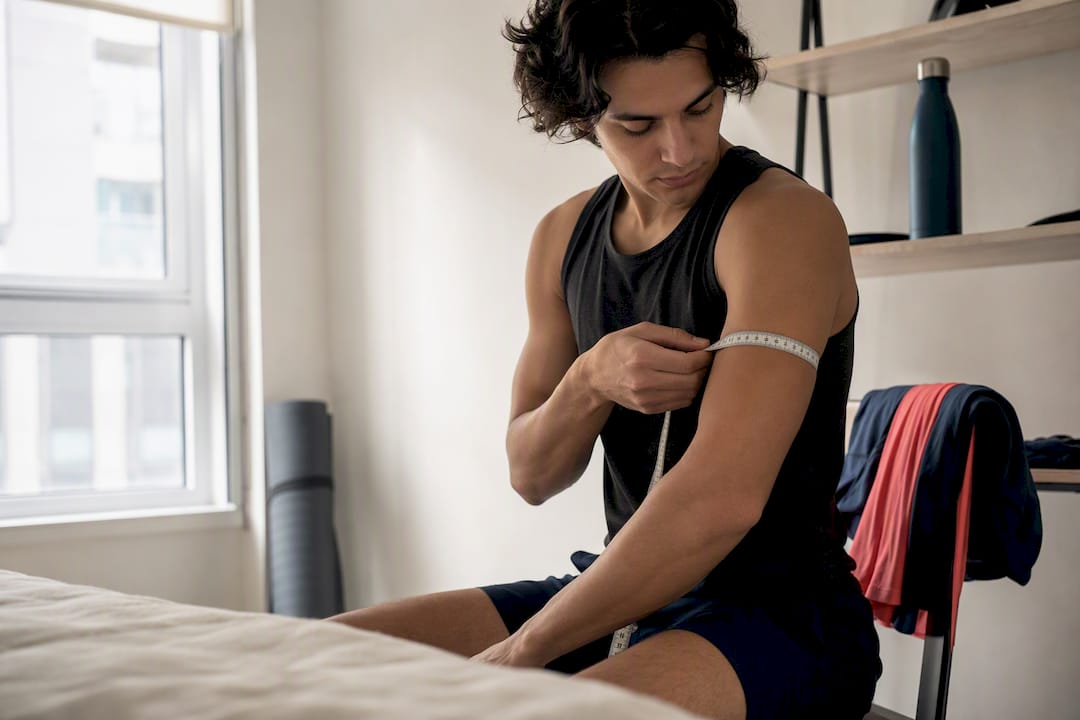
Good measurements need three things: a proper soft tape, a mirror, and a snug base layer instead of your bulky sweatshirt. A second pair of hands helps enormously with the back-of-body measurements, but you can manage solo with a mirror and patience.
Chest/bust: wrap the tape around the fullest part, keeping it level front to back, arms relaxed at your sides.
Underbust: measure directly beneath the bust line, snug but not compressing.
Natural waist: find the crease when you bend slightly sideways, that’s your natural waist, not your belly button.
Hips: wrap around the widest point of your hips and glutes, feet together.
Inseam: measure from your crotch to your ankle bone along the inside of your leg.
Rise: measure from the crotch seam of a well-fitting pair of pants straight up to the waistband.
Thigh and calf: circle the fullest point of each, standing with weight evenly distributed.
Foot length: stand on paper, mark heel and longest toe, measure the distance.
The most common error is holding your breath during the waist measurement, which shrinks the number and guarantees a tight waistband later. Measuring over a hoodie is the second most common mistake, adding an inch or two you don’t actually have.
Pro Tip: Measure twice, at different times of day if possible. Bodies shift slightly from morning to evening, and a single reading can mislead you on borderline sizes.
What Should Correct Fit Look Like by Garment?
Fit rules change depending on what you’re buying, and treating leggings like a jacket (or vice versa) is how most returns happen.
Tops should sit with the shoulder seam right at the edge of your shoulder, not sliding down your arm or riding up your neck. Sleeve fabric should have a little ease, enough to raise your arms overhead without the whole shirt hiking up. Torso length matters more for running tanks than gym tees, since a short hem rides up during stride.
Leggings and tights should have a waistband that stays put without digging in or rolling. Compression-level leggings are supposed to feel snug from the moment you put them on, and the Fanka fit guide recommends rolling them up to your ankles first, then pulling the fabric up in sections rather than yanking from the waistband, which prevents overstretching one panel.
Shorts and pants need the right rise and inseam combination for your torso length, plus a gusset if you’re squatting or lunging regularly. Check that pockets actually zip or snap closed if you plan to run with your phone in them.
Sports bras should pass the two-finger rule under the band: snug enough that two fingers slide in with light resistance, not gapping and not cutting in. Cup coverage should keep you contained during the squat test equivalent for bras, meaning jumping jacks, and adjustable straps let you fine-tune support level to match the activity’s impact.
Shoes need both feet measured, since most people have one foot slightly larger. Match width to your foot shape and function to your sport (running wants forward stability, court sports want lateral support), and size up slightly if you wear thick performance socks.
How Do You Test Sportswear Fit With Movement?
Standing in front of a mirror tells you almost nothing. Movement reveals what static measurements can’t catch, since a legging can look perfect standing still and turn sheer the second you bend over.
Squat test: drop into a full squat and hold for five seconds. Check the fabric across your thighs and seat for any see-through patches or strained seams.
Waistband stability test: do ten jumping jacks or a short jog in place. If the waistband rolls, slides down, or you’re tugging it back up within a minute, size down or try a different style.
Range-of-motion check: raise your arms fully overhead and reach across your body. Tight tops or sports bras that ride up excessively during this movement will annoy you mid-workout.
Compression safety check: watch for numbness, tingling, or trouble taking a full breath, all of which signal gear that’s too tight rather than supportive. Visible drag lines at the seams are an early sign the fabric is overstretched and heading toward see-through territory before the wrinkles ever appear on the surface.
Log which brand and size passed these tests. That log becomes your personal sizing reference the next time a similar style catches your eye.
Which Fabrics and Features Actually Change the Fit?
Fabric composition affects how a garment fits just as much as the size label does. Synthetic moisture-wicking blends (polyester, nylon) pull sweat away from skin and dry fast, which is why they dominate high-intensity gear, while cotton absorbs sweat and stays wet, adding weight and chafe risk during longer sessions.
Elastane/spandex percentage determines stretch and recovery: higher percentages (around 15% to 20%+) mean more give and better shape retention over time, though the Sportiva activewear guide notes that higher-elastane blends need more careful sizing since they can feel deceptively stretchy in the dressing room and restrictive mid-workout.
“4-way stretch” means the fabric stretches both lengthwise and widthwise, ideal for squats, lunges, and yoga poses. “2-way stretch” only moves in one direction and suits simpler, lower-mobility pieces like windbreakers.
Flatlock seams reduce chafing on long runs, while wide waistbands distribute pressure more evenly than thin elastic. A gusset in the crotch area adds mobility room that a flat seam construction can’t match.
How Do You Buy Sportswear Online Without Guessing?
Body measurements beat labeled sizes every single time you shop a new brand, since a “medium” from one label can be a “small” or “large” from another with zero warning.
Compare your own numbers against the retailer’s chart directly, not against what size you normally wear elsewhere.
When you’re between two sizes, size up for non-compression pieces (looser tops, casual shorts) and size strictly by measurement for compression gear, where a snug fit is intentional.
Look for customer photos and reviews from shoppers who mention a build similar to yours, and check whether the brand lists model height and the size they’re wearing.
Confirm the return window and whether returns are free before you order, especially if you’re buying a style you’ve never tried.
Pro Tip: If two sizes seem equally plausible, order both, keep the tags on, and test them at home with the squat and waistband checks above. Return the one that fails, and you’ve spent nothing extra beyond a little patience.
Why a Personalized Size Profile Beats Guessing Every Time
Inconsistent sizing across brands is the single biggest driver of sportswear returns, and no amount of memorizing your “usual size” fixes it when every label means something different.
ClothME’s two-photo sizing method builds a size profile calibrated against actual brand charts, which can meaningfully cut return rates because it matches your body to the correct numeric size rather than a guessed letter size. That profile also stores instantly for family members, so a parent measuring a growing kid, a partner, or themselves doesn’t have to repeat the tape-measure ritual every shopping trip. It’s a natural companion to the measurement steps outlined above: take your numbers once, save them, and run the movement tests on whatever the profile recommends.
Two photos generate a size profile without a tape measure required at checkout time.
Saved profiles cover multiple people in one account, useful for shopping for a partner or outfitting kids each season.
Profiles work across brands, addressing the exact inconsistency this guide has spent several sections walking you through.
Choosing Sportswear for Different Body Types
Fit preferences shift depending on build, and a chart built around one body shape rarely serves everyone well. Athletic or straight builds often find that standard size charts fit predictably across the chest, waist, and hip, since there’s less differential between those three measurements to account for.
Pear-shaped bodies, where hips run noticeably larger than the waist, benefit most from separates rather than one-piece sizing. Buy leggings and shorts by hip measurement first, and expect to size a top or jacket down from what the bottoms suggest. A wide waistband with some stretch prevents the classic gap-at-the-waist problem that a straight-cut pair of leggings creates on a pear-shaped frame.
Plus-size shoppers often get better results from brands offering extended sizing built on genuinely wider block patterns, not just a scaled-up version of a smaller size. Check whether the brand states its plus-size range was pattern-drafted separately, since scaled patterns tend to fit unevenly at the waist and rise.
Broad-shouldered or muscular builds, common among lifters and swimmers, frequently need to size up in tops for shoulder and sleeve room even when the chest measurement matches a smaller size. That tradeoff usually means a slightly looser torso in exchange for sleeves that don’t restrict a full overhead press.
None of these are rules etched in stone. They’re starting points, and the squat and range-of-motion tests covered earlier remain the final word regardless of body type.
How Fit Changes Performance and Comfort by Activity
The same garment that feels great for a slow yoga flow can actively work against you in a sprint interval, because different activities load fabric and seams differently.
High-impact activities like running and plyometric training demand sports bras with real band snugness and minimal bounce, since a loose band redistributes impact force onto your shoulders through the straps, which gets uncomfortable fast over a longer run. Compression leggings suit these same high-impact sessions well, since the snug, muscle-supporting fit reduces muscle oscillation and can shorten recovery time.
Low-impact, high-mobility work like yoga or Pilates favors fitted rather than compression pieces, giving you full range of motion through deep stretches without a waistband digging in during forward folds. A too-tight top here restricts the exact movement you’re trying to achieve.
Water sports bring their own fit logic entirely. A wetsuit that’s too loose lets water flush through and defeats its insulation purpose, while one that’s too tight restricts paddling motion at the shoulder. The kids’ wetsuit fitting guide from H2H Surf covers this activity-specific fit logic in more depth if you’re outfitting a young surfer.
Team and court sports (basketball, tennis) need shorts and tops that allow lateral cuts and sudden stops without pockets flapping or fabric riding up. Loose, breathable builds tend to outperform snug compression pieces here, since the priority is cooling and unrestricted lateral movement over muscle support.
How to Care for Sportswear So It Keeps Its Fit
Performance fabric loses its shape and function faster than cotton does when you wash it wrong, and that lost shape is really just a slower version of the same “no longer fits” problem you started this guide trying to solve.
Wash synthetic activewear in cold water and skip fabric softener entirely. Softener coats moisture-wicking fibers with a residue that blocks the wicking function, which means a “moisture-wicking” shirt stops actually wicking after a dozen washes with the wrong detergent.
Turn compression leggings and sports bras inside out before washing to protect the outer surface from friction against zippers or Velcro on other items in the load. Skip the dryer’s high heat setting, since heat breaks down elastane fibers over time and is the single fastest way to lose recovery stretch in a legging that used to snap right back into shape.
Air-dry when you can, and if you must use a dryer, use low heat and pull items out slightly damp. Wash after every wear rather than letting sweat and salt sit in the fabric, since built-up residue breaks down elastic fibers even faster than the washing itself does.
One Small Habit That Saves a Lot of Returns
I run through the squat test and a quick overhead reach before I ever call a legging “done,” whether it’s for HIIT or a slow yoga class, since the two activities expose completely different weak points in the same garment. When the result is close, I still order a second size and return the loser. That habit has saved me more returns than any size chart ever has.
Get Your Personalized Sportswear Fit Guide With ClothME
Skip the tape measure marathon every time you shop a new brand. ClothME turns two uploaded photos into a size profile calibrated against actual brand charts, so you see the products that fit instead of hunting through size guesses.
Once your profile is built, it pairs directly with the measurement and movement-test steps you just read: ClothME points you to the right numeric size, and the squat test and waistband check confirm it before you commit. Profiles save for every family member, so outfitting your kid for soccer season or your partner for their next race doesn’t mean starting from zero each time. If a chart feels off, ClothME’s approach to personalized size data is built specifically to catch that inconsistency before it becomes a return.
Head to ClothME and build your first size profile today. It takes two photos and a few minutes, and the next sportswear purchase you make won’t be a guess.
Frequently Asked Questions
How should leggings fit exactly? Leggings should feel snug without digging in, stay put through a full squat, and show no sheer patches at the thighs or seat. If the waistband rolls down during a light jog, size down or try a firmer waistband style.
What size sportswear do I need if I’m between two sizes? For non-compression pieces like loose tops or casual shorts, size up. For compression leggings and sports bras, size strictly by your measurements, since the snug fit is intentional and sizing up defeats the purpose.
What’s the fastest way to check sportswear sizing tips before buying? Measure your chest, waist, hips, and inseam once, compare them to the specific brand’s chart (never your usual letter size), and check customer reviews from shoppers with a similar build.
Do sports bras need a different sizing approach than everyday bras? Yes. Sports bras rely on band snugness under the two-finger rule and cup coverage tested through movement, like jumping jacks, rather than static wire support.
How often should I re-measure for a sportswear fit chart? Re-measure every six to twelve months, or sooner after a noticeable weight or fitness change, since even a half-inch shift at the waist or hips can move you into a different size bracket.
Sources
Fanka Fit Guide: How to Find Your Perfect Compression Leggings Size & Fit
How Should Leggings Fit? A Complete Guide to Finding Your Perfect Size
How to Choose Workout Clothes: Ultimate Activewear Guide | Sportiva