
3 Ways to Choose Warm Winter Fabrics for Wet, Dry, and Active Days
For most people, merino wool and cashmere win for everyday winter wear, fleece and polyester win for anything active or wet, and down wins for dry, packable warmth. The rule that matters more than any single fabric: layer with a moisture-wicking base, an insulating middle, and a protective shell, and never wear cotton against your skin outdoors in the cold. Get that system right and the fabric argument mostly sorts itself out.
TL;DR:Wool and synthetic insulations perform best in wet conditions because they retain warmth when damp, unlike down, which loses insulating ability when wet.
Proper layering with moisture-wicking base layers, insulating mid layers, and protective shells is essential to stay warm and dry in winter, regardless of fabric choice.
Check insulation loft, construction, and fit before buying, as these factors influence warmth and comfort more than fiber type alone.
Merino wool’s fine fibers reduce skin irritation compared to coarse wool, making it suitable for sensitive skin, while true wool allergies are rare.
For active or wet winter conditions, prioritize wool or synthetic layers with waterproof shells over down or cotton-based options.
Clothme
Find Winter Clothes That Fit
ClothME creates personalized size profiles from two photos, helping you shop for winter layers without guessing across brands.
Explore ClothME
Table of Contents
Warm Winter Fabrics Explained: Wool, Down, Fleece, and More
Every warm fabric works the same basic trick: it traps air in tiny pockets and slows down heat loss. What differs is how much air it traps, how it behaves when wet, and what it costs you in weight or upkeep.
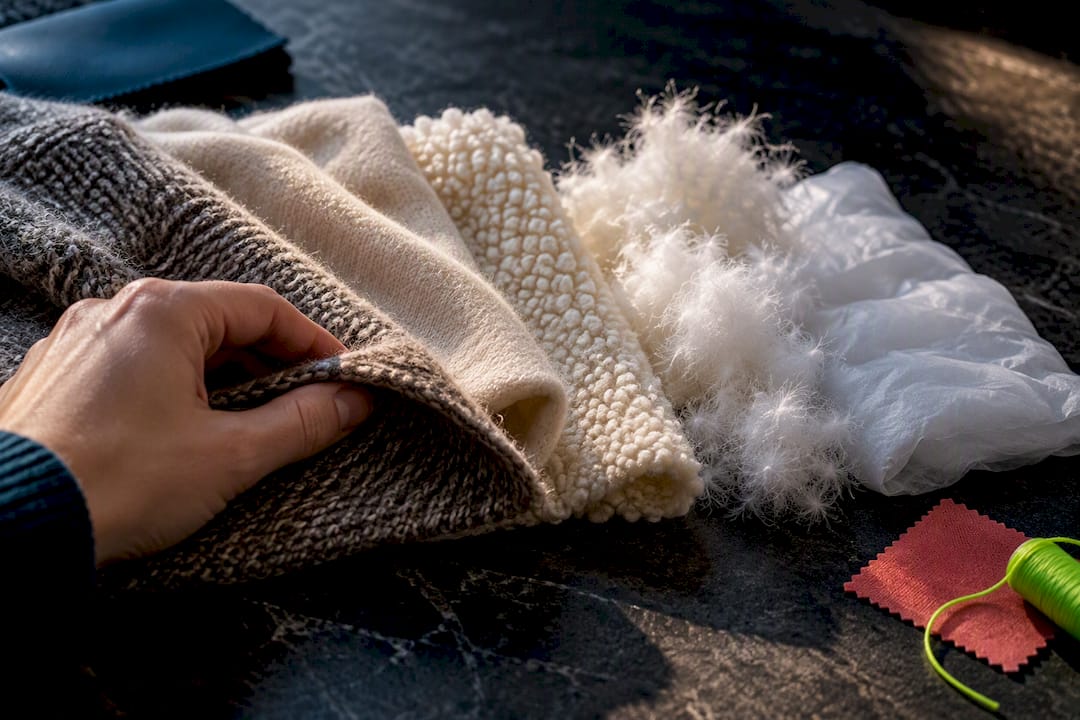
Wool (especially merino) grabs heat by trapping air between crimped fibers, and it keeps insulating even damp, because wool fibers absorb moisture into their core rather than letting it sit on the surface. Merino runs finer and softer than standard wool, so it skips the itch factor most people associate with sweaters. Cashmere goes a step further on warmth-to-weight ratio and price. A cashmere sweater can outperform a much bulkier wool one, but expect to pay for it and to hand-wash or dry-clean it.
Down is the lightest, most packable insulator available, built from the fluffy plumage beneath a duck or goose’s feathers. Fill power measures how much loft an ounce of down produces. Higher fill power generally means more warmth per ounce. The catch: down collapses and stops insulating when it gets wet, because the fine filaments clump together and lose the air pockets doing the work.
Synthetic fills (polyester insulations like those found in most puffer jackets) don’t loft quite as efficiently as high fill power down, but they keep working when soaked, dry fast, and cost less.
Fleece, a brushed polyester knit, comes in weight classes from 100 (light, layering) to 300 (heavy, standalone jacket warmth). It breathes well, dries quickly, and shrugs off light moisture, which is why it shows up in nearly every mid layer built for active use.
A few more worth knowing:
Silk adds warmth with almost no bulk, often used as a lightweight base layer under other insulation.
Flannel, a brushed cotton or cotton blend, delivers cozy warmth for indoor or low-exertion wear but holds moisture, so it’s a poor outdoor performer.
Corduroy, a ridged cotton weave, traps some air in its ribs and works fine for mild cold, not deep winter.
Sherpa, a fleece styled to mimic shearling, shows up in linings and jacket collars for soft, low-maintenance warmth.
Quilted fabrics trap synthetic or down fill between stitched channels, which is how most packable jackets hold their shape and loft.
Natural vs. Synthetic: What Actually Wins When It’s Wet
Natural fibers like wool win on warmth-when-wet and odor control. Wool’s fiber structure resists bacterial buildup, so a merino base layer can go days without smelling, something no polyester shirt manages. Synthetics win on drying speed, weight, and cost. A polyester fleece dries in an hour on a radiator; a wet wool sweater can take most of a day.
A 2024 peer-reviewed comparison of sheep’s wool and hemp insulation found that thermal performance varies more with density and construction than with fiber type alone, meaning a tightly built synthetic garment can out-warm a loosely knit wool one.
Quick rules of thumb:
Choose wool or merino for mixed indoor/outdoor days where odor control and packing light matter.
Choose synthetics for anything wet or high-output, since they keep insulating when damp and dry fast.
Choose down only for dry cold where weight and packability are the priority.
How to Layer for Winter: The 3-Layer System
The three-layer system that REI and most cold-weather guides teach breaks down into three jobs, not three fabrics:
Base layer moves sweat away from skin. Merino wool, silk, or a synthetic wicking fabric all do this well. Cotton does not, since it soaks up moisture and holds it against your skin.
Mid layer traps heat. Fleece, wool sweaters, or a light down or synthetic vest all work, depending on how much bulk you want.
Shell layer blocks wind and precipitation. A tightly woven or waterproof-breathable fabric keeps the first two layers doing their job instead of getting soaked or wind-stripped.
How that plays out in practice:
Hiking in cold, wet terrain: synthetic or wool base, fleece mid, waterproof breathable shell.
Commuting on foot or by bike: merino base, light down or synthetic mid, windproof shell.
Standing around outside (events, spectating): heavier base, thick down or wool mid, insulated shell with less breathability need.
Pro Tip: Watch your exertion level, not just the thermometer. Sweating into your mid layer compresses its loft and kills its insulating power, so vent a zipper or shed a layer before you start sweating, not after. Field guidance for extreme cold environments backs this up directly, warning that managing perspiration before it starts matters more than adding layers after you’re already cold and damp.
Which Fabric Fits Your Winter Situation
Wet conditions: favor wool or synthetic insulation with a waterproof, breathable shell. Skip down entirely unless it’s genuinely dry out or backed by a solid waterproof shell.
High-output activity (skiing, brisk hiking): go lighter and more breathable on base and mid layers, and look for pit zips or vents so you can dump heat before you soak your insulation.
Everyday indoor/outdoor cold: flannel, ponte knit, or velvet handle casual comfort fine. Cotton is perfectly fine indoors, just don’t wear it as an outdoor base layer.
Construction and Care: What to Check Before You Buy
The label tells you the fiber. It doesn’t tell you the warmth. Two jackets can both say “goose down” and perform completely differently based on fill power, baffle construction, and how brushed the interior lining is.
Check for:
Visible loft that springs back after you squeeze it, not flat panels
Baffled construction on insulated jackets, which keeps fill from shifting into thin spots
A brushed or napped interior, which adds warmth without adding bulk
A dense, wind-resistant face fabric and a cut roomy enough to layer under
For care: hand-wash or use a wool cycle for wool and merino, since heat and agitation felt the fibers. Machine-wash synthetics on cold and skip the dryer sheet buildup on fleece. Dry down garments on low heat with a couple of clean tennis balls to break up clumps and restore loft, and store insulated pieces loose rather than compressed in a stuff sack long term.
Pro Tip: Do a compression test in the store: squeeze the insulation and count how fast it springs back. Slow recovery usually means the fill or loft has already started to break down, even on a new-looking garment.
Why Fit Changes How Warm a Fabric Actually Feels
A perfectly warm fabric in the wrong size still leaves you cold. Insulation that gets compressed by an undersized jacket, or bunched inside sleeves that are too tight for a base and mid layer combo, stops trapping air the way it’s designed to. That’s an inspection point worth checking before you buy, not after.
This is where fit becomes as important as fiber. A free size tool builds a size profile from two photos, so the cuts you see match your actual body shape rather than a generic size chart, and you can save profiles for family members to skip the guesswork entirely.
Wool Sensitivity and Other Fabric Allergy Concerns
Wool sensitivity is real, but it’s usually a coarseness problem, not a true allergy. Standard wool fibers run thicker and stiffer, and those coarser fibers can poke and irritate skin, producing an itchy, sometimes reddened reaction that people often mistake for an allergy. Merino wool’s much finer fiber diameter, generally under 24 microns compared to over 30 for standard wool, is why plenty of self-described “wool sensitive” people tolerate a merino base layer just fine.
A true wool allergy, an immune reaction to lanolin or wool proteins, is less common but does exist, and it can cause hives, rash, or respiratory symptoms in sensitive individuals. Anyone with a diagnosed wool allergy should stick to synthetic or plant-based fibers regardless of how fine the weave is.
Cashmere tends to sit better with sensitive skin than coarse wool because of its fine fiber and soft hand, though it carries the same lanolin concern for anyone with a true allergy. Down can trigger separate reactions in people with feather or dust allergies, unrelated to wool sensitivity, so synthetic fill is the safer default for that group.
If you’re shopping for someone with known skin sensitivity, checking fiber diameter and blend content on the label matters more than trusting a “hypoallergenic” claim on the tag.
A Shopping Checklist That Actually Speeds This Up
Here’s the fast version: pick your activity, assign a fabric to each layer’s job, check construction and care before buying, then confirm the fit will still work once you’re wearing three layers instead of one. Skipping that last step is how warm fabrics end up feeling cold anyway.
— admin
Buy Winter Clothes That Fit the Layers You’re Actually Wearing
Sizing a base layer alone is easy. Sizing a jacket meant to fit over a base layer, a fleece, and still leave room to move is where most online orders go wrong, and it’s exactly why so many winter coats get returned.
Clothme’s Free Size Tool solves that specific problem: upload two photos, get a size profile built around your actual body shape, and see product recommendations that already account for the fabric, fit, and style you tend to wear. Instead of guessing whether a “medium” fleece will still zip over a merino base layer, you’re shopping against a profile built for your body, and you can save separate profiles for every family member so nobody’s holiday order comes back the wrong size. Try the Free Size Tool before your next winter order and skip the return-and-reorder cycle entirely.
Sources
How to Dress in Layers: Tips for Staying Warm | REI Expert Advice
Performance Evaluation of Thermal Insulation Materials from Sheep’s Wool and Hemp Fibres
FAQ
What Is the Warmest Fabric for Winter Wear?
For most people, merino wool and down offer the best warmth for their weight, with cashmere winning on warmth-to-weight for those willing to pay more. There’s no single universal winner, since thermal performance depends heavily on density and construction, not just fiber type.
What Is the 3-Layer Rule for Winter?
The 3-layer rule calls for a moisture-wicking base layer, an insulating mid layer like fleece or wool, and a wind- and water-resistant shell on top. Each layer has one job, and skipping the base layer’s wicking role is the most common mistake people make.
What Types of Fabric Are Best for Cold Weather?
Wool, merino, down, and synthetic insulation all perform well, but the right choice depends on whether conditions are wet or dry and how active you’ll be. Wool and synthetics handle moisture better, while down wins on warmth-to-weight in dry cold.
Is Fleece or Thermal Underwear Warmer?
Thermal underwear, usually a lightweight synthetic or merino base layer, is built to wick moisture, not to insulate heavily on its own. Fleece traps more heat by itself, which is why it works as a mid layer while thermals work as a base, and the two are meant to be worn together rather than compared as substitutes.
Can Wool Cause Skin Irritation or Allergic Reactions?
Coarse wool can irritate skin through simple fiber stiffness rather than a true allergy, while finer merino wool causes far fewer reactions because of its thinner fiber diameter. A genuine wool allergy, involving lanolin or wool proteins, is less common but calls for switching to synthetic or plant-based fabrics entirely.