Anniversary Gift Clothing Buying Tips That Actually Work
A clothing gift succeeds when three things line up: the garment matches the formality of whatever you’re celebrating, the fit is confirmed rather than guessed, and one personal detail signals you actually paid attention. Miss any leg of that stool and the gift wobbles, usually straight into a return box.
Here’s the three-step checklist to run before you buy anything:
Pick formality and garment type first. Decide if you’re dressing for a five-star dinner, a weekend trip, or something in between, then choose the category (dress, blazer, accessory) that fits that setting.
Confirm fit before you confirm the item. Use a saved measurement, a borrowed reference garment, or a photo-based size profile like ClothME instead of guessing off a size chart.
Add exactly one meaningful detail. A monogram, a stitched date, or a fabric choice tied to their taste turns a purchase into a gift.
Key Takeaways
A clothing anniversary gift works when the garment’s formality matches the event, the fit is confirmed rather than guessed, and one restrained personal detail ties it to the milestone.
Point Details Match formality to venue Choose tailored pieces or eveningwear for dinners, breathable fabrics like linen or cotton for casual trips. Confirm fit before buying Use a borrowed reference garment, a known measurement, or a photo-based profile instead of a size chart guess. Limit personalization Stick to two or three elements, like a name and a date, to keep the garment timeless and photo-friendly. Order with lead time Allow at least two weeks for custom or personalized items, longer around major holidays. Reduce return risk with ClothME Save a photo-based size profile through ClothME to filter for likely-fit items and avoid guessing on sizes.
Table of Contents
Anniversary Gift Clothing Buying Tips: The Two-Minute Decision Flow
Most people stall out trying to pick a category. Here’s a flow that gets you from “no idea” to “ordering” in about two minutes.
Identify the event type. A reservation at a nice restaurant points to a cocktail dress, a tailored blazer, or eveningwear. A weekend trip points to elevated casual: a linen shirt, a knit dress, a well-cut jacket that survives a car ride.
Match the fabric to the setting. Silk, satin, and velvet read as celebratory and photograph well under restaurant lighting. Linen and cotton hold up better for travel and outdoor plans, and they forgive a slightly imperfect fit.
Pick a sizing method you can execute today. Borrow a similar item from their closet and check the tag, upload two photos to a fit tool for a size profile, or simply confirm the retailer’s return window before you commit.
Pro Tip: If you’re stuck between two sizes, check the brand’s return policy before checkout, not after. A 30-day free return window turns a sizing guess into a low-risk decision instead of a gamble.
That third step is the one people skip, and it’s the one that determines whether the gift becomes a memory or a receipt. A dress that fits will get worn to dinner and photographed. A dress that doesn’t fit gets exchanged online three days later, and the moment is gone.
How the Venue Should Decide the Fabric and Formality
The venue tells you almost everything you need to know about what to buy. A tasting-menu dinner or a milestone celebration calls for tailored pieces or eveningwear, while a casual getaway calls for breathable fabrics that don’t demand an iron.
Editorial gift guides consistently point toward the same pattern: cocktail dresses and blazers for fine dining, linen or knit pieces for casual trips, with romantic fabrics like silk, satin, and velvet reserved for milestone dinners. That’s not arbitrary. Silk and satin catch light in a way that reads as intentional and formal, while heavier velvet adds warmth for cooler-season celebrations without looking bulky.
Silk, satin, and velvet suit indoor evening events, anniversaries with a fixed milestone number, and anything with a dress code.
Linen and cotton suit outdoor brunches, weekend trips, and anniversaries celebrated with activity rather than a sit-down dinner.
Structured blazers and tailored trousers work for both, which makes them a safer bet when you’re not sure how formal the plan will get.
The choice between a statement piece and a complementary item comes down to how much attention you want the garment to command. A bold red dress becomes the center of the outfit and the evening. A well-cut cardigan or a tailored vest complements what they’d already wear, which works better if your partner tends to dress understated day to day.
One detail worth building into your decision: gift editors have found that outfits worn during the actual celebration rank higher emotionally than gifts unwrapped and set aside. A dress bought specifically for that night’s dinner does double duty as gift and memory.
Matching Clothing to Your Partner’s Actual Style
Buying clothing for someone else always risks projecting your taste onto their closet. The fix is reading their existing wardrobe like a source document instead of relying on memory.
Most people fall into one of five loose style categories, and each one has a signature move:
Romantic leans toward soft fabrics, florals, and flowing silhouettes. Think a wrap dress or a blouse with delicate detailing.
Classic favors clean lines, neutral colors, and pieces that don’t chase trends. A tailored coat or a well-made button-down lands safely here.
Minimalist wants solid colors, simple cuts, and no logos. Anything oversized or fussy will sit unworn.
Trendsetting wants what’s current, whether that’s an unusual color or a silhouette they’ve mentioned wanting to try.
Casual prioritizes comfort and ease of movement over anything structured. A soft knit or relaxed denim jacket beats a fitted blazer every time.
To figure out which category fits, look at what’s actually hanging in the closet, not what they say they like in theory. If every dress has short sleeves and a fitted waist, that’s your silhouette answer. If every top is oversized, don’t buy fitted.
There’s a real difference between matching your partner’s outfit and coordinating with it. Styling editors have noted that coordinating pieces read as intentional, while identical matching outfits can tip into costume territory. A shared color palette or complementary fabric works better than buying the literal same shirt in two sizes.
Getting the Fit Right Without Ruining the Surprise
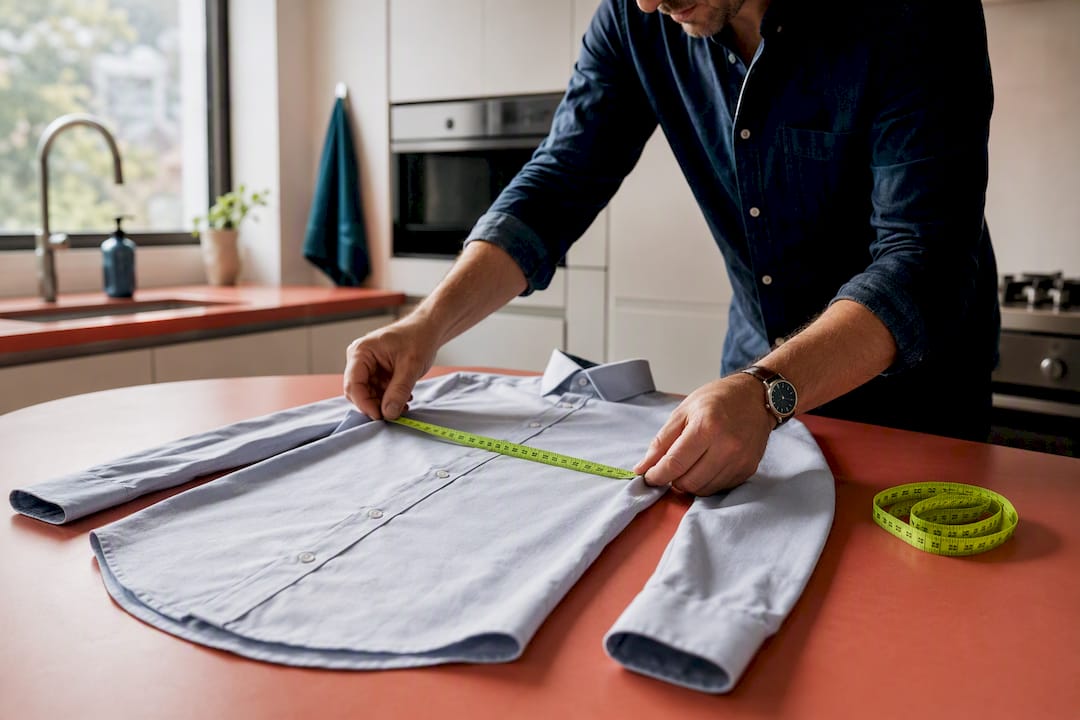
Fit is the single biggest reason clothing gifts get returned, and it’s also the easiest problem to solve quietly if you know where to look. A tag inside a jacket they already own, a size mentioned in an old online order confirmation, or a quick photo of a similar garment laid flat all give you real data without a single awkward conversation.
Different garments fail in different places, so check the right spot:
Jackets and blazers live or die on shoulder fit and armhole depth. Retail fit guides consistently flag shoulder blocking as the detail that matters more than waist measurement for tailored pieces, because a shoulder that’s off can’t be fixed with a tailor visit the way a waist can.
Dresses hinge on bust, hip, and length together, not any single measurement in isolation.
Knitwear is the most forgiving category, which makes it a safer bet when your sizing information is thin.
This is exactly the gap ClothME was built to close. Instead of guessing off a generic size chart that varies wildly between brands, you upload two photos and generate a size profile that maps your partner’s actual proportions to what different brands actually run. You can save that profile permanently, along with profiles for other family members, so next year’s gift search starts from real data instead of another guess. For a deeper walkthrough of how the photo-to-profile process works, the guide on finding clothes that fit every time breaks down the mechanics step by step.
A convertible approach works well here: gift the item now, keep the receipt flexible, and schedule a specific date to try it on together. The surprise stays intact, and a size swap becomes a five-minute errand instead of an awkward confession.
Pro Tip: If you genuinely can’t get a reliable measurement, order two adjacent sizes with free returns and let your partner try both. It costs you nothing but a little patience, and it beats guessing wrong on the one size that matters.
For garment-specific pitfalls beyond dresses and jackets, the fit issues by garment type breakdown covers the smaller details, like sleeve length and rise, that trip people up most often.
Personalizing the Gift Without Overdoing It
Personalization is what separates “a nice dress” from “a nice dress they’ll remember buying.” But there’s a ceiling on how much customization actually helps, and most people blow past it.
Custom-apparel guides land on the same number repeatedly: limit personalization to two or three elements, such as a name, a date, and a short phrase. Beyond that, the garment starts to look busy in photos and loses the timeless quality that makes it wearable years later.
Placement matters as much as content. An inner hem monogram or a small tag detail reads as thoughtful. A large printed graphic across the chest reads as a novelty item.
Keep the phrase short. A date and initials will age better than a long inside joke that only makes sense this year.
Consider where they’ll actually wear it. Anything visible in photos should stay understated; anything hidden (an inner label, a lining detail) can carry more personal weight.
Custom orders also move slower than off-the-shelf ones, which changes your timeline math. Factor that lead time in before you fall in love with an elaborate embroidery idea two days before the anniversary.
Budgeting and Timing Your Purchase
How much you spend should track the milestone, not a fixed rule. A first anniversary and a 25th anniversary carry different emotional weight, and the traditional and modern gift themes tied to specific years can help translate that weight into a material or color choice, like silver-toned accessories for a 25th.
A rough framework that scales with intent:
Token gesture: a well-chosen accessory or a single statement piece, paired with something else, under $75.
Meaningful gift: a dress, suit separate, or quality outerwear piece in the $100 to $250 range.
Milestone celebration: a designer piece, a custom order, or a full coordinated outfit north of $250.
Timing matters more than most people plan for. Editors who cover personalized apparel recommend ordering at least two weeks ahead to allow for production and standard shipping, with production windows commonly running three to fourteen business days depending on the customization involved. Push that to three or four weeks if your anniversary lands near a major holiday, when production queues back up and shipping carriers slow down. The holiday shopping timing guide walks through exactly how much buffer to build in during peak seasons.
Making It a Full Fashion Moment
A single garment, however well chosen, sits alone in a box. Pairing it with one companion piece turns it into a complete look, and it costs you far less than a second major gift.
Add one accessory, not five. A belt, a scarf, or a simple piece of jewelry rounds out the outfit without competing with it.
Package with intention. Tissue paper in a coordinating color, a handwritten note about why you chose the piece, or a small box instead of a shipping bag all raise the moment without raising the budget.
Plan the first wear. Book a dinner reservation or plan an outing specifically so the gift gets worn soon, not folded into a drawer.
Commerce editors who cover gifting have found that pairing a clothing item with a small accessory increases how thoughtful the gift feels, even when the accessory itself is inexpensive. The pairing signals effort, not the price tag.
A Safer Checklist for Buying Clothing Online
Online ordering removes the try-before-you-buy safety net, so the checklist has to do that work instead.
Read the size chart and model notes before adding to cart. Note the model’s height and the size they’re wearing in photos, since that context matters more than the size label alone.
Check the return policy first, not after a problem shows up. Free returns change your entire risk calculation and make it safe to order a size you’re not 100% sure about.
Order two sizes when you’re genuinely torn. Keep one, return the other, and skip the stress of guessing wrong on the one gift that needs to land.
Use a saved size profile to filter results. Cross-referencing a profile against brand-specific fit data narrows your search to items likely to fit, instead of scrolling through everything and hoping.
Pro Tip: Choose expedited shipping only if it’s refundable. A gift that arrives two days early with no size backup plan is worse than one that arrives on time but locked into final sale.
For a full walkthrough of ordering without tipping off your partner, the shopping for partner clothes online guide covers browser history, delivery timing, and how to keep a surprise intact through checkout. And for general best practices on placing fashion orders with confidence, JV London’s guide to online fashion orders covers the retailer side of what to check before you commit.
Why I Trust the Photo-Profile Method Over Guessing
I once bought a jacket for someone based purely on what I remembered their size being from a year earlier. It didn’t fit. Not close. That single wrong guess taught me that memory is a terrible size chart, and “I think she’s a medium” is not a strategy.
What changed things wasn’t better guessing. It was removing the guess entirely. A photo-based size profile gives you real proportions instead of a number that means something different at every brand. If you’ve been burned by a return before, the how to surprise your partner with the right size guide walks through exactly how to gather that information without tipping anyone off.
Let ClothME Take the Guesswork Out of Sizing
Clothme fixes the one part of clothing gifting that ruins the most surprises: not knowing if it’ll fit. Upload two photos, and the platform builds a size profile mapped to how different brands actually run, not a generic chart that varies by manufacturer. You can save that profile for your partner permanently, and add profiles for other family members too, so every future gift search starts from real data instead of a guess.
For anniversary shopping specifically, that means you can filter product feeds down to items likely to fit before you even start browsing, which cuts down on the back-and-forth of ordering, checking, and returning. It also means the surprise stays intact. You’re not asking your partner their size the week of the anniversary. You already know it. Head to ClothME to build a size profile and start browsing gift options that are already filtered to fit.
Frequently Asked Questions
What’s the safest way to buy clothing as an anniversary gift without knowing the exact size? Use a photo-based size profile, borrow a similar garment to check the tag, or order two adjacent sizes with a free return policy. Any of these beats guessing off a generic size chart.
How much should I spend on an anniversary clothing gift? Spending tends to scale with the milestone: under $75 for a token gesture, $100 to $250 for a meaningful piece, and beyond $250 for a major milestone or fully custom order.
How far in advance should I order a personalized anniversary outfit? Order at least two weeks ahead for standard personalization, and closer to three or four weeks if the anniversary falls near a major holiday when production queues slow down.
Should I match my outfit with my partner’s or just coordinate? Coordinating, such as a shared color palette or complementary fabric, reads as intentional. Identical matching outfits can tip into costume territory.
What personalization details work best on anniversary clothing? Two or three elements maximum, typically a name, a date, and a short phrase, placed somewhere subtle like an inner hem rather than printed prominently on the front.
Sources
Best wedding anniversary gifts by year in 2026 | CNN Underscored
Gift ideas for women (fashion and accessories) | Cosmopolitan